
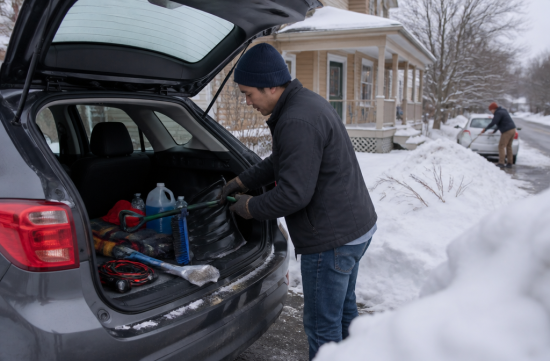
A few days ago in the morning, I tried to open my car door, but the handle was frozen solid with ice. After finally getting it open, I looked in the trunk and found only a camping chair I had put there last spring.
At that moment, I felt a bit panicked. Maine's winter hits like wasabi, catching you off guard, while my trunk was still stuck in fall.
So this weekend, I put together a winter emergency kit again. I based it on the recommended vehicle preparedness list from the Maine Emergency Management Agency (MEMA) and the Maine Department of Transportation (MaineDOT).
The first item is a shovel. A small foldable shovel can help clear snow around the tires or the exhaust area.
The second item is an ice scraper and a snow brush. The MEMA list includes both a scraper and a broom separately.
This isn't just a matter of convenience. Maine has enacted a law in 2023 requiring drivers to take reasonable measures to prevent snow or ice from falling off their vehicles while in operation.
This means driving around with a heavy load of snow on your roof is not only inconsiderate to others but could also be a legal violation. If you have an SUV that you can't reach the roof of, it's better to choose a long-handled brush.
The third item is extra windshield washer fluid. When calcium chloride mixed water splashes, it can quickly fog up your windshield, and if you run out of washer fluid at that moment, you're really in trouble.
The fourth item is jumper cables. Everyone has probably experienced a battery that struggles in the cold at least once.
These days, many people use portable jump starters, but I also keep a set of cables. If the starter runs out of charge, it just becomes a heavy brick.
When using cables, it's good to know the connection order in advance. It's illustrated in the vehicle manual, so read it once and practice holding the clamps with gloved hands to be less flustered in an actual situation.
The fifth item is traction materials. MEMA recommends salt for melting ice and chains or traction mats, while other state emergency management agencies often suggest sand or cat litter.
I keep a small bag of cat litter in my kit. I decided to set aside the irony of a river otter character enthusiast buying cat litter for a moment.
The sixth item is extra warm clothing. The MEMA list includes spare boots, gloves, socks, a warm hat, and waterproof clothing.
It's also good to add a blanket. I noticed that the Pennsylvania Emergency Management Agency checklist includes blankets and hand warmers as well.
Make sure to pack extra socks. If snow gets into your shoes while clearing snow, your feet will get wet, and waiting in the car with wet feet is much colder and more uncomfortable than you might think.
The seventh item is a flashlight and extra batteries. In winter, the sun sets early, so if you stop on the road late in the afternoon, it gets dark quickly.
The eighth item is a phone charger. MEMA advises to pack a phone with emergency contacts saved and an extra charger.
The ninth item is emergency food and water. Non-perishable snacks like granola bars or nuts are sufficient.
Honestly, I wanted to include wasabi seaweed snacks, but I figured if I got thirsty, I would just end up wasting water. Make sure not to fill your water bottle to the brim so it doesn't burst when it freezes.
The tenth item is a brightly colored cloth. MEMA includes a visible colored cloth that can be waved to signal for help in their list.
A gray car is surprisingly hard to see on a snow-covered forest road. Tying a red cloth to your antenna or window can make a significant difference.
Additionally, MEMA recommends having a paper map. It can be useful for explaining your location to rescuers in areas with weak cell signals.
And in winter, it's advised to keep your fuel tank at least half full. This is more of a habit than a kit item, but I believe it's the most important.
If you find yourself stuck in the snow and have to wait in your car, you should check the exhaust pipe first. The CDC warns that blocked exhaust pipes can lead to carbon monoxide poisoning.
Only run the engine briefly to warm up, and keep a window slightly open during that time. Carbon monoxide is scary because it has no smell or color.
While waiting in the car, it's good to periodically clear the snow around the exhaust pipe. If the snow keeps blowing, the cleared area can quickly fill up again.
Lastly, consider the storage location as well. It's advised to keep items like blankets, chargers, and flashlights on the back seat floor in case the trunk won't open due to an accident.
I keep a shovel, sand, and cables in the trunk, and I have a small bag set aside inside the car. An emergency kit should be easy to access.
After gathering everything, the trunk felt a bit heavier, but my mind felt much lighter. No matter how harsh the snowy roads are this winter, for those who are prepared, it's just a prickly season.
 MyHeadBack



 Silent Sea |

 Noodle Noodle |

 figtop |

 Toaster Pizza Magic Show |
 DO Main TODAY |

 cookiefox |



 US Regional Information Blog |

 milkyotter |
 sun walker |
 Hawaii Tourist Information |
 savannah choi |
 glimmer |
 Hot Seat Driver |
 Thou Thou |
 Supplemental Security Income (SSI) Information |
 Breaking Bad Drama |
 San Jose Pop |
 Gook Rule |
 UCLA Captain |
 Asparagus Blog |
 US Regional Information Local News |
 Joseon Dynasty Seal Enthusiasts |
 zestorbit |
 Lemon Kim |
 blueman |
 Alabama Bang |