

Living in San Jose, Nvidia doesn't feel like just another company.
The headquarters is right next door in Santa Clara, and there are many Nvidia employees or people working in related industries around.
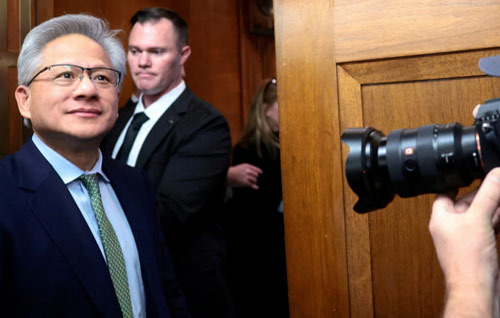
Having witnessed the rise and fall of numerous companies in Silicon Valley until now at the age of 45, Jensen Huang's resignation is quite shocking.
The person who co-founded the company in 1993 and led it for 33 years stepped down from the CEO position overnight.
However, aside from personal issues, there's something I'm curious about.
How much financial loss did Nvidia incur with Jensen Huang's departure?
I calculated it numerically, excluding emotional assessments.
First, let's look at the stock market reaction.
On November 12, when the news of Jensen Huang's resignation broke, Nvidia's stock price dropped by as much as 14% during trading.
According to Bloomberg, the market capitalization that vanished in that moment reached up to $601 billion.
If we assume an exchange rate of 1,450 won to 1 dollar, that's about 871 trillion won.
It's an amount that could be compared to the annual budget of a considerable country, evaporating in just a few hours.
However, it's important to note here.
This money is not cash that has left the company's bank account.
The stock price drop means that the valuation of the shares held by shareholders has decreased.
In fact, on that day, Nvidia's stock price recovered a significant portion of its losses, closing down 4.3%.
Therefore, calling the $601 billion a confirmed loss would be an exaggeration.
So, what about the long-term losses?
Before Jensen Huang's departure, Nvidia's enterprise value once exceeded $5 trillion.
By mid-November, it had dropped to around $4 trillion.
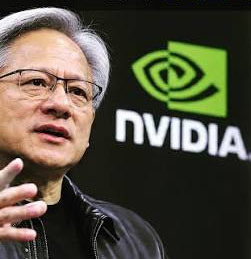
However, we cannot attribute the entire difference to Jensen Huang's resignation.
Concerns about overheating AI investments, semiconductor export regulations, data center investment outlooks, interest rates, and overall market movements also play a role.
Attributing the entire stock price drop to one person's responsibility without distinguishing these factors is not an objective analysis.
In fact, the actual business performance remains solid.
Nvidia's quarterly revenue announced on November 17 was $115.8 billion, exceeding market expectations.
This is a 103% increase compared to the previous year.
This means that customers did not suddenly cancel GPU orders just because the CEO left.
Now, let's calculate the potential losses that could occur in the future.
If we assume the enterprise value post-resignation is around $4 trillion and that investors evaluate the enterprise value 5% lower due to Jensen Huang's absence, that would be $200 billion.
If it's 10%, that would be $400 billion.
Of course, this is not an actual loss but a hypothetical scenario quantifying the risks associated with a change in management.
More importantly, it's about the employees and customers.
Jensen Huang is not just a simple CEO; he has directly led the direction of technology development and key customer relationships.
If key talents leave the company or major customers start shifting orders to competitors, that's when actual sales and profits will be impacted.
Conversely, if the new CEO can maintain existing technology development plans and customer relationships stably, the long-term losses may be smaller than expected.
From the perspective of someone living in San Jose, this situation makes me realize once again.
Even a company with a multi-trillion dollar enterprise value can be significantly shaken by the presence of one person.
The time to verify whether Nvidia is truly a strong company is now.
If it can grow without Jensen Huang, Nvidia will be a fully established global company.
If not, it would mean that a significant part of the enterprise value assessed by the market so far has been attributed to Jensen Huang's personal abilities.
It seems that the results over the next 1-2 years will reveal the answer.
 MacaronHero
 BigYamPop







 Dallas Cowboys |

 tredon |


 Street Smart Blog |

 Noodle Noodle |
 DaeBak Electronics CNET |

 Moscow Kim |

 Western US Medical Student Association |

 Haha and Bomi Blog |

 U.S. Weather Bureau News |
 savannah choi |
 glimmer |
 Hot Seat Driver |
 Thou Thou |
 Supplemental Security Income (SSI) Information |
 Breaking Bad Drama |
 San Jose Pop |
 Gook Rule |
 UCLA Captain |
 Asparagus Blog |
 US Regional Information Local News |
 Joseon Dynasty Seal Enthusiasts |
 zestorbit |
 Lemon Kim |
 blueman |
 Alabama Bang |
 Soy Angelino |
 puddingcat |
 Coco Chanel |