
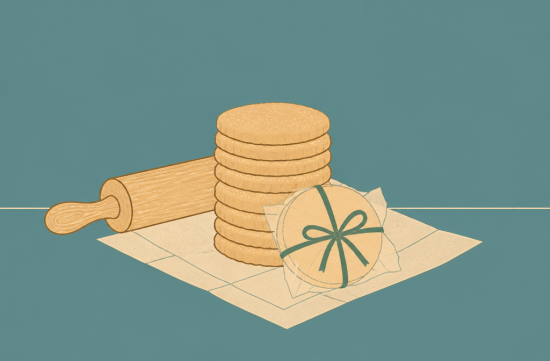
These days, as I walk past the local grocery store, I start to think about it. In a few months, a folding table will be set up at the entrance, and little kids in green vests will be standing there with stacks of cookie boxes.
I can't just walk past that table. Two boxes of Thin Mints are a must.
However, the other day, a customer asked me if Girl Scouts started in Savannah and whether they sold cookies from the beginning. Honestly, I couldn't answer.
So, I did some proper research this time. To cut to the chase, they didn't sell cookies from the start.
The Girl Scouts began on March 12, 1912. That's the day Juliet Gordon Low gathered 18 girls in Savannah for their first meeting.
Some museum records mention 17 girls, but official documents and the Georgia Historical Society state it was 18, so I'll go with that.
The original name wasn't Girl Scouts; it was American Girl Guides. A year later, it was changed to the Girl Scouts we know today.
Juliet Gordon Low was born in Savannah on October 31, 1860. The home on Oglethorpe Avenue was purchased by Girl Scouts of the USA in 1953.
That house was reportedly in a state of disrepair at the time. Thanks to its purchase and restoration, it still attracts groups of uniformed kids from all over the country.
In 1965, it was designated a National Historic Landmark, and later it became part of a historic district along with the Andrew Low House.
The carriage house behind the Andrew Low House was the first headquarters. When Low passed away in 1927, he left the building to the local Girl Scouts, and it was actually used until 1986.
Now, let's move on to the cookie story. The earliest recorded cookie sale was in 1917, five years after the founding.
However, it didn't take place in Savannah. It was by a troop called Mistletoe Troop in Muskogee, Oklahoma.
These kids baked sugar cookies in their mom's kitchen, wrapped them in wax paper, and sold them in the school cafeteria. Official records describe this as a service project.
This part resonated with me the most. It wasn't a grand plan; it started in neighborhood kitchens. That's how kimjang (making kimchi) originally began, too.
The nationwide spread began in 1922 when a cookie recipe by Florence Neil, the Chicago area director, was published in the July issue of the Girl Scouts magazine, The American Girl.
The cost of ingredients was 26 to 36 cents for 6 to 7 dozen, and there were instructions to sell them for 25 or 30 cents a dozen. A recipe that even calculated costs—now that's a real business textbook.
In the 1920s, kids packaged these homemade cookies in wax paper bags, sealed them with stickers, and went door to door selling them.
In 1933, Philadelphia Girl Scouts sold cookies in the windows of a gas company. A box of 44 cookies was 23 cents, and six boxes cost $1.24.
The first factory-baked cookies were also sold in Philadelphia in 1934. Starting in 1936, the national headquarters began licensing commercial bakeries.
It was like the moment when homemade dishes transitioned to being sold in stores. The taste might have changed a bit, but it allowed people everywhere to buy the same cookies.
There were times when cookie sales stopped. During World War II in 1944, there was a shortage of sugar, flour, and butter, so they sold calendars instead of cookies.
In 1951, three varieties were introduced: Sandwich, Shortbread, and Chocolate Mints, with the Chocolate Mints being the original Thin Mints. It's nice to know my favorite has been around for over 70 years.
They also started setting up tables in shopping malls to sell cookies that same year, 1951. That's where the scene outside grocery stores originated.
Nowadays, you can also order online through Digital Cookie, which was established in 2014. Since 2021, all products have received kosher and halal certification.
To summarize, the Girl Scouts started in Savannah in 1912, cookies were first sold in Oklahoma in 1917, and the national sales system began in 1936.
What struck me more than the price tags in this story was the order of events. It's about kids baking, calculating costs, and selling to local adults.
In an age where everything ends with an app, I believe the experience of a child looking a stranger in the eye and asking, "Would you like to buy some cookies?" is an invaluable lesson that money can't buy.
So, this year, don't just walk past the tables outside the grocery store. I plan to buy two boxes of Thin Mints and a box of Trefoils to share with my guests.
Next time, I'll share my experience from the home tour, along with tips on avoiding peak times for group visits.
 ChillVibeRider



 San Jose Pop |
 Princess Park |

 Art patch |

 Rice Shop Uncle BLOG |
 Noodle Noodle |

 Dr. DHA Marine |
 bravo777 |

 InJung Gu |

 Hawaii Tourist Information |
 savannah choi |
 glimmer |
 Hot Seat Driver |
 Thou Thou |
 Supplemental Security Income (SSI) Information |
 Breaking Bad Drama |
 Gook Rule |
 UCLA Captain |
 Asparagus Blog |
 US Regional Information Local News |
 Joseon Dynasty Seal Enthusiasts |
 zestorbit |
 Lemon Kim |
 blueman |
 Alabama Bang |
 Soy Angelino |
 puddingcat |