
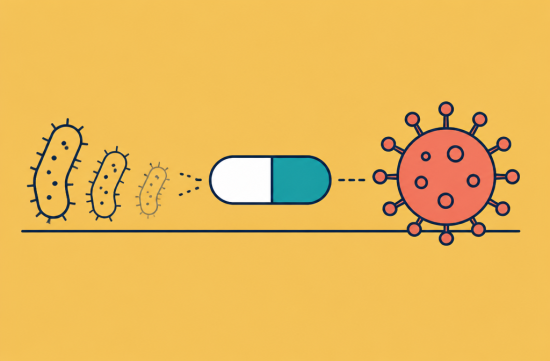
Last week, I had a scratchy throat and a runny nose, so I ended up taking a half day off and went to the clinic. After three days of suffering, I decided to ask for some antibiotics.
However, the doctor examined my throat and ears, listened with a stethoscope, and told me it was a viral cold, advising me to rest and drink plenty of fluids. When I brought up antibiotics, he smiled and firmly said that they wouldn't help.
Honestly, I felt a bit disappointed at that moment. In Korea, I'm used to receiving a bag of medication when I visit the doctor for a cold. I had paid for the consultation, and it felt like I was leaving empty-handed, even thinking it was a waste of my copay.
When I got home, I became determined to look it up myself. To cut to the chase, the doctor was right.
Antibiotics are medications that kill bacteria. Colds are mostly caused by viruses, and antibiotics do not work on viruses at all.
According to CDC guidelines, colds, runny noses, flu, most sore throats, and most bronchitis (commonly referred to as chest colds) are illnesses that antibiotics cannot treat. The exception among sore throats is streptococcal pharyngitis, or strep throat.
So, taking antibiotics for a viral cold won't help you recover faster. It's easy to mistake the natural recovery time as being due to the medication.
I remember taking antibiotics in the past and getting better, but looking back, I probably just recovered naturally after about a week. It was a bit embarrassing.
You might think that there's no harm in just taking them. I thought the same way, but that's not the case.
Antibiotics also have side effects. Common ones include allergic reactions, diarrhea, and stomach pain, and CDC data shows that antibiotics are a common cause of emergency room visits due to drug side effects.
They can also kill good bacteria in your gut, leading to the spread of a bacteria called C. diff, which can cause severe colitis. It would be really frustrating to experience this after taking unnecessary medication.
A bigger issue is antibiotic resistance. The more antibiotics are used, the more bacteria that survive develop resistance to the drugs.
According to the CDC's 2019 report on antibiotic resistance threats, there are over 2.8 million antibiotic-resistant infections in the U.S. each year, resulting in more than 35,000 deaths. I was truly shocked by this number.
Yet, prescriptions are still given out more than you might think. The CDC reports that at least 28% of antibiotics prescribed in outpatient settings in the U.S. are unnecessary.
This figure comes from a study analyzing outpatient and emergency room prescriptions from 2010 to 2015. It means that nearly three out of ten prescriptions were for medications that weren't needed.
CDC's old campaign materials also mentioned that when diagnoses are unclear, doctors are more likely to prescribe antibiotics if patients strongly request them. Ultimately, patients like me who insist on getting them contribute to this statistic.
That's why these days, American doctors are reluctant to prescribe antibiotics to cold patients. It's not out of annoyance; they're following the guidelines.
Of course, there are situations where antibiotics are necessary. If you have a severe sore throat and a fever, the doctor will perform a strep test and prescribe antibiotics if bacteria are confirmed.
Sinusitis, or sinus infection, usually resolves on its own, but if symptoms persist for more than 10 days, are severe from the start, or improve and then worsen again, they will consider the possibility of a bacterial infection.
Just because you have yellow mucus doesn't automatically mean it's a bacterial infection. I used to think that the color of my mucus indicated when it was time to take antibiotics.
Ultimately, whether or not to prescribe antibiotics depends on the duration of symptoms, fever, and test results, as determined by the doctor. I learned that it's not a decision made just because the patient wants it.
So, what should you do when you catch a cold? First and foremost, get plenty of rest and drink enough fluids.
If your nose is congested, saline spray can help, and for fever or body aches, many people manage with over-the-counter pain relievers. However, be sure to consult with a doctor or pharmacist about which medications are right for you.
If you're having trouble breathing, have a high fever that persists, or if your fever goes down and then comes back, you should not hesitate to seek medical attention again. There's a limit to how much you can endure. Enduring is not always the best option.
If you were prescribed antibiotics, make sure to finish the entire course even if your symptoms improve, and do not save leftover medication for the next cold or share it with family members.
This time, I ended up recovering after a full week without any medication. I made ginger tea, went to bed early, and managed to get through work with the bare minimum.
Now, instead of asking for antibiotics at the clinic, I plan to ask whether my illness is bacterial or viral and when I should return. Those are much more useful questions.
There was no reason to feel disappointed for not getting antibiotics. I believe it's better to conserve them now so that they will work effectively when they are truly needed later.
 FlipperSkate




 hihihi |
 fruitflash |
 Anjollinya Blog |

 United States Army |

 premium |

 oneonly |

 So is multiplied by So, So Ji-sub |

 icotla |

 biscuitz |

 Joseon Dynasty Seal Enthusiasts |
 zestorbit |
 Lemon Kim |
 Noodle Noodle |
 blueman |
 Alabama Bang |
 Soy Angelino |
 puddingcat |
 Coco Chanel |
 Nando Raldo |
 The 2000 |
 Mr Bull Jung |
 American Travel Cruise Information |
 vanillatop |
 namico |
 Karina's Blog |
 ASURA |
 Misstic M |
 parlon |
 Mrs New Mex |