

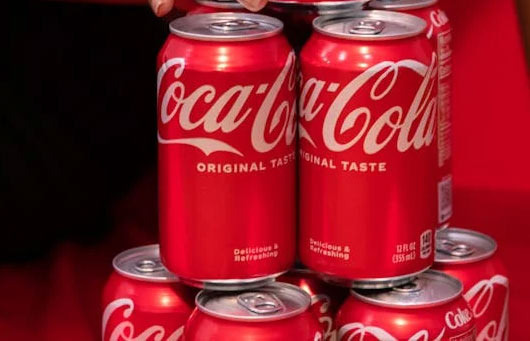
Coca-Cola (The Coca-Cola Company) is one of the most famous beverage brands in the world, born in Atlanta, Georgia, in 1886.
Initially, it started as a somewhat experimental drink, but it later gained popularity worldwide and became a dominant brand in the beverage market.
Coca-Cola began with a drink created by pharmacist John Stith Pemberton in 1886.
At that time, Pemberton aimed to develop a drink containing various medicinal ingredients, and among them, a drink containing cocaine and caffeine was the precursor to Coca-Cola.
This drink was first sold at a pharmacy in Atlanta, and because it was sold at a pharmacy, it was also referred to as a 'cocaine drink.' At that time, Coca-Cola was primarily sold with the expectation of medicinal benefits and was advertised as being good for health.
Pemberton kept the ingredients of Coca-Cola secret and gradually began to promote the drink to the public. Coca-Cola was initially sold for 5 cents at pharmacies and quickly gained popularity.
In 1888, entrepreneur Asa Candler purchased the commercial rights to Coca-Cola, marking the beginning of significant growth for the Coca-Cola brand.
Asa Candler began large-scale production of Coca-Cola and promoted it to the public through advertising and marketing. His method of selling it in bottles was a great success, and Coca-Cola gradually established itself as a national beverage. In particular, the Coca-Cola bottle was seen as very innovative at the time.
Coca-Cola began expanding into international markets in the late 1890s, with Canada and Mexico being the first overseas markets. It then rapidly expanded into various regions, including Europe, Asia, and the Middle East. In the 1920s, Coca-Cola advertisements were broadcast in many countries around the world, playing a crucial role in increasing the brand's global recognition.
During World War II, Coca-Cola's efforts to supply the drink to American soldiers helped raise awareness of Coca-Cola in more countries, and it became an important symbol at U.S. military bases. The demand for Coca-Cola surged in the global consumer market.
Over time, Coca-Cola has undergone various innovative changes. For example, Diet Coca-Cola was launched in 1982, and Coca-Cola Zero was introduced in 2005, leading the low-calorie beverage market. Additionally, in 2009, drinks like Coca-Cola Light were launched to meet the needs of different markets.
Coca-Cola has expanded not only in the carbonated beverage market but also into various beverage markets such as energy drinks, tea drinks, and sports drinks. These changes reflect the diverse demands of consumers. Since 2015, Coca-Cola has adopted a new trend of healthy beverages, actively entering the health-oriented beverage market.
Coca-Cola is a beloved drink in many countries around the world, with its history and culture deeply intertwined in various locations.
Atlanta, Georgia: Atlanta, the birthplace of Coca-Cola, is one of the most important points in Coca-Cola's history. It is home to the Coca-Cola headquarters and the Coca-Cola Museum, along with various facilities commemorating Coca-Cola. Additionally, Coca-Cola-related events are held annually in Atlanta, serving as an important element in maintaining a deep connection with the brand.
The Coca-Cola Museum: The 'World of Coca-Cola' museum located in Atlanta is a famous attraction visited by tourists from around the world. This museum showcases the development of Coca-Cola through various exhibitions related to its history, advertising, and marketing.
Coca-Cola City: As a global brand, Coca-Cola has iconic locations known as Coca-Cola City in several countries. Notable examples include Jakarta in Indonesia and São Paulo in Brazil, and these places are closely linked to Coca-Cola's brand image.
Coca-Cola has launched many innovative advertising campaigns to promote the brand. The "Coca-Cola Christmas advertisement" is particularly famous, and the ads featuring Santa Claus have become an annual tradition. Coca-Cola has also engaged in extensive marketing through its connections with the sports and music industries.
Coca-Cola and Sports: Coca-Cola has consistently sponsored major sporting events such as the Olympics and the World Cup, playing a significant role in enhancing the brand's global recognition. Notably, Coca-Cola was an important partner during the 2008 Beijing Olympics and the 2014 Brazil World Cup, consistently making its presence felt at these sporting events.
Coca-Cola and Music: Coca-Cola has a deep connection with the music industry as well. Through Coca-Cola concerts and music festivals, the brand has strengthened its association with music, targeting younger audiences through this marketing approach.
Major Production Facilities in the U.S.
Coca-Cola operates several production facilities across the United States, with the following being the major ones:
Atlanta, Georgia: This city, where the Coca-Cola headquarters is located, has major production facilities.
Dallas, Texas: Dallas, Texas, has a large-scale Coca-Cola production facility that plays a crucial role in meeting the local demand.
Chicago, Illinois: Chicago, a logistics hub in the Midwest, houses major Coca-Cola production and distribution facilities.
Los Angeles, California: To meet the demand in the western region, a Coca-Cola production facility operates in Los Angeles.
Philadelphia, Pennsylvania: Philadelphia, a major city in the eastern region, also has Coca-Cola production facilities.
These facilities produce a variety of beverage products to meet the demands of each region, playing a vital role in strengthening Coca-Cola's competitiveness in the U.S. market.





 fortbliss |
 Folding Instructions |
 yentra |
 Cali M Law Group |
 quanta7 |
 Darnignac |
 Delicious Food Finder |
 Belgray Miscellany |
 Holy Cow |
  Korean Mom |
  My NYC |
  moo moo |
  Mr Oh |
  forevergee |
  festival |
  manchester |
  constant |
  Leapfrog Move |
  vibranto |
  Tora Tora |
  yellowbutter |
  Dolly |
  US Embassy |
  NYC saladbar |
  Finding Superfoods |
  lightyear |
  song bang |
  vexomo |
  Indiana Jones |