

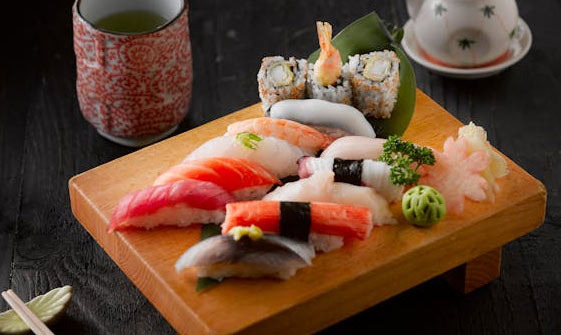
Thanks to its image of being healthy and fresh, it has consistently gained popularity across generations, and the actual scale and influence of the industry make its significance even more apparent. Currently, there are tens of thousands of establishments operating in the U.S., combining Japanese restaurants and sushi specialty shops.
It is estimated that there are about 22,000 Japanese restaurants and over 16,000 sushi specialty shops, with a trend of gradual annual increase. They are particularly concentrated in major metropolitan areas on the West and East Coasts, such as Los Angeles, San Francisco, and New York, and places like Hawaii, which are geographically close to Japan, offer more opportunities to experience traditional Japanese cuisine.
The market size is also considerable. The Japanese restaurant market is estimated to be in the early $30 billion range, while the sushi restaurant market has grown to the mid $30 billion range. It occupies a significant share in the U.S. dining industry, beyond just being one category of dining. The annual growth rate has been steadily around 3-5%, indicating stable expansion is expected in the future.
Consumption channels are diversifying as well. Sushi, which was once only available in Japanese restaurants, is now commonly consumed in large supermarkets and grocery channels. In fact, one of the largest retailers in the U.S. sells millions of sushi rolls each year, accounting for a significant portion of overall consumption. In other words, sushi has established itself as "food that can be easily bought and eaten near home" rather than just a special dining menu.
This growth is leading to investments and M&A by global companies. Japanese trading companies and food-related businesses are acquiring local sushi companies in the U.S., strengthening their position in the U.S. market while leading global trends. This aligns with the assessment that the sushi market consumed in the U.S. is larger than that in Japan, showcasing the strength of Japanese cuisine in the U.S.
The economic ripple effects are also significant. Jobs are being created not only for chefs, servers, and baristas working in Japanese restaurants but also in various fields such as seafood import and distribution, agricultural and seasoning supply chains, and logistics and refrigeration facilities. In particular, the demand for high-value seafood such as tuna, salmon, and eel is directly linked to the air transport and frozen distribution industries, forming a major pillar of the seafood supply chain in the U.S.
The future trends are health, sustainability, and technology. Consumers prefer low-calorie, high-protein menus and place importance on using eco-friendly ingredients through sustainable fishing. Additionally, the integration of technology such as automated ordering and robotic sushi chefs is gradually spreading.
In summary, Japanese cuisine in the U.S. has established itself not just as a foreign food but as an important economic and cultural industry. With infrastructure spread around major cities, a stable growth trend, and creative menus leading global trends, the popularity of Japanese cuisine in the U.S. is expected to continue steadily.





 Yellow Snowman |
 Moscow Kim |
 Seattle - Emerald City |
 self-evaluation |
 Sandiego Auntie |
 Darnignac |
 Delicious Food Finder |
 Belgray Miscellany |
 See It |
  dralix58 |
  Gorama Round |
  Skydiving |
  dreamport |
  Toaster Pizza Magic Show |
  velvetnom |
  Anytime Journey |
  Mrs. Duluth |
  jaxter |
  Atlanta Mama |
  Baguette Blog |
  US Embassy |
  Korean Mom |
  My NYC |
  moo moo |
  Mr Oh |
  forevergee |
  festival |
  manchester |