
A few days ago, while cleaning out my inbox, I discovered a bank notification email that had been buried in my spam folder. It was nothing serious, but it still made my heart drop.
But what if that had been a notice of license suspension? Starting this October, in Florida, this scenario is no longer just a thought experiment.
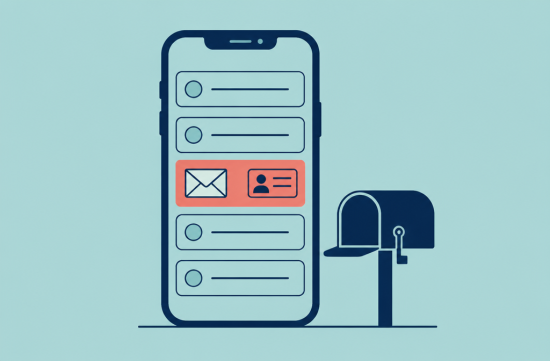
The Florida Highway Safety and Motor Vehicles, commonly known as FLHSMV, will be able to send notifications of license cancellations, suspensions, revocations, and disqualifications via email starting October 1, 2026. This change comes from SB 488 and SB 490, which passed in this year's legislature.
Until now, state law required these notifications to be delivered in person or sent via regular mail to the last registered address. A single paper letter was a signal that could change a driver's daily life.
However, not everyone will suddenly receive emails. Notifications can only be sent via email if the driver has agreed to receive them that way.
One point that caught my attention is that even if you did not receive or open the notification, the effective date of the suspension order will not be postponed.
In other words, emails that end up in the spam folder or are overlooked due to a busy schedule can still be treated as legally delivered notifications. I found myself checking my inbox again after reading that.
The accompanying SB 490 addresses privacy concerns. It states that the state will exclude driver email addresses collected for general notification purposes from public records.
This exception will automatically expire on October 2, 2031, unless the legislature reviews and extends it beforehand.
I found this aspect quite reassuring. If they were asking for my email address and that address was made public, who would willingly agree to that?
In fact, there were many loopholes with mail notifications. For people who move frequently, seasonal snowbirds, or those living in neighborhoods where mailboxes often get mixed up, it was common for letters not to arrive on time.
In that sense, email is certainly a faster and more accurate method. It reduces administrative costs and allows you to check your status from anywhere with just a smartphone.
However, for someone like me who travels between Korea and the U.S., a different concern arises. With multiple accounts for Korean portal mail, work emails, and old personal emails, I can hardly remember which address I registered.
It's also easy to mistake an official email for an advertisement just by looking at the subject line. Many in my parents' generation hardly open emails at all.
So, rather than blindly welcoming this new system, I decided to first take care of what I need to prepare on my end. It's not as difficult as it seems.
First, if you plan to agree to email notifications, register only one address that you actually check daily. Using an old address that you rarely check is the most dangerous option.
Second, check to see if emails from FLHSMV are being filtered into your spam folder. Just adjusting your inbox filters can provide peace of mind.
Third, if your email address changes, update your information immediately. State law already requires you to report address changes within 30 days, so you can manage your email in the same way.
Fourth, make it a habit to occasionally check your license status directly. You can verify your current status by entering your license number in the license status inquiry service on the FLHSMV website.
If you are in Lee County, you can handle driver's license matters at the county tax collector's office, so if you find online processes daunting, you can make an appointment and ask in person.
Also, those who do not agree to email notifications will continue to receive mail notifications as before. Therefore, it's essential to keep your mailing address up to date.
And there's one more thing to remember. Whenever there are changes in such systems, scam messages often follow.
This past spring, there was a text scam impersonating the Florida DMV, claiming that licenses would be suspended and prompting people to click on links. Do not make payments through links in emails or texts, and if in doubt, go directly to the official site to verify.
If you have parents or elderly neighbors, it might be a good opportunity to sit down with them and help them organize their inboxes. Just asking them to let you know when they receive English notifications can be a big help.
In the end, I decided to agree to receive email notifications. Instead, I chose one address I use regularly to register and set up phone alerts.
I believe that the shift to digital administration cannot and should not be stopped. However, I hope that guidance and language support will increase so that everyone can keep up with the pace of change.
The days when paper letters waited in our mailboxes are slowly coming to an end. It seems we are now in an era where we must seek out our emails first.
Tonight, I recommend having a cup of tea and checking your spam folder. You might find an unexpected letter quietly waiting there.
 IUSuperfan






 sun walker |
 Let's Be Like a Salt-like City Person |
 Springs Korea |
 US Legal Consultation on Trials |
 Study Abroad Life Know-How Tips |
 Vision XT |
  Way to easy |
 Joyce 77 |
 Blog Korea |
 Jimbeam 88 |
 valtri |
  August Snowman |
  Pirate Ship Popcorn Maker |
  USA Business News |
  Samsung My My |
  bubblo |
  tartbear |
  Washington Monument |
  Forever Young |
  crystalx |
  Spaghetti Flying Religion |
  lunarpath |
  Another Eden Channel BLOG |
  sprinkletop |
  bongo |
  savannah choi |
  Successful Manager Kim's Team |
  crystalo |
  Canvas Pro Blog |