
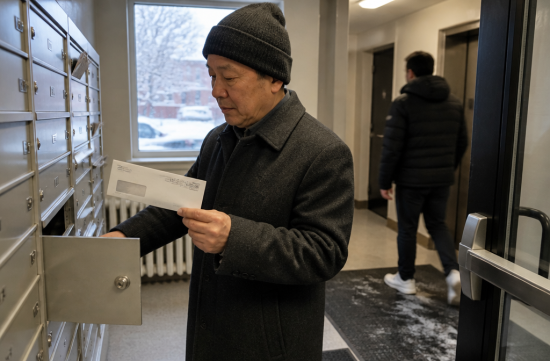
Every year around this time, I have a message for renters that I feel is important to share. A single document from your landlord, due by the end of January next year, can determine whether you receive hundreds of dollars, or even over $2,000 in refunds.
This document is the CRP, officially known as the Certificate of Rent Paid. Without this CRP, you essentially cannot even start the Minnesota Renters Credit process.
Let's first clarify the system. The Renters Credit is a refund-type credit that acknowledges a portion of the property taxes paid by the landlord is included in the rent paid by the tenant, and the state government reimburses that amount.
The fact that it's a refund is important. Even those who owe no taxes can receive money back if they meet the criteria.
According to the Minnesota Department of Revenue, the maximum amount for the 2025 tax year is $2,720. However, this is just a cap, and the actual amount varies based on income, rent paid, and household situation.
The income threshold is set at a household income of less than $77,570. Household income is calculated by subtracting certain items from your federal adjusted gross income.
The items that can be deducted include dependents, if you or your spouse are over 65 years old, or if you have a permanent disability. Therefore, even with the same salary, families with children or older members may receive a higher amount.
There are also a few eligibility requirements. You must have an SSN or ITIN and be a resident of Minnesota (including some periods of residency).
You cannot be listed as a dependent on someone else's tax return. Additionally, the building you lived in must be one that pays property taxes or equivalent payments.
Mobile homes are a bit different. Those renting a mobile home can apply, but if you own the home and only pay for the land lease, you are not eligible for this credit.
It's also important to note changes in the system. Previously, a separate document called M1PR was required for application, but now you attach Schedule M1RENT to your income tax return Form M1 to claim it together.
From my long observation of this market, I find this change both welcome and concerning. While the process has become simpler, there is a risk that those who haven't filed income taxes may completely miss out on this credit.
Now, back to the CRP. The CRP for rent paid in 2026 must be provided to tenants by the landlord or property management company by January 31, 2027.
If you lived in two places during the year, you will need two CRPs. One will be issued for each rental unit.
In cases where roommates or couples live together, each adult tenant will receive their own CRP, even if the rent is split equally. It's important to note that it doesn't matter who actually paid more rent.
The landlord also has significant obligations. According to the state Department of Revenue, landlords must complete and submit the CRP via e-Services, and failing to issue it can result in a $100 fine.
So, what should you do if the CRP doesn't arrive after January? There are two options.
The first is to request a correction or reissue from the landlord or property management company. This also applies if the amount is incorrect; you should first ask the landlord to correct it.
The second option is to request a Rent Paid Affidavit, abbreviated as RPA, from the state Department of Revenue if the issue remains unresolved. The RPA is issued starting February 1 each year, and you can call 651-296-3781 or 1-800-652-9094 for inquiries.
When applying with the RPA, you must provide proof that you paid rent. Therefore, I recommend gathering copies of checks, bank transfer records, or rent receipts in one folder starting now.
There are two ways to file. You can either file electronically using tax software or download Form M1 along with Schedule M1REF and Schedule M1RENT to mail them in.
If you are mailing, you must include copies of all CRPs received that year. The state Department of Revenue clearly states that missing documents can delay or result in the rejection of your refund.
The deadline is April 15, 2027. However, those who are originally not required to file income taxes can claim within three and a half years from this date.
There may also be instances where the rent paid exceeds the income. In this case, you can still apply, but you must include an explanation of how the rent was paid.
In the legislature, there has been discussion about a bill (HF 2499) to significantly raise the income threshold and maximum amount. However, as of the time of writing this article, the final passage status is not confirmed, so it's best to wait for official numbers from the state Department of Revenue.
The maximum amount and income threshold for the 2026 tax year may also be adjusted according to inflation. Use the above figures as a guideline, but be sure to check the Schedule M1RENT guide for that year before filing.
In summary, if you are a tenant who meets the income criteria, check if your CRP has arrived in January, apply for the RPA in February if it hasn't, and file with M1 before April 15.
Over the years, I have seen many Korean tenants miss out on credits not because they didn't know about them, but because they delayed submitting a single document. If I were you, I would make sure to keep a copy as soon as the CRP arrives this year.
 MorningHarbor80







 Dolly |
 B.I.G. Victor |

 Amber H |
 uplifted |
 Dr. Kelso |

 chiobase |

 ronspot |

 corner |

 tarve7 |
 Something is popping in the situation |
 homan |
 The Yellow |
 love ya |
 virex |
 U.S. Weather Bureau News |
 korvex93 |
 nougatpop |
 milkyotter |
 sun walker |
 Hawaii Tourist Information |
 savannah choi |
 glimmer |
 Hot Seat Driver |
 Thou Thou |
 Supplemental Security Income (SSI) Information |
 Breaking Bad Drama |
 San Jose Pop |