
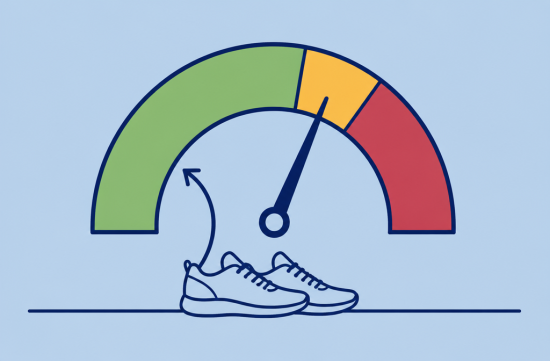
If you receive your health check results and see the number 5.7 in the A1C section, what do you do? Most people think, "Isn't diabetes diagnosed at over 6.5?" and put it away in a drawer. I did the same thing at first.
However, this number 5.7 carries more significance than you might think. November happens to be American Diabetes Month, so I decided to put together some information.
First, let's clarify the standards. An A1C between 5.7% and 6.4% indicates prediabetes, while 6.5% or higher is the diagnostic threshold for diabetes.
In terms of fasting blood sugar, a range of 100 to 125 mg/dL corresponds to prediabetes. So, 5.7 doesn't mean "everything is fine"; it means "this is where the warning light starts."
The numbers are even more surprising. According to CDC and NIDDK data, as of 2021, over 97.6 million adults in the U.S., or more than one in three adults, had prediabetes.
The bigger issue is that many people are unaware of their condition. The American Diabetes Association reports that 8 out of 10 people with prediabetes do not know they have it. It's like driving with the warning light on without looking at the dashboard.
If you're Asian, there's one more thing to keep in mind. Asians tend to have a higher risk of diabetes even at relatively lower weights, which is why various programs apply a BMI threshold of 23 instead of 25.
For those saying, "I'm not that overweight!" that complacency can be a trap. If you're 170 cm tall and weigh around 67 kg, your BMI is already over 23.
So, if you receive a 5.7, what should you do? This is where today's main topic comes in: the National Diabetes Prevention Program (National DPP), certified by the CDC.
This program doesn't prescribe medication; it's a year-long course focused on changing lifestyle habits. Participants learn about diet, exercise, and stress management in a group setting with a coach.
The goals are quite realistic. Aim to lose 5-7% of your body weight and engage in about 150 minutes of exercise per week, like walking. For someone weighing 80 kg, that's about 4-5.6 kg.
The effectiveness is backed by numbers. In a landmark study involving 3,234 participants, those in the lifestyle intervention group had a 58% reduction in the risk of developing type 2 diabetes.
CDC reports that for those over 60, the risk reduction was 71%. Honestly, with numbers like these, there's not much reason not to participate.
There are also 10-year follow-up results. Participants had a one-third lower likelihood of developing diabetes compared to the comparison group after 10 years. This shows that once habits are formed, they tend to stick.
Of course, reality is different from the lab. A study analyzing actual participants from 2012 to 2016 found that only 35.5% achieved the 5% weight loss goal. The average weight loss was 4.2%, slightly below the target.
So, just signing up won't create magic. Ultimately, you have to take action. We all know people who just buy a gym membership and donate without actually going.
Now, let's talk about costs. If you have Medicare Part B, you can participate in the Medicare Diabetes Prevention Program (MDPP) at no cost to you.
Eligibility requires a BMI of 25 or higher (23 or higher for Asians) and a recent blood test showing an A1C in the prediabetes range of 5.7-6.4%. If you've already been diagnosed with diabetes or end-stage renal disease, you won't qualify.
There's also good news. Starting in 2026, CMS will officially recognize online formats, expanding access to participate from home via video.
This is a significant change for those who find English daunting. It's much easier to connect from home at a comfortable time than to sit in an unfamiliar classroom.
On the local front, in San Antonio, the YMCA of Greater San Antonio has been running a diabetes prevention program in partnership with the Metro Health Department since 2013.
The YMCA program allows anyone over 18 to register, even if they are not a member, and offers classes in both English and Spanish, either in-person or online.
However, according to an October 2025 report, Metro Health's diabetes prevention program could lose 72% of its budget if federal Medicaid funding is cut. It's wise to check directly what programs are currently available.
The easiest way is to use the CDC's certified program search feature by entering your zip code. If you have employer insurance, ask your insurer about DPP coverage first.
In my opinion, this is one of the more cost-effective uses of government spending. Considering the treatment costs for one diabetes patient, investing in prevention for a year is beneficial for taxpayers.
That said, we shouldn't just wait for the government to do everything. Programs are just tools, and ultimately, choosing half a bowl of rice instead of a full bowl at dinner is up to you.
This article is for general information only, and individual circumstances vary. If you're concerned about your test results, please consult a doctor or pharmacist to determine the next steps.
If I were in your shoes, I would open my calendar instead of a drawer when I see a 5.7 on the results and register for a program within this month. With it being Diabetes Month, the timing couldn't be better.
 MoonlightTexas








 zestorbit |

 hihihi |

 fruitflash |

 Anjollinya Blog |
 United States Army |

 Helpful Life Stories |

 alamo |

 Zoom Zoom Zoom |

 Investment Information News Update |

 Texas Migration Story |
 tarve7 |
 Something is popping in the situation |
 chiobase |
 homan |
 The Yellow |
 love ya |
 virex |
 U.S. Weather Bureau News |
 korvex93 |
 nougatpop |
 milkyotter |
 sun walker |
 Hawaii Tourist Information |
 savannah choi |
 glimmer |
 Hot Seat Driver |
 Thou Thou |
 Supplemental Security Income (SSI) Information |
 Breaking Bad Drama |
 San Jose Pop |