
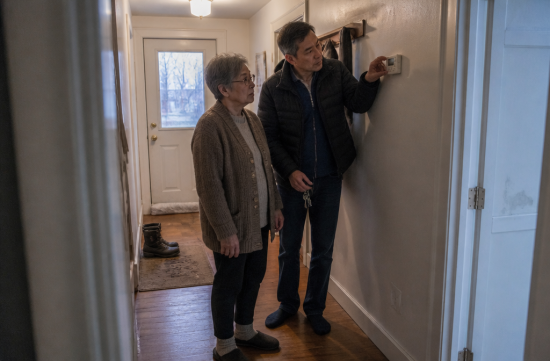
I called my parents in the evening to check on them, but their speech is slower than usual. When I ask if they're feeling unwell, they say, "No, I'm just a bit sleepy," and hang up.
Most people brush it off as just their age. However, if it's a chilly season, we should consider the possibility of hypothermia in this scenario.
When you think of hypothermia, you might picture a lost hiker in the snow. But in my view, this isn't just a rare edge case; it's more like a bug that can occur even in a perfectly normal home.
The National Institute on Aging (NIA) advises that hypothermia can occur in seniors even in homes that are slightly cool, around 60 to 65 degrees Fahrenheit. They recommend setting the heating to at least 68 degrees.
I was a bit surprised by this number. It's not uncommon to see seniors trying to save on heating bills by keeping the thermostat in the low 60s and wearing sweaters.
According to the National Weather Service (NWS), the average low temperature in Augusta for November from 1991 to 2020 is 30.3 degrees Fahrenheit, and by the end of the month, it can drop to 25 to 27 degrees.
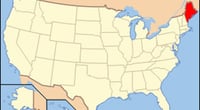
Maine is projected to have a median age of 44.8 years in 2024, making it the oldest state in the U.S., with an estimated 24.6% of the population being 65 or older by the Census in July 2025.
Why is it particularly dangerous for seniors? According to NIH data, as people age, their ability to sense when their body is getting cold diminishes, and their body's response to cold weakens.
Chronic conditions like diabetes and certain medications can also play a role. Common over-the-counter medications, like cold medicine, are included in this, so it's wise to discuss any medications with a doctor or pharmacist.
The real issue arises when they are alone. There's no one nearby to say, "You seem a bit off today."
The NIA defines hypothermia as a body temperature below 95 degrees Fahrenheit, and the CDC advises that if symptoms are suspected and the temperature is below 95, medical attention should be sought immediately.
Early signs identified by the NIA include cold hands and feet, swelling in the face, and pale skin.
Speech may become slow or slurred. They may feel excessively sleepy, irritable, or confused.
Just because they aren't shivering doesn't mean you should relax. The NIA clearly states that there are cases of hypothermia where shivering does not occur.
Changes in speech, drowsiness, and irritability can be detected over the phone. So, if it were me, on a day when a cold snap is forecasted, I wouldn't end the call with just, "Have you eaten?"
I would ask longer-answer questions like, "What's the temperature in your house right now?" or "What did you eat today?" Essentially, it's a ping test for the person.
If it progresses further, their movements may slow down, and they may have difficulty walking or their limbs may jerk stiffly. Heart rate and breathing can slow down, and they may lose consciousness.
At this point, there's no question—call 911. The NIA also advises that even if you don't have a thermometer, if symptoms are present, you should call 911.
If you live far away, make sure to get the contact information for someone who lives next door to your parents. You can't open the door for them over the phone.
While waiting for help, follow the CDC's guidance. Move them to a warm place, remove wet clothing, and warm the core areas of the body—chest, neck, head, and groin—first, wrapping them in a dry blanket.
If they are conscious, warm drinks are fine, but alcohol is not. If they are unconscious, do not give them any drinks, and do not rub their limbs, as advised by the NIA.
When I visit this month, I'll check if the thermostat is set to 68 degrees, block the bottom of the door with a towel, and seal any gaps in the windows.
For those in IT, a remote alert thermostat or Wi-Fi temperature sensor can be quite useful. I can set it up so that if the house drops below 65 degrees, my phone will alert me. However, if there's a power outage, it won't work, so the ultimate backup is still a phone call.
If the reason for not raising the temperature is financial, check out HEAP. Applications for the 2026-27 season opened on August 3 and will close by May 29 next year, but funding may run out before then.
The income limit for a single-person household is $38,070 based on total income for the past 12 months. General inquiries can be made at (877) 544-3271, and applications go through the local Community Action Agency. In Kennebec County, it's handled by KVCAP.
If you find yourself in an urgent situation with an empty oil tank, there's ECIP. This program runs from November 1 to April 30, but you must apply for HEAP first and then contact your local agency, as online applications are not accepted.
During the federal shutdown in 2025, Maine's share of LIHEAP funding was delayed, and I truly believe that heating assistance should not be a pawn in political battles. Winter doesn't wait for Congress to get its act together.
The CDC identifies seniors lacking food, clothing, and heating as high-risk. Spectrum Generations, the Area Agency on Aging for Central Maine, operates Meals on Wheels at (800) 639-1553.
If you need a place during a cold snap, ask 211. You can call or text (ZIP code to 898-211), and since shelter locations change every year, make sure to check before heading out.
Generators can also be a hidden danger during power outages. According to Maine CDC data, more than two-thirds of carbon monoxide poisoning cases occur between November and March. Keep them at least 15 feet away from windows and doors, and do not place them in basements or attached garages.
Eligibility for assistance or health issues can vary based on individual circumstances, so it's best to check with the relevant agencies and professionals. The information I verified is from early November.
I plan to check the thermostat and make a phone call with longer-answer questions. As the outside temperature drops, I'll increase the frequency of my check-in calls.
 KarinaStar






 memorabilia |

 orvian89 |

 looksee 78 |

 vivavida |

 MEDBIO American Doctor Blog |
 cookiefox |
 US Regional Information Blog |



 citrus pop |
 DO Main TODAY |
 korvex93 |
 tacobunny |
 B.I.G. Victor |
 Conflite Teacher |
 cyvera80 |
 Springs Korea |
 Runner Kim |
 Physical Laws and Science |
 Lansinger |
 honey honey |
 dictionary |
 silverleaf |
 Bany T. |
 Korea Forever |
 wavey |
 Valley Bang |
 Enjoying Samba at Home |
 Goroke Geureoke News |