
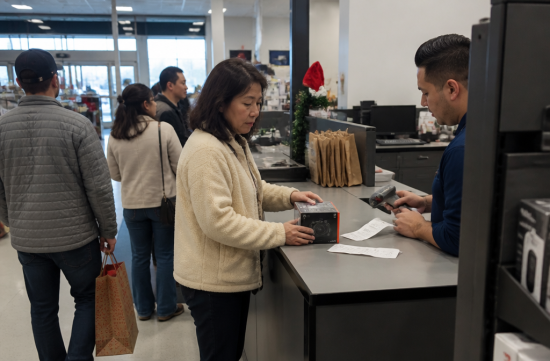
Last year around this time, a friend bought a drone as a gift and went to return it after opening the box. They got a refund, but the amount on the receipt was less than expected. It had a 15% restocking fee deducted.
Hearing that, I decided to check the return policies before buying gifts this year. To sum it up, the deadlines vary by store and even by item within the same store.
First up is Amazon. Most items purchased between November 1 and December 31, 2026, can be returned until January 31, 2027.
However, Apple brand products are an exception. Apple products bought on Amazon have a shorter return window, only until January 15, 2027.
Amazon has stated that this end-of-year return policy will apply every year going forward. However, items that are normally non-returnable will not suddenly become returnable during this period.
Best Buy has its current return guidelines listed on its official return page. Items purchased between October 30 and December 31 can generally be returned until January 15, 2027.
For paid memberships like My Best Buy Plus or Total members, the conditions are slightly different. Items purchased by December 3 can be returned until January 31, while purchases made after December 4 follow the usual 60-day return policy.
There's a catch here. Activatable devices, like phones that require activation, are excluded from the holiday extension and remain at the standard 14-day return period.
Products with third-party contracts, like AppleCare+, and Christmas decorations are also not eligible for the extension. Decorations have a return period of 15 days, regardless of membership.
Additionally, Best Buy calculates the start of the return period from the date the item is received, not the purchase date. This can be advantageous for online orders.
Now, let's talk about the real money drain: restocking fees. Best Buy charges $45 for returning activated devices, excluding prepaid phones.
Many items also incur a 15% restocking fee. This includes drones, digital cameras, camera lenses, camcorders, projectors, projector screens, and high-end scooters.
If you bought a $1,000 camera, that means $150 just disappears. That's quite an expensive lesson for not liking a gift.
Fortunately, unopened items do not incur this fee. So, if you're unsure about the recipient's taste, it's best to check before unwrapping.
Target has its holiday FAQ with dates outlined. Electronics and entertainment items purchased between November 1 and December 24 start their return period on December 26.
This means electronics can be returned until January 24, 2027. Most Target Plus items have the same date.
However, Apple, Beats products, and phones only get a 14-day return window. The deadline is January 8, 2027, so if you wait until after the holidays to check, it might be too late.
The rest of Target's general merchandise follows the original 90-day policy, so no special holiday extension is needed. The basic condition is that items must be unopened and in new condition.
Walmart allowed returns for items purchased between October and December until January 31 last year. Reports suggest it will be similar this year, but I couldn't confirm this on their official page at the time of writing.
Especially for Walmart Marketplace seller items, the rules vary by seller. Even if you bought from the same site, be sure to check who the seller is.
If you live in California, it's good to know this. According to Civil Code Section 1723, stores that do not provide refunds or exchanges within seven days, despite having a receipt, must prominently post their policy.
This must be displayed at the checkout, entrance, on product tags, or on the order form. If they fail to do this, consumers can receive a full refund within 30 days with proof of purchase, as advised by the state attorney general's office.
Conversely, if they have properly posted their policy, it means the store can legally charge a restocking fee or refuse a refund. I think this is fair. If the rules were disclosed in advance, the responsibility for not checking lies with the buyer.
Also, perishable items like food, items marked as final sale, custom orders, and items taken without original packaging are exceptions to this posting requirement.
So, what should you check before buying? First, see if the item is eligible for the holiday extension. Phones and Apple products usually have shorter return periods.
Second, check if it's an item that incurs a restocking fee. The more expensive electronics like cameras, drones, and projectors tend to have higher fees.
Third, make sure to get a gift receipt. This allows the recipient to exchange it without knowing the price, making it easier for both parties.
Finally, distinguish whether it's a Marketplace seller item or a store direct sale. This is where the rules can differ significantly.
My choice is simple. For high-end electronics that are taste-specific, I opt for a gift card instead, and if I must buy an item, I give it unopened along with the receipt. A few minutes of checking can save hundreds of dollars.
 GreatTown






 West Kong |

 havero70 |

 Grow Your Gut Bacteria Well |
 choi family |

 content |

 Various Knowledge and Information in the USA |


 Cali M Law Group |

 Olivia's Blog |

 U.S. Weather Bureau News |

 tarve7 |
 Something is popping in the situation |
 chiobase |
 homan |
 The Yellow |
 love ya |
 virex |
 korvex93 |
 nougatpop |
 milkyotter |
 sun walker |
 Hawaii Tourist Information |
 savannah choi |
 glimmer |
 Hot Seat Driver |
 Thou Thou |
 Supplemental Security Income (SSI) Information |
 Breaking Bad Drama |
 San Jose Pop |