
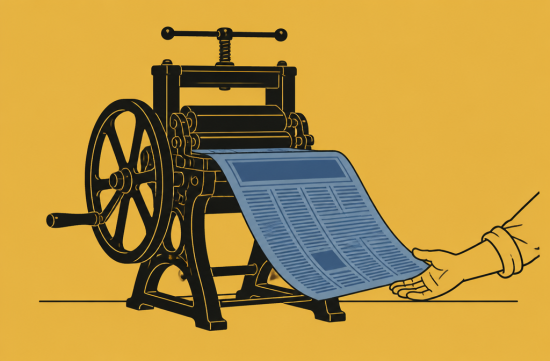
Walking through downtown Columbia, you often see college students rushing toward the city hall with laptops instead of newspaper stands. At first, I thought they were just students working on assignments.
It turns out many of them are actually journalism school students heading out to write articles for real newspapers and broadcasts.
This scene traces back to 1908. On September 14 of that year, the University of Missouri opened its journalism school.
The school reports that it started with 97 students and 3 faculty members. By today's standards, that seems like a small local academy, but it's interesting that this became the starting point for journalism education in the United States.
There's one point to clarify. The school claims to be "the world's first journalism school," but there was already a journalism school that opened in Paris in 1899.
So, to be more accurate, it should be considered the first in the United States and the first to award journalism degrees. While the title may be slightly diminished, the significance remains intact.
The person who pushed this experiment was Walter Williams. He was the editor of the local newspaper, Columbia Herald, and also served as a curator, akin to a university board member.
Interestingly, this person never attended college. He built his career in journalism without a degree and became the president of the Missouri Press Association at the age of twenty-five.
It's ironic that someone who never crossed the threshold of a university argued that "journalists should be trained in college." However, I believe this made his argument even more persuasive.
At that time, being a journalist meant starting as a messenger at a newspaper and learning by watching others. There was no system in place for teaching.
Williams' solution was simple. He proposed that instead of just teaching theory in classrooms, students should actually create newspapers.
So, on the very day the school opened, the first class ended with the launch of the inaugural issue of the University Missourian. The school and the newspaper were established on the same day, indicating it was a deliberate plan from the start.
This newspaper underwent several name changes before becoming the Columbia Missourian. It continues to operate as a local newspaper where students write articles under faculty supervision.
This hands-on learning approach is referred to as the Missouri Method. In modern terms, it's akin to learning by doing or incorporating on-the-job training into the curriculum from the outset.
Meanwhile, in New York, Joseph Pulitzer was trying to establish a journalism school at Columbia University. However, that school didn't open until 1912, after Pulitzer had passed away.
As a result, Missouri opened its doors four years earlier. I find it quite impressive that a small college town in the Midwest took the lead in American journalism education.
In 1914, Williams wrote the Journalist's Creed, a brief ethical guideline stating that journalism is a public trust and that journalists are the ones entrusted with that trust.
This phrase has been displayed on a plaque at the National Press Club in Washington, D.C. since 1958. It shows that a piece of writing over a hundred years old is still relevant today.
Since then, the school has continued to achieve "firsts." In 1921, it established the first master's program in journalism, and in 1934, it launched the first doctoral program in journalism.
In 1953, the university opened KOMU-TV, a broadcasting facility that mirrored the practices used in newspapers, serving as a training ground for students.
Williams himself eventually rose to the position of president of the University of Missouri. It's a rare career path, considering he did so without a degree.
So, was this method the right answer? When you consider both sides of the argument, the debate is more balanced than you might think.
Supporters point to the results. Graduates can be deployed to the field from day one, and they gain experience making mistakes and correcting them in front of real readers during their student years.
However, there are concerns from the opposing side. Since articles produced by students are read as actual news by local residents, a lack of experience could lead to a decline in the quality of local information.
I believe the advantage outweighs the risks as long as there is faculty supervision in place. While it's hard to quantify, the fact that this model has persisted for over a hundred years serves as evidence.
From a professional standpoint, this resonates even more. In the workplace, the biggest challenges for newcomers are not theory but the cycle of deadlines, feedback, and revisions.
Columbia in 1908 brought that cycle into the school environment. It feels like we can see the origins of what we now take for granted, such as internships and capstone projects.
If you ever find yourself in Columbia, take a walk around the journalism school building. The sight of student journalists bustling about is proof that this century-old experiment is still ongoing.
 WeirdoDream





 San Jose Pop |
 Princess Park |
 Art patch |

 Rice Shop Uncle BLOG |
 Noodle Noodle |

 tooto |
 toclick |


 toodin |

 Missouri Kings News Information |
 Going Once |
 monica hong |
 Tainami American Travel Story |
 tarve7 |
 Something is popping in the situation |
 chiobase |
 homan |
 The Yellow |
 love ya |
 virex |
 U.S. Weather Bureau News |
 korvex93 |
 nougatpop |
 milkyotter |
 sun walker |
 Hawaii Tourist Information |
 savannah choi |
 glimmer |
 Hot Seat Driver |