
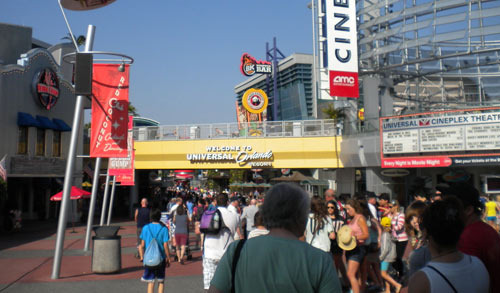
When most people hear the name Orlando, they immediately think of Walt Disney World, Universal Studios, and SeaWorld.
This is not incorrect. Orlando is indeed one of the most visited tourist cities in the world, and when it comes to the concentration of theme parks, no other city can compare. However, if you think that the fireworks photos in tourist brochures are all there is to Orlando, you only know half of it.
Orlando is located in central Florida, in Orange County. The population is about 320,000 within the city limits, but when combined with the Orlando-Kissimmee-Sanford metropolitan area, it forms a large metropolitan area of about 2.8 million people.
At an elevation of about 30 meters, it is relatively high inland compared to other areas in Florida, which is one reason it is less affected by hurricanes than coastal cities. The city is dotted with hundreds of natural lakes, which is why Orlando is often referred to as the "City Beautiful."
The heart of the city is downtown Orlando. Centered around Orange Avenue, it is home to financial institutions, law offices, government buildings, restaurants, and bars. Lake Eola Park, a circular lake park right next to downtown, hosts a weekly Sunday Farmers Market and is a place for Orlando residents to relax with swan paddle boats. The Eola Heights neighborhood, formed around this park, is one of the most beautiful areas in Orlando.
International Drive, commonly known as I-Drive, is the main artery of Orlando tourism. It is lined with Universal Studios, Icon Park, the Orange County Convention Center, large shopping malls, and restaurants, attracting millions of visitors each year. A little west on I-Drive leads to the Lake Buena Vista area, home to the Walt Disney World Resort. This complex, which includes four theme parks—Magic Kingdom, Epcot, Hollywood Studios, and Animal Kingdom—along with two water parks and resort hotels, covers an area of about 110 square kilometers, larger than Manhattan.
Winter Park, located just north of Orlando, is an independent municipality with a completely different atmosphere. Park Avenue, lined with museums, independent bookstores, galleries, and upscale restaurants, is the center of Winter Park, and the presence of Rollins College adds an academic vibe. To the south lies Kissimmee, which has lower rental prices than downtown Orlando and a relatively large Asian community, including Hispanics and Koreans.
While tourism is the core of Orlando's economy, it is not the only aspect. A research and development cluster centered around the University of Central Florida (UCF), the Medical City in Lake Nona, and aerospace-related companies are driving economic diversification. The Kennedy Space Center is located about 90 kilometers east of Orlando, leading to active participation of space industry companies in the Orlando area. The defense industry related to simulation and training is also a significant employer in the region.
The climate is close to humid subtropical. Summers are hot and humid, with afternoon showers almost every day. Average high temperatures in July and August exceed 33 degrees Celsius, with the heat index sometimes surpassing 40 degrees. Hurricane season runs from June to November, and Orlando often experiences indirect damage rather than direct landfall due to its distance from the coast. Winters are mild, with average high temperatures between 21-23 degrees Celsius from December to February, so heavy coats are unnecessary. Snow is virtually nonexistent. This climate is one of the main reasons retirees and migrants from northern states choose Orlando.
Thanks to its image as a tourist city, Orlando feels familiar even to first-time visitors. However, living there reveals a significant gap between the tourist infrastructure and the actual living infrastructure. Public transportation is weak, making it difficult to get around without a car. The housing market has surged sharply since COVID-19, and the cost of living is not low by Florida standards. Nevertheless, the absence of state income tax, warm weather, and a strong job market continue to attract people.
 foxriverwalker1972



 |
| 
 Premium Gas Camp |
 CA Real Estate |
 cheesepup |
 breezem |
 You Only Live Once |

 Mr Bull Jung |
 Sunshine Blog |
 US Home Buying Information Home Insurance |
  Taco Bell Candy Note Blog |
  MintO |
  My Town My Way Blog |
  New Mexico Friends MAX |
  Hajiwon Blog Hair Salon |
  Wicked - Fireyo |
  Seattle - Emerald City |
  new noah |
  xylora |
  Anjollinya Blog |
  total solution |
  Vacation on Hawaii |
  valtri |
  August Snowman |
  Way to easy |
  Pirate Ship Popcorn Maker |
  USA Business News |
  Samsung My My |
  bubblo |
  tartbear |