
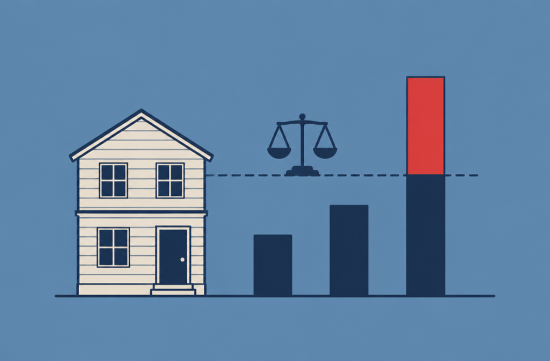
As the end of the year approaches, lease renewal notices start arriving one by one. If you open the envelope and are shocked by the increase, the first question that comes to mind is likely, 'Should I accept this amount as is, or is there another way?'
If you live in Albany, let me give you the conclusion right away. Thanks to the Good Cause Eviction law adopted by the city, many tenants have grounds to challenge excessive increases.
However, this law is not a rent control measure that automatically prevents increases. To use it effectively, you need to understand its structure, so let's go through some frequently asked questions in order.
The first question is when this law was applied in Albany. New York State enacted the Good Cause Eviction law in April 2024 along with the state budget, allowing cities outside New York City to decide whether to adopt it.
The Albany City Council passed the adoption proposal on June 3, 2024, and it was confirmed as Local Law E of 2024 when the mayor signed it in July. Albany was the first city outside New York City to adopt this law.
In fact, Albany had previously created its own Good Cause ordinance in 2021. However, it was ruled invalid in January 2022 due to a conflict with state law, and the appellate court reached the same conclusion in March 2023.
This time, they chose to adopt it within the framework of state law. From the perspective of someone who has observed the mayor for a long time, the legal foundation has become much stronger, which is the biggest difference.
The second question is whether our home is subject to this law. The state law allows the city to adjust only two criteria: the definition of small landlords and the rent exemption criteria.
The default state law considers landlords with 10 units or fewer as small and excludes them. Albany narrowed this down to landlords who own just one unit in New York State.
The rent criteria have also changed. The state law excludes high-priced units that exceed 245% of the Fair Market Rent (FMR), but Albany raised this to 345% to protect more tenants.
Additionally, there are separate criteria under state law for newly constructed buildings approved since 2009 and existing rent-stabilized units. Since the conditions are complex, you must verify where your home falls in the documentation.
The third question is how much can rent be increased? The state law uses the concept of 'local rent standard.'
The standard is the lower of the value obtained by adding 5% to the inflation rate or 10%. Increases above this are presumed to be unreasonable.
The inflation rate is announced annually by the Housing Community Renewal (HCR), so if you're renewing this year, it's best to check the latest published figures directly, as they can vary by location and time.
Many people misunderstand this point. This standard is not an immediate illegal cap if exceeded; rather, it is a presumption that landlords can contest.
Landlords can explain the justification for the increase to the court by citing property tax increases, rising operating costs, or significant repair expenses. Ultimately, the housing court makes the judgment.
The fourth question is how to actually fight back. The key point is that simply not paying an increase that exceeds the standard does not constitute a valid reason for eviction.
In other words, this law primarily serves as a defense mechanism for tenants when landlords file eviction lawsuits. It's important to remember that tenants do not initiate separate lawsuits first.
So what should you do right now? First, check if the lease renewal has a 'Good Cause Eviction Law Notice' attached.
According to Real Property Law Section 231-c, landlords must include this notice in new leases, renewal leases, late notices, and legal documents. It should indicate whether the unit is subject to the law or, if not, what exceptions apply.
If the unit is subject to the law but the increase exceeds the standard, the reason must also be included in the notice. In 2025, there was a case in Manhattan where an eviction lawsuit was dismissed because the landlord left the notice checkbox blank.
Next, compare the previous lease with the current notice and calculate the increase rate yourself. If the numbers exceed the standard, it's better to request written justification rather than respond emotionally.
If communication with the landlord breaks down, it's advisable to seek advice from local legal aid organizations or tenant groups. Those who find English documents burdensome should not make judgments alone.
It's also worth considering the landlord's perspective. Property taxes and insurance rates in the Albany area have been steadily rising, and not all increases may stem from greed.
Therefore, I would recommend viewing this law not as a weapon for conflict but as a baseline for negotiation. The outcomes for tenants who know the standards and those who do not will be markedly different.
I would say the same to Korean landlords who own rental properties in Albany. To avoid having a lawsuit overturned due to missing a single notice, please check your documents first.
In summary, there are three things to do: verify if your home is subject to the law, compare the increase rate with the standard, and check if the notice is properly attached.
Details of the law may change in the future, so please refer to this article as information based on November 2026, and be sure to consult with an expert before making important decisions.
 MichaelKim
 MohicanIndian






 B.I.G. Victor |

 Amber H |
 uplifted |
 Dr. Kelso |

 silents |

 Dolly |

 Bany T. |

 Tan Zoo |


 Day by day |
 MBTI Detective Agency |
 ShyShy dating |
 hihihi |
 kiwifox |
 Silent Sea |
 Masa Masa |
 dewyo |
 summita |
 coconutpath |
 moonlight |
 Curry Dragon |
 secure |
 tredon |
 Eldorado 88 |
 donggul donggul |
 korvix |
 Noodle Zin |
 Forever Tiger Teacher |
 strongman |