
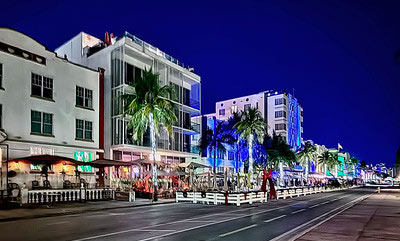
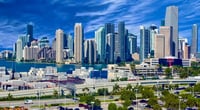
Miami is one of the most unique cities in the United States.
Located at the southeastern tip of the Florida peninsula, where the Atlantic Ocean meets Biscayne Bay, this city has a population of about 440,000 (according to city standards), but the entire Miami-Dade County has around 2.8 million, making it the largest city in South Florida with a metropolitan area of about 6.3 million. It is not only large in size but also an international city, earning the nickname the capital of Latin America, with the Latino population making up about 70% of the total.
Miami was officially incorporated as a city on July 28, 1896. The transformation from a small town with a population of just 300 to its current state was significantly influenced by the opening of railroads, a tourism boom, and a large influx of Cuban immigrants following the Cuban Revolution. The city's name itself is derived from the Mayaimi tribe, who lived in the area, and the Miami River. Today, Miami is a complex city where finance, trade, tourism, healthcare, and entertainment all come together, thriving year-round thanks to its warm climate, unlike New York.
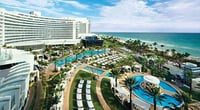
In terms of city structure, distinctive neighborhoods spread out from the downtown and Brickell financial district. Wynwood is famous for its world-class street art and galleries, while Little Havana is the heart of Cuban culture. Coconut Grove is one of the oldest residential areas in Miami, maintaining a bohemian atmosphere, and Coral Gables is an upscale residential and commercial area known for its Spanish Mediterranean architecture. Miami Beach is a separate city but is generally recognized alongside Miami, with the world-famous South Beach known for its Art Deco architecture.
In terms of tourist attractions, notable sites include the Venetian Islands in Biscayne Bay, Biscayne National Park, the Vizcaya Museum and Gardens in Coconut Grove, the Pérez Art Museum Miami (PAMM), the Frost Science Museum, and Calle Ocho in Little Havana. Ocean Drive in South Beach is a collection of Art Deco architecture and a must-visit for architecture enthusiasts. The Everglades National Park, located about a 45-minute drive from downtown Miami, is a unique ecological area where you can see Florida alligators, manatees, and hundreds of species of migratory birds.
The climate is classified as a tropical monsoon, divided into a wet season (May to October) and a dry season (November to April). In summer, temperatures exceed 32 degrees Celsius, and high humidity often leads to afternoon showers. In contrast, from November to April, daytime temperatures hover around 24 degrees Celsius, making it very pleasant and attracting tourists from around the world. Annual rainfall is about 1,500 mm, most of which occurs in the summer. Snow is historically rare, and the hurricane season (June to November) is a natural phenomenon to be cautious of. Hurricane Andrew in 1992 is remembered as a historic event that struck southern Miami as a Category 5 hurricane, causing extensive damage.
Miami is a city where both English and Spanish are equally spoken. Spanish services are standard in shops, restaurants, and medical facilities, and visitors who only speak English can get by without much trouble, but knowing even a little Spanish is advantageous. Services in Korean are concentrated in the Doral area. Transportation is provided by Miami-Dade Transit, which includes Metrorail, Metromover, and Metrobus, but living without a car can be quite inconvenient. The Brightline train connects MIA station to Fort Lauderdale, West Palm Beach, and Orlando, providing options for intercity travel. Miami is a city of grandeur and vibrancy, but it is also complex and has a high cost of living. Nevertheless, it is a place with a unique energy that is hard to find anywhere else in the world.
 JapchaeRadar
 SunnyFox


 Smile Face |
 Helpful Life Stories |
 Casa Mia |
 Study Abroad Life Know-How Tips |
 pravix22 |
 Florida King |
 My Miami Stories |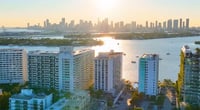
 Komet Park |
 Mr Song Song |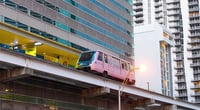
 Victory 1988 |
  Cap Com |
  nixxon |
  kevin Kim |
  beerdreamer |
  Kims Spring |
  White bunny |
  Kansas City Representative Singer |
  shadow 007 |
  sun walker |
  Choco Choco Star |
  midnight blue |
  honeypot |
  summer |
  adventure77 |
  flexible |
  Shintongbangtong Shin Naerin James Park |
  truepixel |
  Kathy's Blog |
  Hae Naem |
  quatspace |