
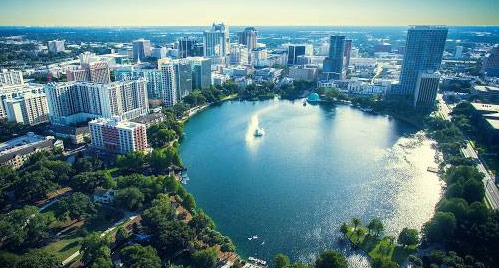
Florida is a state that boasts both racial diversity and economic vitality in the United States. Its economic structure is very complex, and its population composition is also unique. As of 2025, Florida's population is approximately 22.2 million, making it the third most populous state in the U.S.
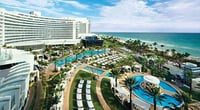
Looking at Florida's racial composition, non-Hispanic whites make up about 51%, followed by Hispanic/Latino at 27%. Among them, the influence of Cubans and Puerto Ricans is prominent. The southern region, centered around Miami, is almost an extension of Latin America, with Spanish signs being common, and Hispanic culture easily felt in the music and food on the streets. African Americans constitute about 17%, and Asians make up around 3%, while the remaining 2% consists of mixed and other races.
Economically, Florida is one of the 'economic powerhouses' in the U.S. While tourism is at its core, various sectors such as agriculture, trade, real estate, and technology are also growing together. The most representative sector is undoubtedly tourism. Over 100 million tourists visit Florida each year, with attractions like Disney World, Universal Studios, Miami Beach, and Everglades National Park being recognized as world-renowned destinations. Tourism accounts for about 20% of the state's overall economy, supporting numerous jobs and local businesses.
Agriculture is also one of Florida's long-standing core industries. In particular, the production of citrus fruits such as oranges and grapefruits ranks first in the U.S., and the cultivation of sugarcane, tomatoes, strawberries, and flowers is also active. Thanks to Florida's warm climate and abundant sunlight, crop production is possible year-round. This has led to Florida being nicknamed the 'fruit basket of America.'
Recently, the aerospace and high-tech industries have been growing rapidly. Cape Canaveral, home to the Kennedy Space Center, is used not only by NASA but also as a launch site for private space companies like SpaceX and Blue Origin. The aerospace industry is leading Florida to become a center for future industries rather than just a vacation spot, and as a result, technology-based jobs and startups are steadily increasing.
Additionally, Florida is active in real estate and construction. Every year, retirees and newcomers flock in, leading to a steady increase in housing demand. Not only in major cities like Miami, Tampa, and Orlando, but also in areas like Jacksonville, Fort Myers, and St. Petersburg, new homes and resort complexes are continuously being built.
Trade is also a significant part of Florida's economy. To the south lies the Caribbean, to the east the Atlantic Ocean, and to the west the Gulf of Mexico, making it a hub for international exchange. In particular, the Port of Miami and Port Everglades are key trade routes to South America and the Caribbean, making Florida one of the leading logistics centers in the U.S.
In terms of income, Florida's median household income is about $64,000 as of 2025, slightly lower than the national average. However, there are distinct regional differences. Cities like Miami-Dade County and Orlando, which are centers for tourism, trade, and finance, record relatively high incomes, while rural areas in the north and the Midwest have lower incomes. Nevertheless, Florida's unemployment rate remains low at about 3.1%, below the national average, due to the steady creation of jobs in tourism, healthcare, real estate, and service industries.
Ultimately, Florida can be described as a state with an 'economy of diversity.' Here, you can find the streets of Miami filled with Cuban music, the launch pads of Cape Canaveral sending rockets into space, and vast rural areas with endless orange groves.


 Rainbow Bridge to the Sky |
 Taco Bell Candy Note Blog |
 Splendid Mission |


 Tonky |
  viroma |
  cookie |
  Live and that's it |
  Alright Twain |
  eatontown blog |
  HAWAII Korean Church News |
  Amore |
  linex |
  Balancework |
  laro90 |
  MEDBIO American Doctor Blog |
  SWAT TEAM BLK |
  DREAM BIG |
  frostbite |
  330 Forever My Love |
  El Dorado |
  dralix58 |
  Gorama Round |
  Skydiving |