

Recently, I had an experience in a dental waiting room. A Korean person sitting next to me was filling out a medical history form and casually asked me.
"Do I need to write down bone medication? That doesn't relate to teeth, right?"
I immediately told them to definitely include it. Osteoporosis medication is something that must be known in dentistry.
This person had been taking Fosamax for several years and mentioned they were there to consult about extracting a molar. This is exactly the kind of case that is the focus of today's discussion.
Among osteoporosis medications, many belong to the antiresorptive category, which prevents bone loss. Bisphosphonates like alendronate (Fosamax), risedronate (Actonel), and ibandronate (Boniva) are representative examples.
Zoledronic acid (Reclast), which is administered once a year, and denosumab (Prolia), which is given every six months, also fall into the same category. Whether it's oral medication or injections, the important point is that it must be disclosed to the dentist.
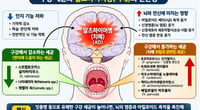
The issue lies with the jawbone. There have been reports of patients using these medications experiencing slow healing at extraction or implant sites where the bone is exposed.
This condition is medically referred to as MRONJ, or medication-related osteonecrosis of the jaw. While the name sounds frightening, there's no need to be overly scared.
According to the UK dental guidelines from SDCEP, the incidence rate among osteoporosis patients is estimated to be less than 0.05%. For patients receiving high doses for cancer treatment, it's less than 5%, which is quite a difference.
However, it is noted that there is significant variability in studies, making it difficult to pinpoint an exact number. While it is rare, that doesn't mean it should be ignored.
This issue has been officially recognized for quite some time. In 2005, the FDA requested all manufacturers of oral bisphosphonates to include jaw necrosis as a potential side effect on their labels.
The Prolia label also contains relevant warnings. It states that prescribing doctors should conduct oral examinations before starting treatment and recommends dental check-ups and preventive care if risk factors are present.
Risk factors include invasive dental procedures, cancer, concomitant medications like steroids, and poor oral hygiene. The last factor is something we can manage ourselves.
Then, the most common question arises: can't we just stop the medication temporarily to have the tooth extracted? I thought that way at first too.
The American Association of Oral and Maxillofacial Surgeons (AAOMS) recommended in their 2014 guidelines that patients who have been on osteoporosis medication for over four years take a drug holiday for about two months before extraction.
However, this recommendation was removed in the 2022 revision. There was no consensus among experts, leading to a shift towards individual assessments for each patient.
The FDA label also states that there is no data indicating that stopping the medication before procedures reduces risks. Stopping medication without evidence is akin to gambling.
Especially, Prolia is a medication that should not be stopped arbitrarily. According to the label, the risk of fractures increases after discontinuation, and there have been reports of multiple spinal fractures occurring simultaneously.
New spinal fractures can appear as early as seven months after the last injection, with an average of 19 months. Therefore, the label advises transitioning to another osteoporosis medication when discontinuing Prolia.
If you skip the injection due to concerns about the jawbone and then suffer a vertebral fracture, it would be a case of losing sight of the bigger picture. Ultimately, this is a matter that requires communication between the dentist and the prescribing physician.
So, what should we communicate to the dentist? It's simpler than you might think.
First, the name of the medication. If you can't remember the brand name, take a picture of the medication bottle.
Next is the duration. Please inform them how many years you've been taking it and if you've stopped, when you last took it.
If it's an injection, the date of your last dose is important. Dentists often refer to this information when scheduling procedures.
If you've been on steroids for a long time or have a history of cancer treatment, you should also disclose that. This information is directly related to the risk factors mentioned earlier.
Don't forget to mention any medications you previously took and stopped. These types of medications tend to remain in the bones for a long time, so past usage history is important information from the dentist's perspective.
And one more thing, if you're about to start medication, it's best to have a dental check-up first. If you have a tooth that needs to be extracted, it's much more reassuring to have everything sorted out in advance.
The person in the waiting room ultimately decided not to have the extraction that day and to consult with their prescribing physician first before returning. I believe that was the right choice.
The decision to continue medication or schedule a procedure varies based on individual circumstances. Never make medication adjustments on your own; always consult with a doctor or pharmacist.
The main point I want to convey is simple: don't overlook that one line in the medication section of the medical history form.
 sunsetriver
 SunnyValley90








 fruitflash |
 Anjollinya Blog |

 United States Army |

 premium |

 The Emperor Must Grow |

 Dr. Kelso |

 Florida Gario |

 Komet Park |

 Mr Song Song |

 My Miami Stories |
 strawberry |
 US Regional Information Local News |
 USA Business News |
 Blondee |
 E whisper |
 Potato House |
 freshmint |
 Ansaso |
 Golado |
 babybay |
 honeycom |
 French Macarons |
 Exploring American Life Information |
 Sunshine Blog |
 Community Cross |
 Sayonara H |
 What can make money? |
 Information Search LifeMAN |
 morvex37 |
 neontrail |