
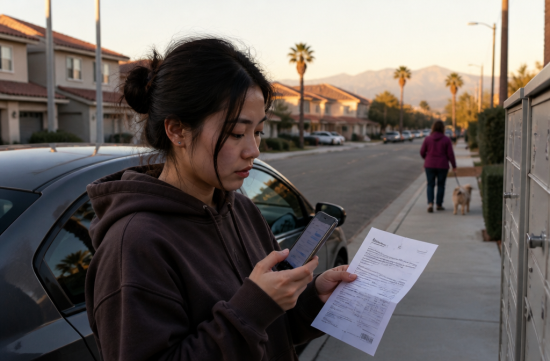
Last night, my phone buzzed, and when I checked, I found a message like this: "You have an unpaid toll. If you do not pay today, a late fee will apply," followed by a link.
My heart skipped a beat. I remembered using the express lane on Freeway 10 last week.
But to cut to the chase, this was a scam. Today, I'll outline the steps for those who, like me, hesitated before clicking the link.
In fact, I wasn't the only one who received this message. In a previous post, someone commented: "I got the same text. Is this real? The amount is so small that I almost paid it."
That's right; the small amount is the key point. According to a public warning issued by the FBI on April 12, 2024, the unpaid toll mentioned in the text was $12.51.
They also threatened that if not paid on time, a $50 late fee would apply. The structure is designed to make you input your card number without much thought since it's only $12.
From early March 2024, the FBI's Internet Crime Complaint Center (IC3) reported over 2,000 complaints about these toll impersonation texts within just a month. By then, reports had already come in from at least three states, indicating that the scam was spreading across state lines.
California is no exception. On January 2, 2025, Attorney General Rob Bonta issued a warning about the surge in text-based toll scams.
According to that announcement, most of these scams impersonate FasTrak, and the links lead to fake sites mimicking The Toll Roads in Orange County. The sole purpose is to steal banking or card information.
So how can you distinguish between real and fake? I dug through official materials and organized the information in a Q&A format.
Q: Don't toll companies usually bill via text? A: According to the Attorney General's office, toll agencies in California, including The Toll Roads, do not send texts to people without accounts.
Q: If I have an account, I might receive a text, right? A: That's true, but FasTrak has stated that they do not request payments via texts containing website links. If you receive a payment request text with a link, you should be suspicious.
Q: So how will I be notified if I really have an unpaid toll? A: This is the most important part: according to SB Express Lanes guidelines, if you don't pay your toll on time, a violation notice will be mailed to the vehicle registration owner's address.
This notice includes a $25 fine per toll violation, and if you pay within 30 days, you can avoid additional penalties. Ignoring the first notice will result in another $25 fine on the second notice, and it could lead to a DMV registration hold.
So, a message saying, "If you don't pay today, your license will be suspended" is entirely different from the actual process. The real notice comes by mail, and you're given more time than you might expect.
There's also a reason why those of us who use the express lane on Freeway 10 get confused. In September 2024, a 10-mile stretch from the LA County border to Etiwanda Avenue opened, and The Toll Roads is handling account processing.
So when you see a fake Toll Roads site, you might think, "Oh, I have an account there?" making it easier to fall for the scam. For scammers, it's a prime opportunity.
Drivers without accounts can pay directly at SBExpressLanes.com, and according to the FAQ, you should pay within five days after driving. There have been announcements about extending the payment period due to processing delays, so check the site banner before paying.
Now, here's my verification routine, which I call the "Night Owl Pick Check" order. First, never click the link in the text.
Second, type the official site directly into the address bar. If you have a FasTrak account, find your toll agency at fastrak.org, and if you have a Toll Roads account, log in at thetollroads.com or through the official app.
Third, if you want to verify by phone, call the number listed on the official site, not the one in the text. The Toll Roads customer service number is 949-727-4800.
Fourth, check the sending number. Reports indicate that some messages came from numbers starting with +63, which is the country code for the Philippines.
Fifth, report and delete the message. Many people skip this step out of annoyance, but it really only takes a minute.
You can report it to the FBI at ic3.gov or the FTC at reportfraud.ftc.gov, and they advise including the sending phone number and the website address from the text. You can also forward the message to your carrier's spam reporting number, 7726.
If you've already clicked the link and entered your card information, call your card issuer or bank immediately. Dispute any unknown charges and it's a good idea to change passwords for any accounts using the same password.
Honestly, what's frustrating is that these messages keep coming every few weeks with just the wording changed. According to officials in the Bay Area, they change every 6 to 8 weeks and come in waves.
Rather than waiting for the government to block everything, I find it's quickest to protect my phone myself. Scammers change their wording much faster than regulations can catch up.
So my conclusion is simple: always be suspicious of toll violation texts, verify only through the official app or by typing the address directly, and remember that real unpaid tolls will come by mail.
If you receive any strange texts, feel free to DM me a screenshot. In the next post, we'll take a closer look at whether they're real or fake.
 GoldenBear







 Kitchen Ideas |

 Spaghetti Flying Religion |

 Giant Squid and Sweet Potato Soup |

 choi family |

 What can make money? |

 Solo Yolo |

 Forever Young |

 Star Way |
 some fame |

 Lifestyle Information Search USA |
 Blondee |
 rapidfire |
 walnutbo |
 Shinbaram Dr. Blog |
 breaddough |
 Michigan Enthusiast |
 Only Dentalbay |
 postcard |
 Buckwheat Muktudari Notebook |
 Jellia Angel |
 Victory 1988 |
 Rice Shop Uncle BLOG |
 ASURA |
 hot chocolate |
 rapids |
 Softember |
 mykiwi blog |
 Maria Mom |