
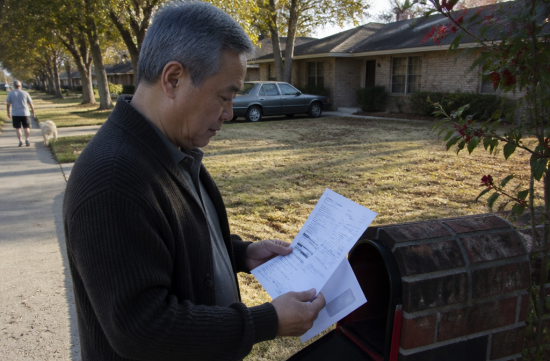
Recently, I've been hearing quite a bit among parents in the Dallas area about how the school property tax line has come out almost at zero.
At first, I thought it might be a calculation error, but upon checking, the reason became clear. It's thanks to Proposition 11 and Proposition 13, which passed in the Texas referendum on November 4, 2025.
Today, I will summarize step by step what exactly these two propositions changed and how to verify if you are receiving the benefits.
First, let's clarify the basic concept. Texas property taxes are collected separately by school districts, counties, and cities, with the school district portion usually being the largest.
The Homestead exemption is a system that deducts a certain amount from the assessed value of the home where you actually live, reducing the taxable amount. The larger the deduction, the smaller the taxable amount.
Proposition 13 raised the basic school tax exemption for all homestead owners from $100,000 to $140,000.
Proposition 11 increased the additional exemption for homeowners aged 65 or older or those with disabilities from $10,000 to $60,000. This is a sixfold increase, which is quite surprising just by looking at the numbers.
Combining both, senior homeowners can deduct up to $200,000 from the assessed value of their homes for school tax calculations.
For example, if the assessed value of a home is $300,000, the school tax will only apply to $100,000. If the home value is below $200,000, the school tax effectively disappears.
The voting results were also overwhelming. Initial reports indicated that Proposition 11 had a 79% approval rate.
The timing is also important. Both measures were designed to be retroactively applied from January 1, 2025.
Therefore, the reduced amounts have already been reflected in the 2025 tax bills, and the same exemptions will continue in this year's bills. Those who turn 65 this year and apply for the first time will likely notice the biggest difference in this year's bill.
According to Paul Bettencourt, the state senator who proposed the bills, the estimated annual savings per senior is $907. However, this is an average estimate for the entire state, so it can vary from household to household.
One area that often confuses people is the tax ceiling, commonly referred to as a freeze. This is a system where the school tax amount for the year you start receiving the 65+ exemption is fixed as a ceiling.
The ceiling cannot go up, but it can go down as much as necessary. This means that if the exemptions increase, the actual calculated tax could be lower than the ceiling.
So, if you are already receiving a freeze, I recommend comparing the school tax amount and the ceiling amount on your bill with last year's figures.
There are also some points to be aware of. The ceiling is a benefit that applies to the homeowner themselves, so if the property is inherited by children, it disappears and is recalculated based on general standards.
Major expansions or renovations to the home can also raise the ceiling. Simple repairs or maintenance do not apply.
So, what do you need to do to receive these benefits? You need to submit Form 50-114 to the Dallas Central Appraisal District, abbreviated as DCAD.
You can apply anytime within the year you turn 65, and you must be living in that home as of January 1 of that year.
If you are already receiving a homestead exemption, you may still need to check for the 65+ exemption separately. You can search by address on the DCAD website to see what exemptions are attached to your account.
If you live in Dallas, there is also a city-specific senior exemption. Starting from 2025, it has increased to $175,000, but this applies to city property taxes, not school taxes.
If paying taxes is a burden, be aware of the deferral program mentioned in the Dallas County guidelines. The late interest rate is reduced from 24% to 5%, and it prevents forced sales.
Of course, there are criticisms as well. Opponents point out that these two measures will result in a $3 billion loss in school funding, while the state government claims it will be covered by a surplus budget.
There are also concerns that the tax burden is shifting from property taxes to sales taxes. This means that renters or younger households without homes may feel less benefit.
Personally, I believe that reducing the burden on the retired generation living on fixed incomes is the right direction. However, it remains to be seen whether this promise will be kept even in years when the surplus decreases.
Whether or not to apply for the exemption and inheritance plans vary by individual circumstances, so be sure to check with DCAD or a tax professional.
In summary, the exemption has increased to $200,000, applications are made using Form 50-114, and even if there is a freeze, you should compare your bills. Open your parents' tax bills together this weekend.
 ChocoBuddy








 vivavida |

 MEDBIO American Doctor Blog |

 Burbank Lee |
 vibranto |

 sparkling |

 Giant Squid and Sweet Potato Soup |

 American Blog Forge |

 Dalsabet dolstar |

 Gorama Round |

 Texas Lone Star Longhorn Spirit |
 walnutbo |
 Shinbaram Dr. Blog |
 breaddough |
 Michigan Enthusiast |
 Only Dentalbay |
 postcard |
 Buckwheat Muktudari Notebook |
 Kitchen Ideas |
 Jellia Angel |
 Victory 1988 |
 Rice Shop Uncle BLOG |
 ASURA |
 hot chocolate |
 rapids |
 Softember |
 mykiwi blog |
 Maria Mom |
 Watch for possible danger |
 northpeak |
 Far East Movement |