
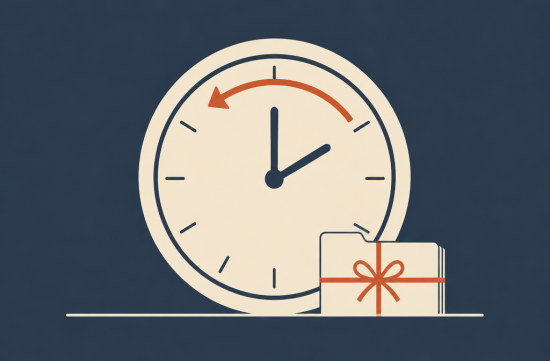
This weekend, it's time to turn the clocks back an hour again. November 1st, Sunday, is the day when 2 AM becomes 1 AM.
My phone changes automatically, but I have to adjust the car dashboard and microwave clock myself every year. Honestly, I was too lazy last year and drove around for weeks with my car clock an hour off.
This year feels a bit different, though. I've heard people say, "This is the last time we'll change the clocks." a few times.
Curious, I looked into it. To cut to the chase, it's still too early to say it's the last time.
The catalyst was the House of Representatives vote on July 14. The Sunshine Protection Act, which proposes to keep daylight saving time year-round, bill number H.R. 139, passed with a vote of 308 to 117.
According to the House Clerk's records, Republicans voted in favor 193 to 22. The Democrats were more divided, with a vote of 114 to 95.
With that kind of margin, it seems like it would quickly become law, right? But the Senate is a whole different world.
The bill has moved to the Senate Committee on Commerce, Science, and Transportation but has yet to reach a vote in the full Senate. On October 3, President Trump publicly pressured Senator Tom Cotton on Truth Social, stating that he was holding up the bill.
The Senate has a process for quick unanimous consent, but if just one person opposes it, it can get blocked. Trump even wrote, "One is enough" in that context.
So, at this point, it's confirmed that we will be changing the clocks this Sunday. Even if the law is passed, a separate effective date would need to be set, so the schedule won't change this fall.
For reference, even if this bill passes as is, places like Hawaii and most of Arizona, which do not observe daylight saving time, will continue to maintain standard time as they do now. The changes will affect states that currently switch their clocks twice.
This isn't the first time this has happened. In March 2022, the Senate unanimously passed a bill with the same name, but it was never taken up by the House and was ultimately discarded.
When the Senate acts, the House stalls, and when the House acts, the Senate stalls. It's somewhat amusing to watch.
What's even more interesting is that the U.S. has already tried this once. During the oil crisis in 1973, President Nixon signed a law that started year-round daylight saving time on January 6, 1974.
Initially, the response was positive. A NORC survey from the University of Chicago showed a 79% approval rating in December 1973.
However, the problem arose in the winter mornings. Concerns grew about children going to school in the dark, and support dropped to 42%.
Ultimately, in October of that year, President Ford signed a law to revert back, and on October 27, 1974, the U.S. returned to standard time. Coincidentally, that's exactly today's date.
This issue is more pressing for people in New England. Being at the easternmost edge of the Eastern Time Zone, the sun sets really early in December.
In 2016, Massachusetts even created a special committee in the state legislature. It was prompted by a resident, Tom Emsweiler, who was shocked to see the sun set at 4:11 PM after moving here.
The committee adopted a report in November 2017 with a vote of 9 to 1. Under federal law, the only option available to states is to opt out of daylight saving time, so they even considered moving to Atlantic Standard Time.
Still, the conclusion was that changing alone would cause too much confusion, so they recommended moving in conjunction with neighboring states. Maine also proposed a similar conditional bill, but it fizzled out.
I was somewhat impressed by this point. I thought it was just a yearly complaint, but it's fascinating that the state government seriously considered changing the time zone itself.
As for my stance, I wish we could stop changing the clocks twice a year. Losing an hour in March messes up my freelance deadlines, and it's really exhausting.
However, I'm not sure if permanent daylight saving time is the answer. Looking at the 1974 case, people couldn't handle the dark winter mornings as well as they thought.
Sleep experts have argued that permanent standard time is actually better for our bodies. It's a battle between having sunlight after work or sunlight during the morning commute.
As a night owl, I honestly lean towards having sunlight after work. When it gets dark at 4:30 PM, it feels like the day is over, and my motivation to work really drops.
Still, this isn't a left or right issue; it's a matter of lifestyle rhythm, so I think both sides have valid points. That's probably why both parties were divided in the House vote.
For now, I plan to do what I always do this weekend. I'll adjust the car clock before bed on Saturday night and check the smoke detector batteries as well.
And I'll grab a bag of roasted walnuts to enjoy the extra hour on Sunday morning slowly. That extra hour is still quite a treat.
By the time I move the clocks forward on March 14 next year, the Senate might have made some decision. I'll check back then.
 ChocoWaves


 hot chocolate |

 Chichiki Chicago Train |

 Noodle Noodle |

 Twist Kim |

 U.S. Weather Bureau News |

 Masa Masa |

 nougat |




 some fame |
 rapidfire |
 walnutbo |
 Shinbaram Dr. Blog |
 breaddough |
 Michigan Enthusiast |
 Only Dentalbay |
 postcard |
 Buckwheat Muktudari Notebook |
 Kitchen Ideas |
 Jellia Angel |
 Victory 1988 |
 Rice Shop Uncle BLOG |
 ASURA |
 rapids |
 Softember |
 mykiwi blog |
 Maria Mom |
 Watch for possible danger |