
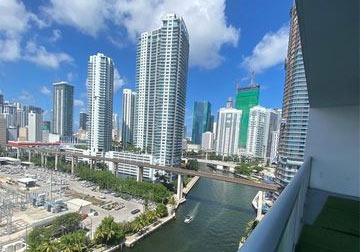
The first month after moving to Miami can be really hectic. You need to find a place to live, change your driver's license, register your car, and set up electricity and internet.
If you don't set an order and just tackle things one by one, you might end up wasting a lot of time going back and forth with the same documents.
The first thing to do is, of course, find a home. Instead of signing a long-term lease right away, it might be a good idea to stay in a hotel or an Airbnb for a short term while you look for a place in person. In Miami, there are cases where people are disappointed with the surroundings or transportation after signing a lease based only on photos.
If you have children, it's better to adjust the order a bit. First, find out about the schools and school districts you want, and then look for a home based on the addresses assigned to those schools. Even in Miami, the living environment can vary significantly from neighborhood to neighborhood.
The second step is to get your driver's license. If you've established residency in Florida, new residents generally need to obtain a Florida driver's license within 30 days. If you have a license from another state, you can prepare the necessary documents for the transfer based on your identity and residency qualifications.
What's important here is proof of residency. It's a good idea to check and bring documents like your passport or green card, SSN-related documents, and any paperwork that can prove your Florida address. If possible, make an appointment for your visit to the FLHSMV. If you forget one document and have to go back, you could waste an entire day.
If you've brought a car, you'll also need to get insurance and register the vehicle. Florida's auto insurance regulations differ from those in other states, so don't just change your address with your existing insurance company; make sure to check the coverage requirements needed in Florida. It's also a good idea to look into vehicle registration and title changes at the same time.
Additionally, it's convenient to get a SunPass in Miami. You'll find that you use toll roads more often than you expect, so it's easier to handle tolls electronically rather than worrying about them each time.
Next, you'll need to set up electricity, water, and internet. For electricity, you'll create an FPL account based on your area, and for water, you can check with the agency responsible for your residential address or the building management office. In some apartments, water may be included in the rent or maintenance fees, so you may not need to apply separately.
Make sure to apply for internet service before you move in. If you wait until after you've moved to request installation and then have to wait several days, it can be quite frustrating, especially for those working from home.
Banking and credit are also important. If you're new to the U.S., consider opening an account with banks like Chase or Bank of America, and if you don't have a credit history, starting with a secured card is an option. In the U.S., your credit score will follow you not only when buying a car but also when renting an apartment and eventually buying a home.
Don't delay on health insurance either. If you don't have employer-sponsored insurance, check if you're eligible to enroll in the Marketplace and look for a plan that fits your income and residency status.
Finally, preparing for hurricanes is part of life in Miami. Check which evacuation zone your home is in and it's a good idea to have basic emergency supplies like bottled water, flashlights, and backup batteries ready in advance.
Ultimately, during your first month, there's no need to rush to explore Miami. Focus on establishing your living foundation in this order: home, driver's license, car, utilities, banking, and insurance.
Once you have these sorted out, you'll finally start to feel like you're really living in Miami.
 silver84
 MagicTree








 Smile Face |
 Helpful Life Stories |
 Casa Mia |
 Study Abroad Life Know-How Tips |
 pravix22 |
 Florida King |
 My Miami Stories |
 Komet Park |
 Mr Song Song |
 Victory 1988 |
  Cap Com |
  nixxon |
  kevin Kim |
  beerdreamer |
  Kims Spring |
  White bunny |
  Kansas City Representative Singer |
  shadow 007 |
  sun walker |
  Choco Choco Star |
  midnight blue |
  honeypot |
  summer |
  adventure77 |
  flexible |
  Shintongbangtong Shin Naerin James Park |
  truepixel |
  Kathy's Blog |
  Hae Naem |
  quatspace |