

One property in Miami had a low rating for assigned schools, yet the GreatSchools rating was a perfect 10. Conversely, there were schools with good reviews but a rating of only 5. Recent market trends show that such discrepancies are not uncommon.
Ratings and reviews do not measure the same things. The GreatSchools rating reflects test scores, academic growth, and college readiness, each contributing 33% to the overall score. Recently, the weight of equity indicators, which assess the performance of disadvantaged students, has also increased. Reviews capture the actual experiences of parents and students in school. Since they represent different aspects—numbers and experiences—there's no reason for them to always align.
Looking more closely at the college readiness component, it includes not only SAT and ACT results but also the participation rates in AP courses and dual enrollment. AP allows high school students to take college-level courses and exams, while dual enrollment lets them earn community college credits while still in high school. A higher participation rate boosts the college readiness score.
When examining actual ratings within Miami-Dade County, the variance is striking. Miami Senior High School and Miami Beach Senior High School both have a rating of 5. In contrast, Somerset Gables Academy, International Studies Preparatory Academy, Archimedean Academy, Doral Academy, Ada Merritt K-8 Center, and Coconut Grove Elementary School all received a perfect score of 10. Even within the same county, there can be significant differences in scores among schools.
Another factor contributing to this difference is the equity indicator. This measures the performance gap between disadvantaged and non-disadvantaged student groups, awarding higher scores for smaller gaps. With recent reforms increasing the weight of this indicator, more schools are seeing differing ratings despite similar average scores.
A school rated 10 does not mean it is perfect in every aspect. High-rated charter schools often require applications and lotteries for admission, so buying a home does not guarantee automatic assignment. Conversely, a public school with a lower rating may have a good reputation for specific grades or programs. Recent market observations show that some buyers decide on a location based solely on ratings, only to discover these nuances later.
Therefore, it is essential to consider ratings, reviews, and recent trends in ratings together. The student-to-teacher ratio is not reflected in ratings, so it's advisable to check that separately. Most importantly, to know which school a property is actually assigned to, it's best to verify with the county education department's district map. Even within the same neighborhood, being on the boundary of a school zone can lead to different school assignments.
Miami-Dade County also operates a school choice program, so if the assigned school's rating is disappointing, there is an option to apply for other magnet programs. However, due to application processes and capacity limits, it's safer to check these details before moving in.
When considering the same budget, comparing a charter school rated 10 nearby with a public school that has slightly lower ratings but good reviews and student-to-teacher ratios can be more helpful in making a decision. Families moving to Miami from other states should also consider that Florida's property tax and insurance systems may differ from their previous locations. For investors looking at rental income, prioritizing areas with stable or improving ratings can help reduce vacancy risks. By going through the three steps of checking ratings, reviews, and assignments, the likelihood of regret in the final decision decreases. This article does not constitute investment or legal advice, and consulting a professional before making contracts is recommended.
 ForestTrend
 Squid Q








 moo moo |
 ultron78 |
 garlic bread |

 urbanmint |
 oh my salami |
 My Miami Stories |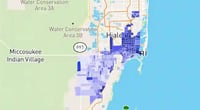
 Florida King |
 Dr. Kelso |
 Komet Park |
  round1 |
  Way to easy |
  musicque |
  road98 |
  Churros Train Conductor |
  gleeful |
  Burbank Lee |
  Olivia's Blog |
  Bushing Around Life |
  Active |
  Cherokee Rose |
  Kor. Master |
  Holey Moley |
  Conflite Teacher |
  Hodong Prince Over Flex |
  Mist inn |
  citrus pop |
  Onion Ring |
  phoenixia |
  viewtop |