

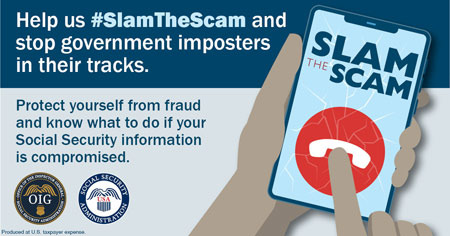
A few days ago, my mother received a call saying there was a scam call from Social Security.
They told her that her Social Security number was used in a crime and that she needed to verify it immediately. They scared her by saying that her benefits could be cut off and that she could even face a police investigation.
Fortunately, my mother is quite proficient in English, so she said she found it suspicious and hung up, asking them to send a letter instead.
However, it seems that these scams are really common these days. According to a 2025 report, there were over 200,000 incidents reported by seniors aged 60 and above. The total amount lost exceeded $7.7 billion.
Especially in Florida, where many retirees live, reports of scams targeting the elderly were the second highest in the nation.
Do you know how cunning these scammers can be? They don't ask for money right away.
"Your Social Security number has been used in a crime." "Your Medicare card will be suspended soon." "You have unpaid taxes with the IRS."
They call pretending to be government agency employees.
Then they threaten that if you don't resolve it now, your bank account will be frozen, or the police will come to arrest you.
Can you imagine how shocked seniors must feel when they hear such things?
In fact, according to a report from the FTC, the amount lost by seniors who lost over $100,000 increased from $55 million in 2020 to $445 million in 2024.
Let me give you an example of a real scam method.
A person posing as a bank security officer calls a senior to inform them that suspicious transactions have been detected in their account.
They then say that to protect their money, it needs to be transferred to a secure account managed by the government.
Shortly after, a person claiming to be a government investigator also appears on the call. In reality, they are all in cahoots.
The senior, alarmed by the idea that their lifelong retirement savings are at risk, transfers the money.
But that so-called secure account turns out to be a scammer's account.
This method is a typical scam that the FTC has warned about.
So how does the real Social Security or Medicare contact you?
Knowing this can greatly help you avoid scams.
First, Social Security employees do not threaten to arrest you if you don't send money over the phone.
They won't ask you to buy gift cards and provide the numbers, nor will they ask you to send money via Bitcoin.
Medicare operates the same way.
If someone suddenly calls asking for money to issue a new card or requesting your Medicare number, you should be suspicious right away.
Of course, actual government agencies can call if necessary. But if a call comes out of the blue asking for money or personal information, you should not trust it.
And nowadays, they can even spoof phone numbers.
Even if your cell phone screen shows Social Security Administration, there's no guarantee that it's a legitimate call from Social Security.
This is called spoofing, a technique scammers use to display a fake caller ID.
So just because the name of a government agency appears on your screen, don't let your guard down.
After experiencing this incident, I told my mother to remember three important things.
First, if someone asks for money or your Social Security number over the phone, just hang up.
No matter how friendly or threatening the other person sounds, you can simply hang up. There's no need to be polite.
Second, if you're curious whether it's really a government agency contacting you, verify it directly using the official phone number.
The Social Security number is 1-800-772-1213, and Medicare is 1-800-633-4227.
Make sure to call the official number, not the number given by the caller.
Third, don't make decisions alone; ask your family first.
Scammers often tell you not to tell your family. If someone else hears about it, they might realize it's a scam.
Especially Korean seniors who are not familiar with English need to be extra cautious.
If the other person explains quickly in English, they might not understand exactly and just respond with "Yes, Yes."
In such cases, remember this one English sentence.
"I will call the agency myself."
This means you will call the agency yourself. You can just say that and hang up.
It would be good to inform your parents or nearby seniors about the existence of such scams.
Hang up on calls asking for money, verify using the official number, and ask your family first.
If you remember these three things, it will help prevent significant losses.
This is not just someone else's problem. We must protect our parents' hard-earned money.
 GochujangSpy
 AlaskaSalmon
 HappyCookie






 saffronroute |
 You Only Live Once |
 Texas Real Estate Blog |
 zentar |
 seouljung |
 Komet Park |

 Victory 1988 |

 Mr Song Song |
  Tomato Health Club blog |
  Egg Steamed Pot |
  Helpful Life Stories |
  quanta7 |
  UNI Lover |
  zen zeng |
  oh my salami |
  wendra |
  coloradoman |
  business life |
  candytip |
  churrotop |
  swiftlane |
  allstar realty |
  mystery |
  dermoon |
  UCLA Captain |
  lattecu |
  dynamite |
  frostingline |