
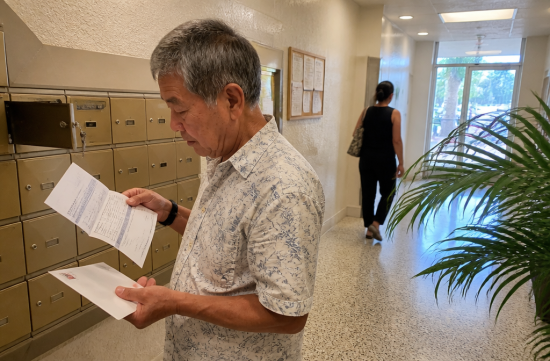
Last week, a friend living in the same building stood in front of the mailbox holding an envelope for quite a while. It was a notice for a special assessment meeting sent by the management association.
These envelopes are among the most dreaded pieces of mail for retirees living in Florida condos these days. Having received something similar myself, I could relate to the expression on their face.
Let's first address why these notices have suddenly increased. It all started with the law enacted after the Surfside condo collapse in 2021.
The SB 4-D passed in 2022 mandated milestone structural inspections for condos above a certain height. It also required an investigation into reserve funds, known as SIRS.
The original deadline for the first SIRS was December 31, 2024. However, the 2025 HB 913 extended this deadline by one year to December 31, 2025, and that law took effect on July 1, 2025.
The issue lies in the results of these investigations. Many buildings have not adequately built up their reserve funds over the decades, leading to the need for special assessments to collect the shortfall all at once.
In South Korea, it is legally mandated that long-term reserve funds be collected monthly as part of management fees. If American condos had implemented something similar earlier, we might not be facing such financial burdens now.
HB 913 clearly states that the board has the authority to collect special assessments or take out loans for necessary repairs identified during inspections. Therefore, it's realistic to expect these notices to become more frequent in the future.
So, what should you look for when you receive a notice? I recommend checking the date first.
According to Florida law 718.112, board meetings addressing special assessments, unless in emergencies, must be announced in writing at least 14 days in advance. They must also be posted in visible areas within the building.
The notice should specify the nature of the assessment, the estimated costs, and the purpose. If it simply states "construction costs," there may be grounds for questioning.
If the association's bylaws specify a longer notice period than 14 days, that period applies. So, be sure to pull out the bylaws and regulations from your drawer.
Next, it's important to attend the meeting in person. If you skip it out of inconvenience, you may find yourself without a voice later.
During the meeting, ask how many estimates were received, whether the scope of work aligns with the inspection report, and if installment payments are possible. It's better to write down your questions beforehand.
Legal guarantees for installment payments are not mandatory. However, many associations allow installments for larger amounts, so it's worth requesting.
If you have doubts about the documents, you can formally request to view the association's official records in writing. The association must allow access within 10 business days after receiving the request.
If this deadline is exceeded, the association is presumed to have intentionally violated the law. Therefore, it's advisable to send your request in a way that leaves a record of the date.
If you still receive no response, you can file a complaint with the DBPR's condo division or apply for dispute resolution. The condo ombudsman's office also accepts consultation appointments.
You should also be aware of what happens if you can't pay immediately. Many people overlook this part and end up in trouble.
If you fall behind, the association will first send a delinquency notice and give you a 30-day grace period. Paying within that time can help you avoid attorney fees.
The next step is a notice of intent to lien. Since the law was amended in 2021, a lien can only be recorded 45 days after the notice.
A foreclosure judgment can only be issued 45 days after the association has formally notified its intent to foreclose. This means there is time, but it doesn't imply you can just wait it out.
Many people believe their homes are safe because they are registered as homesteads. However, the general legal explanation is that condo management fees and assessment liens are not protected by homestead laws.
So, don't avoid communication; discuss a payment plan with the association or management company first. Be sure to keep a record of the conversation via email or in writing.
If the assessment is at an unmanageable level, some may consider selling their unit. In this case, it's crucial to clearly state in the sales contract who will bear the assessment costs to avoid future complications.
Legal provisions and implementation schedules are revised every year, and each association has different bylaws. Since outcomes can vary significantly based on individual circumstances, it's essential to consult a condo attorney or legal aid organization.
In my opinion, the intent of this law is correct. We cannot delay the safety of buildings where lives are at stake.
However, imposing several years' worth of burdens on seniors living on fixed incomes all at once is too harsh. I believe the state government should expand options like long-term low-interest loans.
If I received a notice, I would mark the date on my calendar, find the bylaws, and write down my questions. Ignoring the envelope and putting it in a drawer is the worst choice.
 SilverTrail87


 memorabilia |

 orvian89 |

 looksee 78 |

 vivavida |
 MEDBIO American Doctor Blog |

 Splendid Mission |


 Kyo Sho |


 Tamfa Fan |

 Cheese Hill Restaurant Exploration |
 gentle |
 tamarindbay |
 Yes Dorian |
 Hedgehog Baggu Story |
 Good Riddle |
 Well Done Sir |
 struct |
 Vision XT |
 Joyce 77 |
 Way to easy |
 dreamer20 |
 business lim |
 lorixa |
 Que Buena |
 Street Smart Blog |
 butter 90 |
 Flying Shooting Star |
 silents |
 ROLDU WAY |