
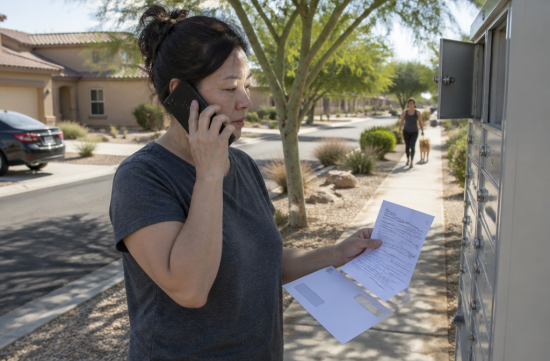
I received a message from someone whose husband's company suddenly underwent restructuring, resulting in a 50% reduction in income for the past three months. The first question was, "If I miss a mortgage payment, will I lose my home immediately?"
To put it simply, one month of delinquency does not mean foreclosure. However, what you do in the following weeks can significantly affect the outcome.
These days, the term mortgage delinquency crisis appears frequently in the news, so let's take a calm look at the numbers. According to ICE's data from August 2026, the national mortgage delinquency rate was 3.53%.
This is an increase of 0.10 percentage points from the previous year, but 0.35 percentage points lower than in August 2019. Looking at the national average alone, the term crisis seems a bit premature.
The serious delinquency rate, which is 90 days or more overdue, stands at 1.04%, similar to the average for August in the years before the pandemic. The figures for September and October have not yet been confirmed at the time of writing this article.
There is one area of concern. The percentage of loans in the foreclosure process is 0.54%, the highest level since February 2020.
ICE has pointed out that this pressure has been concentrated on FHA loans throughout the year. These loans are commonly used by families purchasing their first home with a low down payment, making it a relevant issue for Korean families as well.
Now, let's return to the initial scenario. The first terms this person heard were forbearance and loan modification.
Forbearance is a temporary measure that allows you to pause or reduce payments for a certain period. The loan terms themselves remain unchanged.
This is where many people misunderstand. The paused amount does not disappear; it must be repaid later, and interest typically continues to accrue during this time.
Once the forbearance period ends, you can settle the missed payments in one lump sum, spread them out over several months, or push them to the end of the loan. The options available depend on the type of loan and the servicer.
Loan modification is different in nature. It is a permanent adjustment that changes the interest rate, repayment term, and sometimes even the principal structure to make the monthly payment more manageable over time.
In simple terms, forbearance is a brief pause, while modification is about restructuring the contract entirely. The timeline for when income returns becomes the deciding factor between the two.
In this case, the husband was likely to find a new job within two months. Therefore, they opted for a short forbearance and planned to settle the payments in installments afterward.
If there was no prospect of returning to previous income levels, the situation would be different. Simply receiving forbearance could lead to a larger wall of debt when the missed payments come due all at once a few months later.
In such cases, it is better to inquire about modification from the start. In fact, many people first use forbearance and then transition to modification if their situation does not improve.
If it's an FHA loan, there's one more thing to keep in mind. Due to changes in HUD guidelines, starting from October 2025, permanent housing maintenance measures can only be received once every 24 months.
This means you cannot rely on multiple forbearances as before. You need to carefully evaluate whether the conditions are truly manageable when you receive it.
Knowing the timeline can also ease your urgency. According to federal regulations under Regulation X, servicers typically cannot initiate the first foreclosure process until the delinquency exceeds 120 days.
Additionally, if you submit a completed modification application at least 37 days before the auction date, the servicer cannot proceed with the auction until the review is complete. Therefore, submitting documents early and completely is crucial.
In Arizona, the trustee sale method, which does not go through the courts, is common. Auctions cannot be held before the 91st day from the date the sale notice is recorded.
Moreover, if you pay the overdue amount by 5 PM the day before the auction, you can restore the loan to its original state. After the auction, there is virtually no way to recover, so you need to act before that.
So, what should you do right now? I would call the servicer before the first delinquency occurs, or at least during the week it happens.
When you call, it's best to honestly explain the reason for the reduced income and when you expect to recover. Be sure to note the date of the call and the name of the representative.
Gathering documents like pay stubs, unemployment benefit notices, and bank statements in advance will speed up the application process significantly. If any documents are missing, the application may be processed as incomplete, leaving you unprotected.
HUD-approved housing counseling agencies provide free assistance with this process. Be cautious of companies that ask for fees upfront while promising to prevent foreclosure.
Options vary depending on the type of loan, state laws, and personal circumstances, so it's advisable to consult with a counselor or attorney before making a decision. Even with the same delinquency, the solutions differ from household to household.
Ultimately, this family returned to normal payments after four months. From my long experience in this field, I've noticed that those who managed to keep their homes were usually the ones who made the first call.
 bluestarcreator1966








 silents |

 Choco Choco Star |

 gentle |

 neapolis |

 moo moo |

 Arizona AZ Cowboy |

 Young Kim |

 Kitchen Ideas |


 business lim |
 tamarindbay |
 Yes Dorian |
 Hedgehog Baggu Story |
 Good Riddle |
 Well Done Sir |
 struct |
 Vision XT |
 Joyce 77 |
 Way to easy |
 dreamer20 |
 lorixa |
 Que Buena |
 Street Smart Blog |
 butter 90 |
 Flying Shooting Star |
 ROLDU WAY |
 dreamming |
 greenloop |