
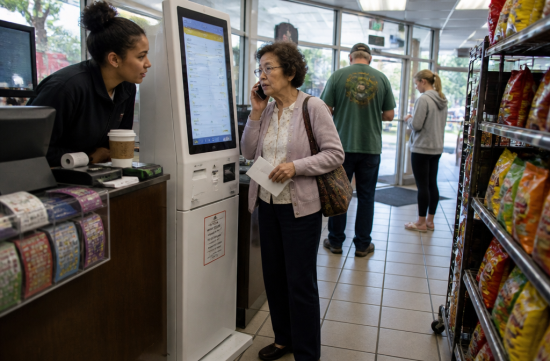
Last week, while I was waiting in line to buy coffee at a local gas station, I noticed an elderly woman standing in front of the coin ATM next to the checkout. She was on the phone with one hand and holding a cash envelope in the other.
When a clerk approached and asked, "Did someone ask you to put money in?" the woman hesitated for a moment. Ultimately, she left without depositing any money that day, and watching her walk away left me feeling uneasy.
This scene is no longer unfamiliar in Florida. That's why the state legislature has created a law to regulate coin ATMs, officially known as cryptocurrency kiosks, which will take effect on January 1, 2027.
The bill number is HB 505. It passed the House with a vote of 107 to 0, and Governor DeSantis signed it on June 26.
Why go to such lengths? The numbers tell the story.
According to data from the FBI's Internet Crime Complaint Center regarding coin ATMs in 2025, Florida had 1,213 reported cases with losses totaling $32.7 million, making it the second highest in the nation after Texas. This is just the reported cases, so the actual losses are likely much higher.
Last year, a warning from AARP and the state law enforcement agency FDLE indicated that there are over 3,100 coin ATMs in Florida. This explains why they are so easily spotted at gas stations, convenience stores, and grocery stores.
The methods used by scammers are quite similar. They impersonate police officers, sheriffs, bank employees, or government officials, claiming that "your account is at risk, and you need to safely transfer your money" to the coin ATM.
This spring, there were reports of victims who were tricked into depositing cash into a gas station coin ATM after receiving a call impersonating the sheriff's office in Hillsborough County. The sheriff's office reiterated that they never ask for money over the phone or request cryptocurrency, gift cards, or wire transfers.
So, what changes will take effect in January? Let's take a look at them one by one. The most noticeable change is the daily transaction limit.
New customers will only be able to deposit up to $2,000 per day. Existing customers will have a limit of $10,000 per day.
This aims to prevent scammers from taking large sums of money all at once when they first bring a victim to the ATM. Setting a threshold for the initial transaction is key.
The second change involves warning messages. The machines will be required to display fraud warnings on their screens.
Honestly, I wonder how much a single warning can prevent. Still, if it makes someone pause during a frantic phone call, that could be meaningful, right?
The third change is regarding receipts. Every transaction must provide a paper or digital receipt, which will include the contact information of the operating company and transaction details.
This receipt will be crucial evidence if you need to report a fraud later, so if you do make a transaction, be sure not to throw it away.
The fourth change requires operating companies to filter out transactions going to wallet addresses linked to criminal activity using blockchain analysis tools. This aims to prevent money from being transferred to scammers' wallets at the machine level.
The fifth and most welcome change is the introduction of a refund policy. If a fraud victim reports the incident within a specified timeframe, the operating company must refund the first fraudulent transaction within 72 hours.
However, there are conditions. You must adhere to the reporting deadline and provide documentation such as a police report, as explained in the bill analysis.
So, if you feel you've been scammed, don't be embarrassed; report it to the police immediately and contact the company with your receipt. Time is money.
Finally, coin ATM operating companies must register with the state Office of Financial Regulation (OFR). Until now, they have essentially been outside state-level oversight.
Let's summarize the changes briefly. New customers will have a daily limit of $2,000, while existing customers will have a limit of $10,000. Screen warnings, receipts, blocking criminal wallets, refunds for the first fraudulent transaction, and OFR registration will follow in order.
So, what should we do? I believe that what's more important than the law is keeping an eye on things at home.
Tell your parents to memorize just one sentence: the government or police will never ask you to put money into a coin ATM.
If someone pressures you over the phone, hang up and make a promise to call your children or friends first. Scammers always say, "Don't tell anyone."
Many elderly Korean Americans feel anxious during English phone calls, and when the other party speaks in an official tone, they can become even more intimidated. This is the frightening aspect of this scam.
Some may feel that a $2,000 limit is low, but isn't it much better than losing a lifetime of savings in a single day?
I don't think this law is perfect. Scammers can still split transactions over several days to bypass the limits.
However, the introduction of mandatory refunds and registration is a clear advancement. It means that companies can no longer treat fraud victims as someone else's problem.
I hope there will be more neighbors willing to speak up, just like that clerk at the gas station. When we see an elderly person counting cash while talking in front of a coin ATM, let's casually ask if they're okay.
 SoupCircus
 QUODUO





 Anjollinya Blog |

 Kitchen Ideas |

 Spaghetti Flying Religion |

 Giant Squid and Sweet Potato Soup |

 choi family |

 Splendid Mission |

 Tamfa Fan |

 Kyo Sho |

 ssome |
 skykong |
 Shining Our Own World |
 gardener 007 |
 golfmaster |
 Nanana Nanana Nanana |
 Who's watching? |
 endone |
 RockStar |
 Casa Mia |
 You Only Live Once |
 Hardworking CPA |
 Joyce 77 |
 Runner Kim |
 My Town My Way Blog |
 My Miami Stories |
 Entip |
 Tony Park |
 Jean Claude Bundang Blog |
 DJ DC BLOG |