

A friend of mine plans to retire in Hawaii. When the topic of taxes came up, they confidently said, "Hawaii doesn't tax pensions, right?"
This statement is partly correct and partly incorrect. So today, I want to clarify this confusing aspect.
Hawaii state income tax treats retirement income differently based on the source of the funds. The key factor is who originally contributed the money, rather than the label on the funds.
Traditional pensions, where the company covers the entire cost and the employee does not contribute separately, are exempt from Hawaii state income tax when received after retirement. Federal taxes are still applicable.
What about 401k plans? The elective deferral, which is the portion contributed from the employee's salary, is subject to Hawaii state income tax when withdrawn.
The Hawaii Department of Taxation clarified this distinction in an administrative rule change effective January 1, 1998. It states that funds that the individual could choose to receive as salary or contribute to a retirement account remain taxable.
The logic is this: the money I chose to contribute was essentially my salary. In terms of taxes, it's as if I'm being told, "That was my money back then."
Many people ask about the company matching contributions. What happens to the matching contributions made by the company into the 401k?
Tax software companies and expert sites often explain that the portion corresponding to the company contributions may be exempt. However, I could not find a specific statement from the state government that clearly addresses 401k matching contributions.
So, I won't make a definitive statement on this. It's important to keep track of how much is your contribution and how much is the company's contribution in your account.
Contributory pensions, where employees also contribute, are treated differently. In these cases, the portion corresponding to the employee's contributions is taxable, while the remainder may be exempt.
The Hawaii Employees' Retirement System (ERS) also involves employee contributions, which falls under this category. This is why tax treatment can vary for different recipients, even though they all receive "pensions."
According to materials submitted by the Department of Taxation to the Tax Review Commission in July 2026, there was a recommendation to exempt the first $25,000 of income from contributory pensions per beneficiary. This is merely a proposal and has not yet been enacted into law.
Personally, I find this proposal quite fair. It seems unjust for teachers or public servants who have contributed throughout their careers to end up paying more taxes.
Additionally, the ERS employee contributions are mentioned in the Department of Taxation materials as funds that have not received state income tax deductions. This is one reason why the taxation of contributory pensions remains a contentious issue.
IRAs are generally taxable as well. Withdrawals from a traditional IRA are typically considered ordinary income in Hawaii.
There is one exception. If company contributions from a pension are rolled over into an IRA, that portion may be exempt when withdrawn later, according to documents from the Department of Taxation.
The challenge lies in documentation. You might have to dig through your garage to find rollover paperwork from decades ago. Seriously, scan them now.
Timing is also important. Exemptions are based on distributions received upon retirement, so withdrawals subject to the federal 10% early withdrawal penalty are generally not exempt.
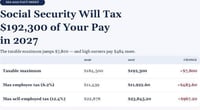
There's good news too. Hawaii does not impose state income tax on Social Security benefits.
The standard deduction is also increasing. Under Act 46 passed in 2024, it is gradually rising, with the 2026 tax year standard deduction set at $8,000 for single filers and $16,000 for married couples filing jointly.
Considering how low the previous amounts were, this change is quite noticeable. However, the highest state income tax rate in Hawaii is not low, set at 11% for 2026.
So how should you prepare? Here's how I would approach it.
First, I would categorize my retirement assets into company-funded pensions, contributory pensions, 401k, and IRA. It's surprisingly quick to organize.
Next, check your 401k statements to see if your contributions and the company matching contributions are listed separately. If not, you can request this from the plan administrator.
Also, read the Hawaii Department of Taxation's N-11 personal income tax return instructions regarding pension exemptions. There are reports that tax software may not automatically account for these.
Finally, when planning your withdrawal sequence, include state taxes in your calculations. How you mix exempt income and taxable income can affect your taxes each year.
Of course, since pension structures and rollover histories vary from person to person, be sure to consult a tax professional knowledgeable about Hawaii tax law before filing.
In summary, in Hawaii, money contributed by the company is generally treated generously, while money contributed by the individual is scrutinized closely. Remember, the waves are free, but the 401k is not.
 NatlSlaveShow








 memorabilia |
 orvian89 |

 looksee 78 |

 vivavida |
 MEDBIO American Doctor Blog |

 Hawaii Tourist Information |
 HAWAII Korean Church News |
 Why Not 1987 |


 tamarindbay |
 Yes Dorian |
 Hedgehog Baggu Story |
 Good Riddle |
 Well Done Sir |
 struct |
 Vision XT |
 Joyce 77 |
 Way to easy |
 dreamer20 |
 business lim |
 lorixa |
 Que Buena |
 Street Smart Blog |
 butter 90 |
 Flying Shooting Star |
 silents |
 ROLDU WAY |
 dreamming |
 greenloop |