

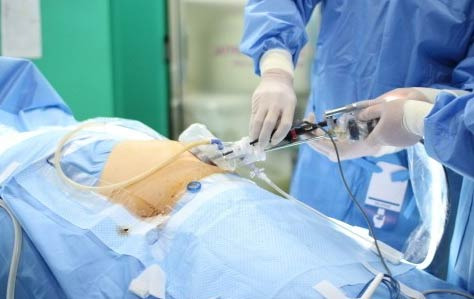
When thinking about what might lead to a visit to the emergency room while living in the U.S., appendicitis is surprisingly common.
There are cases where a seemingly healthy person suddenly experiences abdominal pain and ends up having surgery on the same day.
The lifetime probability of developing appendicitis is estimated to be about 8.6% for men and 6.7% for women in the U.S.
For men, this roughly translates to 1 in 12 people. That's higher than you might think.
It mostly occurs in younger individuals up to their 40s, but it's not a condition that people in their 50s or 60s can completely ignore.
So, wouldn't Americans just remove their appendix beforehand since it's considered an unnecessary organ?
Generally, they do not. It is not common medical practice to proactively remove the appendix from a healthy person due to concerns about developing appendicitis later.
Even though laparoscopic surgery is relatively simple, it requires general anesthesia and carries risks such as bleeding, infection, and damage to surrounding organs.
There may be cases where the appendix is removed for specific reasons during other abdominal surgeries, but you can't just walk into a hospital and say, "Please take out my appendix."
The problem arises when someone has appendicitis but tries to tough it out. Initially, the pain may be vague, but over time, it typically shifts to the lower right abdomen.
Loss of appetite, nausea, or fever may occur. If someone waits a few days thinking it's just indigestion and the appendix bursts, the situation changes dramatically.
This can lead to peritonitis or abscesses, and the treatment with antibiotics and hospital stay can become prolonged. Ultimately, going to the emergency room early is better for both health and finances.
But then comes the scariest question in the U.S.: So, how much does it cost?
If you don't have insurance, a simple appendectomy can cost between $10,000 and $30,000, including emergency room tests, CT scans, surgeon fees, anesthesia, and surgery costs.
According to publicly available pricing data from 2026, the total cost for uninsured patients was around $7,500 to $30,000, with surgeries without complications averaging around $15,000.
In unfortunate cases where complications arise, the actual hospital bill can exceed $40,000.
On the other hand, if cash payment discounts or negotiations are applied, the costs can be significantly lower, leading to huge price variations for the same surgery in the U.S.
The bigger issue is that if the appendix bursts, requiring emergency surgery and a longer hospital stay, along with infection treatment or additional tests, it's not uncommon for costs to exceed $30,000 and potentially rise much higher depending on the situation.
If you have insurance, the situation changes. Insurance companies do not require patients to pay the full $20,000 hospital bill; they apply contracted rates, and patients are responsible for their deductible, copay, coinsurance, and annual out-of-pocket maximum.
So, with good employer-sponsored insurance, the actual out-of-pocket expense can sometimes be just a few thousand dollars.
The conclusion is that in the U.S., appendicitis is a condition you cannot afford to ignore due to financial concerns.
Especially if the pain in the lower right abdomen worsens and is accompanied by fever or vomiting, waiting a day or two while calculating hospital costs is not an option.
In the U.S., a burst appendix is far scarier than a healthy one.
 NewLightly
 GrayPhone







 Diana Blues |

 Dragon Lee |

 Churros Train Conductor |

 Tora Tora |

 neroyo |

 My Two Way |

 Living in Florida |

 Splendid Mission |


 Kyo Sho |
 hot chocolate |
 SODA MAKER |
 james kim |
 All About Cars |
 lomira98 |
 calmbridge |
 oneonly |
 Brighto |
 racuse |
 Total Beauty |
 crystal |
 Good Hotels |
 raspberry7 |
 Que que |
 Well Done Sir |
 dance dance |
 sweetpepe |
 vegas mom |
 Olivia's Blog |
 cathywhite |