
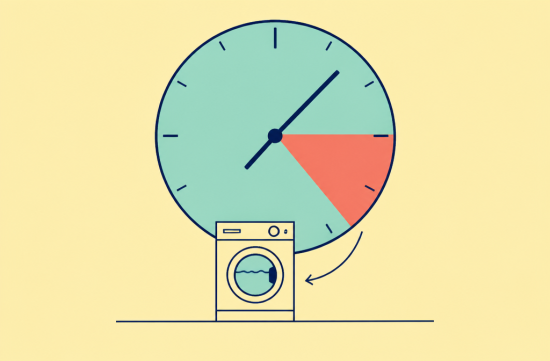
Many of you might have paused when opening the first bill in November. The amount feels strangely heavy even though the usage is similar.
I checked the numbers first. According to SDG&E's official rate change notice, the average residential electric rate for bundled customers was 45.7 cents per kWh in January 2026.
Then, starting in April, it increased by 0.7 cents, or 1.5%, to 46.4 cents. Bundled customers are those who receive both transmission and generation services from SDG&E.
Honestly, I was a bit surprised by this number. Almost half a dollar per kWh feels like buying electricity rather than using it.
However, there's an interesting point. The same notice states that the average bill for a TOU-DR1 household using 400 kWh per month actually decreases from $195 to $194, a drop of $1.
The reason the rate increased but the bill decreased is that the super off-peak hours have been extended. This is the key to winter savings.
Previously, the super off-peak hours from 10 AM to 2 PM on weekdays were only available in March and April. Starting this spring, this time frame will apply year-round.
To summarize, for rate plans like TOU-DR1, the super off-peak hours on weekdays are from midnight to 6 AM and from 10 AM to 2 PM. On weekends and holidays, it's from midnight to 2 PM.
The most expensive peak hours are from 4 PM to 9 PM every day. This doesn't change on weekends, so make sure to remember this. It's particularly annoying since it's right when you come home from work and start turning things on.
SDG&E's winter season runs from November 1 to May 31. This means that for the next seven months, these rules will apply.
So, what can you actually shift? Start with appliances that can be scheduled, like washing machines, dryers, and dishwashers.
If no one is home during the day on weekdays, use the scheduling feature. If you set the washing machine to start at 10:30 AM, it will be done by the time you get home from work.
Weekends are even easier. Since the entire time before 2 PM is super off-peak, you can batch your laundry and deep cleaning in the morning.
If you have an electric vehicle, make sure to set the charging timer for after midnight. This is a no-brainer.
Cooking is the same. I do batch cooking on weekend mornings, preparing oven dishes and side dishes all at once, so I only need to reheat during peak dinner hours, which is much more relaxing.
If you run an electric heater, oven, and dryer all at 6 PM in winter, it creates the worst combination of peak rates and usage. Just avoiding this time frame can make a noticeable difference.
Be especially careful with electric heaters. A 1,500W heater uses 1.5 kWh if it's on for an hour, and if you run it for several hours a day, it adds up quickly.
Use it briefly to heat just one room, and first block drafts with door seals or thick curtains to keep the heat in.
There's also a new item on the bill to note. Starting in October 2025, a monthly fixed charge called Base Services Charge will be added.
Regular customers will pay between $22.22 and $26.18 per month, depending on the billing period length. SDG&E explains that while some fixed costs have been moved here, the effect is a lower rate per kWh.
This fixed charge won't decrease no matter how much you save. Therefore, it's best to focus your savings efforts on the kWh rate and usage time.
If you meet the income criteria, be sure to check the CARE or FERA programs. CARE offers over 30% off energy rates, while FERA provides an 18% discount.
For CARE customers, the fixed charge will drop to between $5.52 and $6.51, and for FERA customers, it will be between $11.11 and $13.10. You can apply at sdge.com/assistance.
One more disappointing piece of news: the electric Climate Credit for this year has already been reflected in the August and September bills, so you shouldn't expect it on this winter's bill.
For reference, customers using other power providers like San Diego Community Power may have different generation rates, so they won't match the average rates exactly. Check the generation item on your own bill.
Also, check if your current rate plan has super off-peak hours. By logging into My Energy Center, you can compare rate plans and view usage by time.
I find looking at this data quite interesting. When you see the usage spikes on a graph, it's easy to identify areas for improvement.
I have many complaints about the rate structure as well. However, when the rate schedule sends such clear signals, those who adapt to those signals tend to succeed rather than complain.
If it were me, I would focus on just three things this week: changing the washing machine's scheduled time, reducing heater and oven use between 4 PM and 9 PM, and checking CARE eligibility. Even small changes will be reflected honestly on the bill.
 TONCOFFEE






 content |

 Carolina border |

 Que Buena |
 juicylol |

 Mr Song Song |

 Karina's Blog |

 Shintongbangtong Shin Naerin James Park |

 U.S. Supreme Court Judge Kim |

 Pinky Seven |

 Sandiego Auntie |
 jaxter |
 garlic bread |
 Cheese Hill Restaurant Exploration |
 gentle |
 tamarindbay |
 Yes Dorian |
 Hedgehog Baggu Story |
 Good Riddle |
 Well Done Sir |
 struct |
 Vision XT |
 Way to easy |
 Joyce 77 |
 dreamer20 |
 business lim |
 lorixa |
 Street Smart Blog |
 butter 90 |
 Flying Shooting Star |