
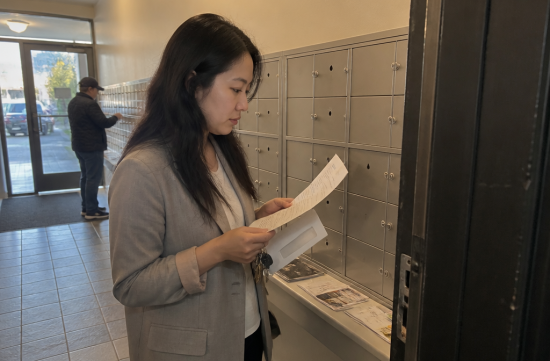
When you open the mammogram result letter and see the phrase "dense breast tissue," it can be a bit alarming. I've had people around me send me a screenshot of this letter right after receiving it.
To put it simply, this is not a diagnosis. It doesn't mean you have cancer.
So why do they send this information? There are federal regulations that changed starting in 2024.
The FDA announced the final rule revising the Mammography Quality Standards Act (MQSA) in March 2023. This regulation began to apply to all mammography facilities nationwide starting September 10, 2024.
The key points are twofold. The reading report must include a breast density assessment, and the summary sent to patients must indicate whether or not they have dense breasts.
If you have dense breasts, a specific statement is included. It explains that dense tissue makes it harder to detect cancer on a mammogram and increases the risk of breast cancer.
At the end of the notice, there's a sentence encouraging you to discuss your breast density, risk factors, and personal situation with your healthcare provider. The regulation essentially mandates that the next step involves a conversation with a doctor.
So that statement isn't attached because your results are unusual. It's a standard notice sent to everyone who qualifies.
Density is categorized into four levels: A is mostly fatty, B is scattered fibroglandular tissue, C is heterogeneously dense, and D is extremely dense.
C and D are referred to as dense breasts. The National Cancer Institute (NCI) explains that nearly half of women over 40 have dense breasts.
In numbers, this means it's quite common. It also indicates that many people receive this letter.
And this cannot be determined by touch. Self-exams or clinical breast exams cannot confirm it; only mammogram images can provide a diagnosis.
The issue arises from the colors visible in the images. Dense tissue appears white on the mammogram, and tumors also appear white, making it like searching for a white rabbit in a snow-covered field.
So what should you do after receiving the letter? Here's the order I recommend.
First, check whether your category is C or D in the original report. Many patient portals have the full reading available.
Second, jot down your risk factors. This includes family history, personal medical history, and genetic test results. It's helpful to ask family members about any relevant medical history beforehand to make discussions with your doctor easier.
Third, bring this information to discuss with your primary care physician or gynecologist. The decision about whether additional tests are needed isn't based solely on density; it considers these factors together.
Common additional tests mentioned include breast ultrasound and MRI. 3D mammography, also known as tomosynthesis, is frequently discussed as well.
One thing to note is that the U.S. Preventive Services Task Force (USPSTF) recommended in 2024 that women aged 40 to 74 receive mammograms every two years.
However, they gave an "insufficient evidence" rating regarding adding ultrasound or MRI for women with dense breasts. This doesn't mean you shouldn't do it, but rather that there isn't enough data to weigh the benefits against the risks.
I find this approach to be more honest. Rather than saying everyone should get all tests, it's much more realistic to decide based on your individual situation.
If you live in Ohio, there's more to know. There's a state law passed in 2022 called HB 371.
This law requires insurance companies to cover supplemental screenings for those identified as high-risk due to dense breasts or family history.
The catch is that while it's covered, it doesn't mean it's free. Deductibles and copays still apply, so you might be surprised when you receive a hospital bill.
To address this, the BEST Act (HB 271) was introduced in 2025 to eliminate out-of-pocket costs entirely. However, as of the time I checked, it's still in the House Insurance Committee stage.
Personally, I understand the intent of this bill, but I think we also need to consider the costs that come back through insurance premiums. Free tests ultimately mean someone is paying for them.
Another point is that self-funded plans operated directly by companies may not be subject to state insurance laws. Therefore, it's best to call your insurance company directly before scheduling a test to confirm coverage and out-of-pocket costs.
When you call, having the test name and CPT code from the hospital will help you get a more accurate answer. This alone can reduce the chances of disputes over bills later on.
In summary, don't panic, check your category, bring your risk factors to discuss with your doctor, and confirm insurance coverage in advance.
If it were me, I would probably open the report on the portal within the week of receiving the letter. Looking at the data is much more reassuring than just worrying aimlessly.
 VelvetMoon94

 Churros Train Conductor |
 Tora Tora |
 neroyo |
 nivex85 |
 Old English |
 hopeful |
 happy 9 |

 Mr Cleveland |
 peace |
 Real Estate Investment Korean American |
  apricotla |
  Soy Angelino |
  nati8 |
  NE Hodori Preik |
  washington mom |
  celtics |
  Balancework |
  round1 |
  Way to easy |
  musicque |
  road98 |
  gleeful |
  Burbank Lee |
  Olivia's Blog |
  Bushing Around Life |
  Active |
  Cherokee Rose |
  Kor. Master |
  Holey Moley |