
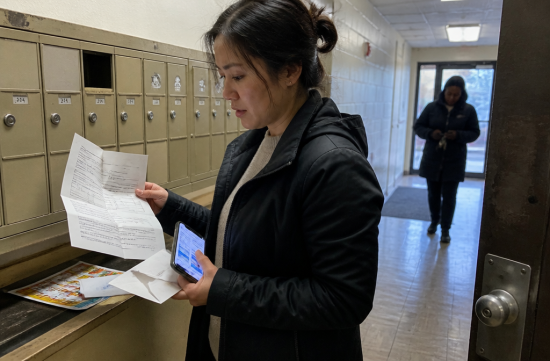
These days, I often hear people asking if they've received a Medicaid letter. Some have opened the envelope and felt a jolt of fear upon seeing the term "work requirement."
Nebraska is the first state in the nation to implement Medicaid work requirements. So today, I will break down exactly what this means and what you need to document.
First, a bit of background. A federal law passed in July 2025 (One Big Beautiful Bill Act) included work requirements for those eligible for Medicaid expansion.
The federal standard will take effect on January 1, 2027. However, Nebraska has moved this up by eight months, starting on May 1, 2026.
The target group is Heritage Health Adults, meaning adults aged 19 to 64 who are enrolled in Medicaid expansion. The income limit is up to 138% of the federal poverty line, and those who are pregnant, disabled, or enrolled in Medicare are not included.
The key number is 80 hours a month. This can be fulfilled by working, attending school or an apprenticeship for more than half-time, participating in a work program, or volunteering.
You can mix and match. For example, if you work part-time for 50 hours and volunteer for 30 hours, that adds up to 80 hours.
And I think the most important part is that you can also meet the requirement through income instead of hours.
If you earn more than $580 a month, you meet the requirement. This is equivalent to the amount earned by working 80 hours at the federal minimum wage.
For those doing seasonal work, if your average monthly income over the last six months is above $580, it will be recognized regardless of hours worked. If you work on a farm or have a seasonal job, make sure to remember this.
There are also quite a few exemptions. Parents or guardians caring for children under 13, or those caring for a family member with a disability, are exempt.
Individuals who are pregnant or within 12 months postpartum, as well as veterans with total disability ratings, are also exempt. Households receiving SNAP or TANF while meeting those work requirements are similarly exempt.
If you have a medical condition that makes it difficult to work, you may also be exempt. This includes serious or complex illnesses, disabilities, addiction treatment, or severe mental health issues.
The state will review medical claims records about 90 days before renewal. If the diagnosis is confirmed in the records, you won't need to provide additional documentation, but if there are no records, you will need to provide proof yourself. If you're unsure whether your condition qualifies, be sure to consult your doctor and gather the necessary paperwork.
Timing can also be confusing. New applicants will be verified based on the month they apply or the previous month.
For those already enrolled, verification will occur during renewal. The process will apply in order to those whose coverage ends after July 31, 2026, and you only need to meet the requirement for at least one month since your last renewal.
Those who renewed in May or June will not need to provide documentation until their renewal in 2027. This is somewhat fortunate.
So how do you provide documentation? DHHS will first check employment or income data they already have, and if verified, you will receive an approval notice.
If verification fails, you will receive a verification notice along with a reporting form. The crucial point here is that you must respond within 30 days of receiving the notice.
Submitting online through iServe (iserve.nebraska.gov) is the easiest option. You can also submit by mail, fax, phone (855-632-7633, option 3), or visit a local DHHS office.
Honestly, I was a bit shocked when I first saw the data. According to an analysis by the Georgetown University Center for Children and Families, at least 1,090 people lost coverage or had their applications denied in the initial months.
What concerns me more is that 92% of those who were dropped during renewal did so because they "failed to submit the requested information." This means they were dropped not for not working, but for not submitting paperwork.
The state government plans to increase data matching to verify automatically, but at this stage, missing a single letter could result in losing your insurance.
I understand the intention behind encouraging work. However, I see the fact that even working individuals are being dropped due to paperwork issues as a sign that the system design is still lacking.
So here's my recommendation: First, log into iServe and check your renewal date.
Also, verify that your address, email, and phone number are up to date. Notifications will come via mail, email, or text, so if your contact information is incorrect, it won't be useful.
And take photos of your pay stubs or volunteer hour records each month and keep them in one folder. The 30-day deadline can pass quicker than you think.
If you find English documents overwhelming, don't struggle alone; call Legal Aid of Nebraska or DHHS directly for help. Not knowing is not something to be ashamed of, but missing deadlines can be a real loss.
 NationalSing






 Churros Train Conductor |
 Tora Tora |
 neroyo |
 nivex85 |
 Old English |
 noraro |
 moomoon |
 selvon |
 Nebraska Center Director TOP |
 Eagle in America for Five Years |
  nati8 |
  NE Hodori Preik |
  washington mom |
  celtics |
  Balancework |
  round1 |
  Way to easy |
  musicque |
  road98 |
  gleeful |
  Burbank Lee |
  Olivia's Blog |
  Bushing Around Life |
  Active |
  Cherokee Rose |
  Kor. Master |
  Holey Moley |
  Conflite Teacher |
  Hodong Prince Over Flex |