
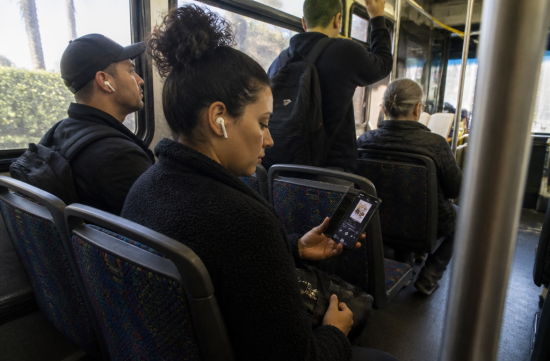
During lunch in the company break room, I overheard two colleagues having a heated discussion. I thought they were talking about a meeting, but it turned out they were debating who the murderer was in a podcast about a homicide they listened to the night before.
At first, it was a bit amusing. But then I realized I was also listening to similar content during my commute.
One of the fascinating things about living in America is the popularity of the true crime genre. When you open Netflix, there's usually at least one or two true crime documentaries featured on the main page.
Curious, I looked up some numbers. I can't help it; I have an analytical mindset.
The Pew Research Center published data in 2023. In a survey from 2022, they found that 34% of American adults who listened to podcasts in the past year reported regularly tuning into true crime podcasts.
There's a significant gender gap. Among podcast listeners, 44% are women, while only 23% are men, meaning women are nearly twice as likely to listen.
Looking at age demographics, 41% of listeners aged 18-29 and only 15% of those over 65 reported listening. This suggests that younger people are more inclined to tune in.
In terms of education, 45% of those with a high school diploma or less listen, compared to 27% of those with a bachelor's degree or higher. This was a surprising statistic for me, as I had an assumption that more educated individuals would enjoy this type of content.
In fact, the roots of this genre run deep. Truman Capote's In Cold Blood was published in 1966 and covers the non-fiction account of a family of four murdered in Holcomb, Kansas, in 1959.
However, the current boom can be traced back to October 2014, when the podcast Serial, derived from This American Life, first aired.
Serial revisited the case of Adnan Syed, who was convicted for the murder of a Baltimore high school student in 1999. The host's approach of investigating like a journalist and sharing the confusion of the case was refreshing.
This show was the first podcast to win a Peabody Award, and many believe it elevated the medium of podcasting into the mainstream.
The following year, in December 2015, Netflix released the ten-part documentary Making a Murderer. This marked the moment when the audio-driven trend transitioned to streaming. Since then, almost every platform has produced similar documentaries.
So why are women particularly drawn to this genre? There's a study on this.
Psychologist Amanda Vicary published a paper in the journal Social Psychological and Personality Science in 2010. The findings indicated that women are more attracted to true crime stories, while men are drawn to other violent genres.
The researchers interpreted this as a survival instinct. It's a psychological need to understand what signals the perpetrator exhibited and how the victim managed to escape.
I found this explanation quite relatable. Many women have the habit of holding their keys between their fingers when walking through a parking lot at night, often without knowing where they learned it.
Another factor is the puzzle instinct. The process of piecing together evidence and forming my own conclusions can be oddly addictive. It's similar to the pleasure of analyzing data at work.
Lastly, there's a question about the system. Many works ultimately question whether police investigations were thorough and if trials were fair.
In fact, Syed's conviction was overturned in 2022, leading to his release after more than 20 years in prison. Although legal battles continued, it's clear that public interest has prompted a re-examination of the case.
However, there are uncomfortable aspects as well. When the Netflix series Dahmer was released in 2022, the families of the victims publicly protested.
One family member stated that the production team never contacted them. They expressed that seeing their courtroom statements reenacted caused them to relive their trauma.
The producers countered that they had reached out to family and friends during the three years of scriptwriting, but no one responded. Regardless of which side is correct, the fact remains that someone's most horrific day becomes someone else's entertainment.
Honestly, this always weighs on my mind. I can remember the names of the perpetrators, but often forget the names of the victims.
So these days, I've set a standard for myself. I first check whether the voices of the victims and their families are adequately represented and whether the work addresses systemic flaws.
I turn off any content that glorifies the perpetrator like a star or drags out gruesome scenes. I believe that's not analysis; it's consumption.
The popularity of true crime likely stems from a mix of anxiety, curiosity, and a thirst for justice. That feeling itself isn't strange.
However, I hope we, as listeners, become a bit more discerning. Before hitting play tonight, why not take a moment to consider whose perspective this story was created from?
 MARIO 2022








 Conflite Teacher |
 SEVEN SEVEN |
 Korean Mom |
 novapixel |
 Peter Pan Pet |

 There Are Such Things in the World |
 Exploring American Life Information |
 Project Tomorrow |
  apricotla |
  Soy Angelino |
  nati8 |
  NE Hodori Preik |
  washington mom |
  celtics |
  Balancework |
  round1 |
  Way to easy |
  musicque |
  road98 |
  Churros Train Conductor |
  gleeful |
  Burbank Lee |
  Olivia's Blog |
  Bushing Around Life |
  Active |
  Cherokee Rose |
  Kor. Master |