

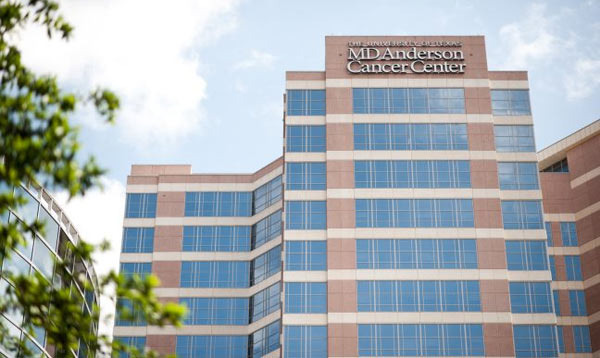
MD Anderson Cancer Center is a world-renowned comprehensive cancer treatment and research institution located in Houston, Texas, USA.
It is part of the University of Texas System and is recognized as a leading cancer specialty center that integrates treatment, research, and education.
This institution is one of the first three comprehensive cancer centers designated under the U.S. National Cancer Act established in 1971, and it has played a leading role in cancer research and treatment since then. It continues to receive high global recognition for its innovative research, clinical care, and medical education.
Its unique feature is the interconnected structure of research, education, prevention, and treatment. While most hospitals focus on treatment, this center operates with simultaneous research and clinical trials, allowing new therapies to be quickly applied to actual patients.
The range of cancer types treated here is quite broad. It covers common cancers like breast cancer, lung cancer, and colorectal cancer, as well as complex cases such as leukemia, lymphoma, brain tumors, and head and neck cancers.
In particular, it is not uncommon for patients to seek this center as a last resort after being told by other hospitals that "there are no more options." This is due to the scale of clinical trials, as it is one of the first places where new drugs or treatments are applied.
To illustrate, consider the case of a male patient in his 50s from Korea.
He was diagnosed with stage 4 colorectal cancer in Korea and underwent several rounds of chemotherapy, but the response was poor.
The domestic medical team determined that more aggressive treatment options were limited, and while his family was exploring options in the U.S., they found MD Anderson.
Initially, they were concerned about the financial burden. Including airfare, accommodation, and treatment costs, it was realistically a significant amount.
However, they decided to send their information and proceed with a consultation for a second opinion.
During this process, they were presented with different targeted treatment options and the possibility of participating in clinical trials.
As a result, the patient entered a new treatment protocol, and the tumor responded, significantly slowing the progression of the disease. This case is a typical example of why this hospital is sought after by patients worldwide, rather than a special miracle.

One reason this hospital is well-known in Korea is due to stories related to the Samsung family being introduced through the media.
However, it is important to distinguish between fact and interpretation regarding this matter.
It is known that the late Chairman Lee Kun-hee received cancer treatment and examinations abroad, but there is limited official documentation confirming whether he received treatment at MD Anderson during a specific period.
While some reports have mentioned this hospital, it is necessary to be cautious about stating it as a confirmed fact.
From the perspective of Korean patients, the international patient services are systematically operated, and Korean language interpretation support is available.
The most anxious aspect for first-time visitors is often the language and system, but this is well organized. In fact, there is a cooperative relationship with large hospitals in Korea, making the transfer of medical records and collaboration relatively smooth.
For residents in the U.S., it is common to receive a referral through a primary care physician.
However, self-referral is also possible depending on the case. For those coming directly from Korea, translating medical records and preparing imaging materials are key. Proper preparation is essential for a swift initial consultation.
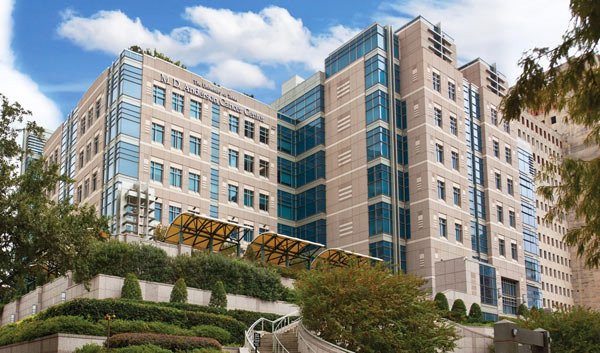
It is also important to address the realistic aspects. The costs are quite high.
The financial burden varies significantly depending on insurance coverage, especially regarding network inclusion and prior authorization, which must be confirmed. Missing this can lead to much higher costs than expected.
Another factor is time. There may be a waiting period for appointment scheduling, and tests and treatments are conducted in stages, making schedule management important.
Consideration should also be given to local accommodations in Houston.
There are short-term rental apartments or patient accommodations near the hospital, but prices tend to rise during peak seasons. Parking and transportation are relatively convenient, with large parking facilities on campus and valet services available.
However, due to the hospital's large size, it can be challenging to navigate on the first visit. It is not an exaggeration to say that most first-time visitors spend almost the entire day moving around the hospital.
For Korean patients, the cost of lung cancer treatment at MD Anderson Cancer Center varies significantly depending on the treatment method. Generally, surgery (lung resection), chemotherapy, and radiation therapy are combined, with total costs expected to range from $80,000 to over $200,000. If only surgery is performed, the cost is around $40,000 to $80,000, but costs rise quickly with the addition of chemotherapy and radiation therapy.
The out-of-pocket expenses can vary greatly depending on insurance coverage, so prior confirmation is essential. Therefore, MD Anderson Cancer Center is not just a "good hospital" but a place that expands the range of available treatment options.
Especially in situations with limited options, such as advanced or rare cancers, this significance increases. While there are certainly realistic burdens of cost and time, the potential for opportunities also broadens.
In the situation of receiving a cancer diagnosis, there are sufficient reasons to consider a second opinion at least once.



 neroyo |
 nivex85 |
 Old English |
 nixxon |
 LIZ Legal Information Blog |
 U.S. Weather Bureau News |
 Things to know |
 Texas Real Estate Blog |

 action blog 101 |
  Tora Tora |
  yellowbutter |
  Dolly |
  US Embassy |
  NYC saladbar |
  Finding Superfoods |
  lightyear |
  song bang |
  vexomo |
  Indiana Jones |
  meloncat |
  novapixel |
  mortrix |
  Esther 1983 |
  fortbliss |
  Moscow Kim |
  My Two Way |
  toastyfox |
  FLORIDA Acus |
  tracker |