

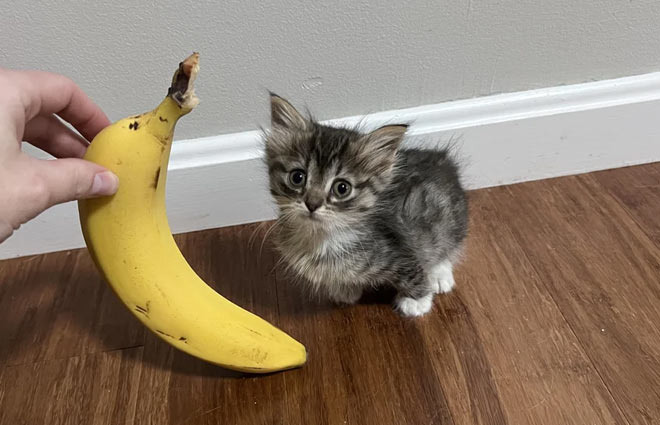
The reason the phrase "Banana for scale" spread like a meme on the American internet is simple yet very practical.
Ultimately, the key point is one: people understand size through "feel" rather than "numbers."
When showing objects in photos, there is always a problem. The actual size is hard to grasp.
Even if you write, "This is about this size," each viewer has a different reference point. Having a ruler or tape measure next to it is accurate, but it's cumbersome to prepare and, most importantly, not intuitive. You have to convert the numbers in your head again. This process is annoying.
This is where the banana comes in. Bananas are almost a common reference object in the U.S.
Their length is roughly consistent, and their appearance is similar. Most importantly, everyone has seen them. They are common in stores, homes, and offices. So when you place a banana next to something, no explanation is needed. A single photo conveys the message immediately. "Oh, that's a bit bigger than a banana"—that one line is all it takes.
This was not a culture that was intended from the start. It began naturally in online communities. Especially on platforms like Reddit, someone posted a photo of an object with a banana next to it, and those who saw it reacted immediately. "Oh, this is much easier to understand." This reaction repeated and solidified into a custom.
There is an important point here. This is not an exact unit but a "relatable reference." The goal is not to measure length but to help the viewer understand intuitively. This reflects the American style of communication. Instead of explaining complicatedly, they choose to make it understandable at once.
From then on, the momentum picked up. On the internet, repetition becomes culture. People started using bananas more and more, and at some point, it became a "reference that communicates without words." Just having one banana is enough to conclude the explanation.
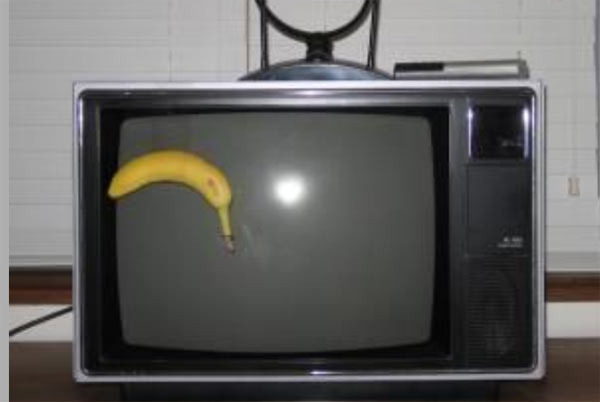
And then it takes a step further. Humor starts to attach.
Initially, it was for practical purposes, but gradually, playful elements began to emerge.
People started making absurd comparisons on purpose.
They place a banana next to very small objects or, conversely, attach a banana to something ridiculously large. This creates laughter.
The reason this meme works particularly well in the U.S. is clear.
First, bananas are one of the most common fruits in America. It's easy to relate to because everyone has at least one at home.
Second, there is a cultural atmosphere that naturally accepts 'humorous explanations.'
Third, there is a visual-centric content culture. On social media, simple devices like this resonate much more strongly than lengthy explanations.
Another interesting point is that this meme has started to be used almost 'formally.'
Some online sellers or reviewers occasionally show sizes based on bananas.
Ultimately, this culture has established itself through the convergence of three factors: intuitiveness, accessibility, and humor. It's not precise, but it's quick to understand. And it's a bit funny. This combination resonates strongly in American internet culture.
Now, it has solidified as a symbol. A banana is no longer just a fruit; it has become an unofficial unit for explaining size.
It is understood by anyone, and it communicates without needing further explanation. This is the reason why "Banana for scale" has survived.







 washington mom |
 California Dreamer |
 Sugar Cream Door Bulletproof Noodles |
 Investment Campus Home Ownership |
 U.S. Retirement Pension Information |
 Texas Real Estate Blog |
 Grow Your Gut Bacteria Well |
 action blog 101 |
 rockets |
  Valley Bang |
  pravix22 |
  Cohesive Kong |
  werehere |
  problemo |
  galaxy88 |
  breezelove |
  hazelnut |
  Korean News American Blog |
  AH LALA |
  Savion |
  pintos |
  Good Good |
  oh my salami |
  Lemonade Cider Planning Director |
  Way to easy |
  American Hardcore Band |
  Dala Dala |