

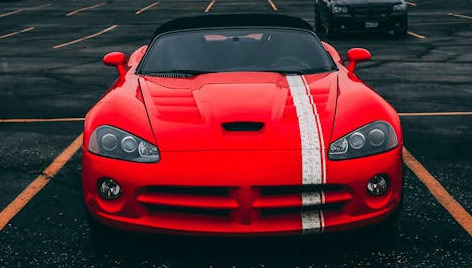
The Dodge Viper is a supercar launched by Chrysler's Dodge in 1992. At first glance, it looks like a typical muscle car, but it is known as one of the 'Big Three American Supercars' alongside the Ford GT and Chevrolet Corvette due to its exceptional performance and presence.
Engine and Drivetrain
- FMR (Front-Midship, Rear-Wheel Drive): The engine is located at the front, but power is delivered to the rear wheels.
- 8.0~8.4 liter V10 naturally aspirated engine: It boasted an engine displacement of over 8 liters from its launch until it was discontinued.
- Sticking to a 6-speed manual transmission: It exclusively used a 6-speed manual, allowing the driver to experience all the thrills of acceleration and shifting.
- As a product of Dodge, a leading muscle car brand, the Viper is fundamentally equipped with powerful performance and straight-line acceleration.
- However, it is not just fast in a straight line; it also possesses high performance worthy of the 'supercar' title, being referred to as an 'American Supercar' alongside the Ford GT and Chevrolet Corvette.
Performance on the Race Track
- Le Mans 24-hour endurance race: It competed alongside Porsche, Ferrari, and Aston Martin until 2015, even setting class victory records.
- Nürburgring lap time: Notably, the 5th generation ACR model recorded a time of 7 minutes and 01 seconds, holding the best record among manual transmission vehicles.
Attractions and Features
- American V10 sound: The roaring exhaust note and massive torque available from low RPMs provide a thrilling experience for the driver.
- Direct driving feel: With minimal interference from electronic devices or automatic transmissions, it is known as a car that reflects the driver's skill.
- Rarity: With its intense image and performance, it has a strong following both domestically and internationally, and its rarity has increased due to its recent discontinuation.
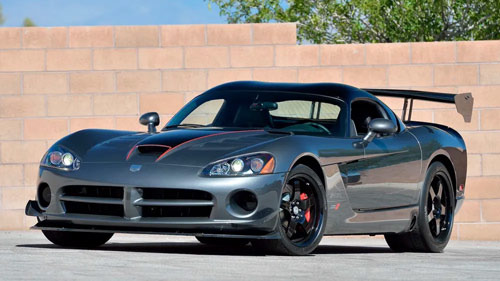
The Dodge Viper, which stubbornly insisted on a V10 engine and manual transmission, possesses a unique character and charm among American supercars. It is not merely a car that relies on a 'big engine' but is seriously designed to perform on the race track as well.
The Viper has consistently been loved by car enthusiasts seeking unique sensibilities and powerful performance. Although it has a large displacement that burdens fuel efficiency and maintenance costs, once you experience the smooth torque and deep exhaust note unique to this engine, it is hard to forget.






 Baguette Blog |
 Khan Film Blog Production |
 dermoon |
 hoosierdaddy |
 sun walker |
 Kitchen Ideas |
 Toaster Pizza Magic Show |


 The Long Shot |
  laro90 |
  MEDBIO American Doctor Blog |
  SWAT TEAM BLK |
  DREAM BIG |
  frostbite |
  330 Forever My Love |
  El Dorado |
  dralix58 |
  Gorama Round |
  Skydiving |
  dreamport |
  Yellow Snowman |
  velvetnom |
  Anytime Journey |
  Mrs. Duluth |
  jaxter |
  Atlanta Mama |
  Tan Sol |