

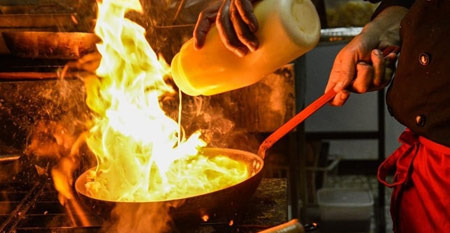
The main cause of lung cancer in chefs is identified as harmful substances generated during the cooking process.
Generally, fine dust, ultrafine dust, benzo[a]pyrene (polycyclic aromatic hydrocarbons, PAHs), and fatty acid degradation products produced by heating cooking oil at high temperatures or through direct grilling (using charcoal or gas) are problematic. Long-term inhalation of these substances can burden the respiratory system and increase the risk of lung cancer, according to research findings.
Smoke from High-Temperature Cooking Oil
- When cooking oil is heated to high temperatures, smoke containing various harmful particles such as lipid peroxides and organic compounds is produced.
- Chefs inhale this smoke repeatedly throughout the day, which can accumulate and negatively affect the bronchi or lungs.
Carcinogens from Direct Grilling
- When grilling or frying meat, benzo[a]pyrene or other polycyclic aromatic hydrocarbons (PAHs) can be produced, increasing cancer risk.
- If ventilation is insufficient or exhaust systems do not function properly, concentrations can rise, increasing danger.
Fine Dust and Ultrafine Dust
- Fine dust (PM10) and ultrafine dust (PM2.5) generated during cooking can penetrate deep into the respiratory system and trigger inflammatory responses.
- Prolonged exposure can worsen lung function and increase the long-term risk of developing lung cancer.
Importance of Ventilation and Safety Devices
- Workplaces without proper exhaust facilities are prone to high concentrations of toxic substances.
- Some studies report significant differences in respiratory health between kitchens with proper exhaust facilities and those without.
Prevention and Management Methods
- Sufficient ventilation: Harmful substances generated during cooking should be quickly expelled by installing powerful exhaust fans or hoods.
- Wearing protective equipment: Depending on the situation, wearing dust masks can be considered to reduce direct inhalation.
- Regular check-ups: For those working in the culinary industry, it is advisable to undergo periodic lung examinations (such as chest X-rays) to increase the chances of early detection and treatment.
- Minimizing harmful substance generation: Improving cooking methods to reduce high-temperature cooking or excessive heating of cooking oil can also help reduce harmful smoke production.
Working as a chef for a long time increases the risk of prolonged exposure to these harmful substances. Therefore, it is important to work in an environment with well-established ventilation facilities and protective measures, and to conduct regular health check-ups to detect and manage problems early as the best preventive measure.






 Tora Tora |
 neroyo |
 nivex85 |
 Old English |
 nixxon |
 newyorker 101 |
 Things to Do to Buy a House |
 U.S. Weather Bureau News |
 International Court |
 Lunch and Dinner Mexican Taco |
  US Embassy |
  Korean Mom |
  My NYC |
  moo moo |
  Mr Oh |
  forevergee |
  festival |
  manchester |
  constant |
  Leapfrog Move |
  vibranto |
  yellowbutter |
  Dolly |
  NYC saladbar |
  Finding Superfoods |
  lightyear |
  song bang |
  vexomo |
  Indiana Jones |