
Three days before closing, an email arrives from the buyer. It appears to be from the title company representative, stating that due to internal circumstances, the wire transfer account has changed and asking to send the funds to the new account.
The message is smooth, and it's a reply to the email thread from last week. With the signature and logo looking identical, there's little room for suspicion.
However, this is the beginning of one of the most common wire transfer scams in U.S. real estate transactions. Having observed this for decades, I can say that the methods have never been as sophisticated as they are today.
First, let's look at the scale of the issue. According to the FBI's Internet Crime Complaint Center (IC3) report for 2025, there were 12,368 reports of real estate fraud, with losses totaling $275.1 million.
In 2024, there were about 9,359 reports with losses of approximately $173 million, indicating a noticeable increase in losses within just one year. However, it's important to note that the IC3's classification of real estate fraud also includes rental and timeshare scams.
Closing wire fraud is primarily categorized under business email compromise, commonly referred to as BEC. In the same report, BEC losses amounted to $3.04 billion, with 24,768 reports, making it the second most common type.
The methods are generally similar. The perpetrators either hack the email accounts of agents, title companies, or law offices, or they create fake addresses that differ by just one character.
They quietly monitor the transaction as it progresses. They wait for the closing date and down payment amount to be confirmed, then send a revised wire transfer instruction at the busiest and most urgent moment.
In Virginia, closing is often handled by a settlement agent, which is typically a title company or law office. Since buyers have fewer opportunities to meet these offices in person, they are more easily swayed by a single email.
A case highlighted in the FBI's 2025 report followed the same pattern. A buyer who received an email impersonating a lawyer sent over $449,000 to the scammer's account.
This case was reported quickly, allowing the FBI's asset recovery team to request the receiving bank to freeze the entire amount. This was a fortunate outcome, as such resolutions are rare in practice.
Unlike credit card payments, wire transfers are very difficult to reverse once sent. If the money passes through multiple shell accounts, tracking it becomes virtually impossible.
Thus, prevention is crucial. I always summarize the principles I share with buyers into a few key points.
First, do not trust the wire transfer information received via email as is. Call the number from the documents received from the title company at the beginning of the contract or from their official website to verify the account number digit by digit.
Calling the phone number listed in the email is not verification. That number often connects directly to the scammer.
Second, any last-minute notification of a change in account should be treated as a potential scam. Legitimate title companies rarely change wire transfer accounts just days before closing.
Third, schedule your transactions to avoid being rushed. It's safer to wire funds a day or two before closing and to call the title company immediately after sending to confirm receipt.
Fourth, during periods of significant financial transactions, change your email password and enable two-factor authentication. There may be instances where a scammer has accessed your inbox and is reading transaction details.
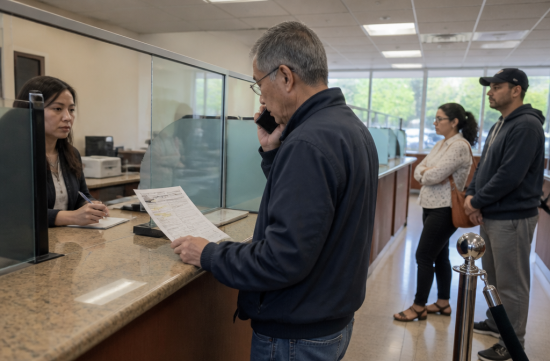
If a bank teller asks, "Have you verified this account?" don't brush it off; take a moment to reconsider. I've seen that question prevent scams on multiple occasions.
If you have already sent the funds, the order of actions is crucial. First, call the bank where you sent the money to request a recall, and ask the receiving bank to freeze the funds.
Simultaneously, file a report at ic3.gov. The FBI will attempt to contact the receiving bank to freeze the funds through what is known as the financial fraud blocking procedure.
This procedure is time-sensitive. For international wire transfers, certain conditions must be met, such as being within 72 hours of the transfer, so even a one-day delay can significantly reduce the chances of recovery.
The FBI reported that in 2023, they froze $538.39 million in 3,008 cases through this procedure. While the success rate was 71%, it was still only a small fraction of the total reported losses.
Agents and title companies should also be informed immediately. There's a high likelihood that the same method is being used on other clients, and it's important to check if their insurance or procedures can assist.
Determining liability or compensation varies based on contracts and company policies, making it difficult to provide a straightforward answer. In such cases, consulting a real estate attorney is advisable.
Many Korean buyers bring significant funds from Korea for their down payments. It's disheartening to see years of savings vanish with a single email.
My view is simple. Making one more phone call before wiring money is the cheapest insurance in the entire closing process.
Even if it seems a bit cumbersome, there's no need to worry about offending the other party. A reputable title company will actually appreciate that call.
 SushiHunter








 moo moo |

 ultron78 |
 garlic bread |

 Sugar Cream Door Bulletproof Noodles |

 urbanmint |

 zonter88 |

 leman |

 bongo |

 travelo |

 Cool Beach Freeway |
 Real Estate Investment Korean American |
 Dollydori, Lover of Movies |
 dmzline |
 American Food Information & Calories |
 Splendid Mission |
 sparklingo |
 Watch Walker |
 Soy Angelino |
 autumn |
 K-POP TV News |
 cortiva6 |
 Nevada Teppanyaki |
 aerion99 |
 Golado |
 Maximum Pro |
 Joyce blog |
 Atlanta Business Information |
 Ansaso |
 Soft Feeling That Feeling |