
Last week, I received over ten notifications from Nextdoor in a single day. I thought something serious had happened, but when I opened it, I found nearly a hundred comments on a post asking until what time Halloween trick-or-treating should happen.
At first, everyone was sharing their opinions with laughter, but at some point, comments like "These days, parents..." started to emerge, and the mood turned sour. It was disheartening to see neighbors getting heated over when to hand out candy.
However, on the same day, there was also a post about finding a lost cat. After posting a picture, someone reported that it had been found in a garage two blocks away.
Have you ever had experiences like this? It's like seeing both heaven and hell in one app in a single day.
I realized that Nextdoor is a much larger app than I expected. According to their investor page, as of March 31, 2026, one in three households in the U.S. uses it.
The service is available in 11 countries. Since it is divided by neighborhoods, it feels like a small group chat, but its scale is quite significant.
The biggest difference from other social media platforms is the address verification. You must verify your real name and actual address to join that neighborhood group. This results in fewer spam accounts or posts from strangers, creating a sense of trust that these are indeed stories from your neighbors.
When signing up, you also have to agree to the Good Neighbor Pledge. The core of the community guidelines is to respect neighbors, avoid discrimination, discuss topics in the appropriate places, and use your real identity.
Interestingly, the reasons this can be beneficial and the reasons it can lead to fights are the same. When you know your neighbors, help comes quickly, but a hurtful comment can linger for a long time.
What I appreciated the most were the recommendations. When local people leave reviews for plumbers, pediatricians, or piano teachers, it feels more trustworthy than Google reviews.
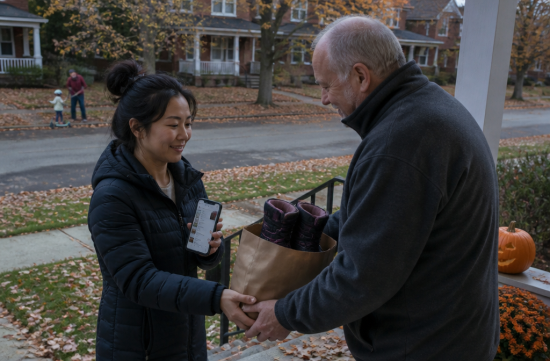
Free giveaways are also quite nice. When I post winter boots or toys that my child has quickly outgrown, someone usually picks them up from my doorstep within half a day. It's great to see items that are too good to throw away being reused by neighbors.
On July 15, 2025, the app underwent a significant update. Real-time notification features for weather, power outages, and traffic were enhanced, and local news began appearing in the feed.
They say the news comes from over 3,500 local media outlets in the U.S., U.K., and Canada. I was surprised to hear from the CEO that until then, the feed was filled 100% with posts from neighbors.
There's also a new feature where AI summarizes recommendations from neighbors. For example, if you ask about hiking trails suitable for kids, it organizes and presents the information.
So why do fights happen? From what I've observed, they usually stem from three main issues: noise, parking, and reports of suspicious individuals, as well as discussions about local politics.
Particularly, posts about suspicious individuals need to be approached with caution. In 2016, Nextdoor changed its rules regarding Crime and Safety posts. To mention race in a post, you must include several other characteristics like clothing, hair color, or tattoos.
According to the company, in areas where this method was tested, posts containing racial profiling dropped by 75%. The explanation was that identifying someone based solely on race is not very helpful.
I believe this aspect is really important. Families like ours, who are immigrants, can easily become just "suspicious Asians" in someone's post. I hope such measures become even more stringent.
There's also a feature called Kindness Reminder. If you try to post a comment that could hurt someone, the app pauses and shows the guidelines again.
In initial tests in the U.S., one in five people who saw this reminder edited their comments, and negative comments decreased by 20%. It's fascinating that just pausing can have such an effect.
Another thing I learned is that simply having a differing opinion is not grounds for reporting. Often, it's better to just let go of a post you don't like rather than reporting it.
So, I've been following my own rule lately. I don't write comments when I'm angry. If I still want to after sleeping on it, then I'll write it.
When it comes to neighbor issues, it's better to talk directly rather than using the app first. If the neighbor's dog is barking all night, knocking on their door with a plate of cookies is much less painful than posting publicly for the whole neighborhood to see.
If it's a dangerous situation, you should call 911 or the non-emergency police number before Nextdoor. Time can slip away while you're waiting for comments on the app.
Make sure to adjust your notification settings as well. I've turned off notifications for local political posts and only receive alerts for lost items, free giveaways, and weather updates. Just doing this has significantly reduced my stress.
Lastly, I double-check photos that reveal my child's face or our home's location before posting. Even though they are verified neighbors, it's still online.
As for how the Halloween time debate ended? Someone simply commented, "Just go to the houses with the porch lights on," and that comment received the most likes.
I felt that comment encapsulated the essence of using Nextdoor. Instead of arguing, finding a comfortable solution together is what community is all about.
I will continue to use Nextdoor in the future, but as a neighbor who helps find lost cats and shares boots, rather than just a spectator of fights. How is Nextdoor in your neighborhood these days?
 SpringPlus





 Spaghetti Flying Religion |

 Giant Squid and Sweet Potato Soup |

 choi family |

 What can make money? |

 road98 |

 sunny7 |

 OMG Indiana YO |

 Toaster Pizza Magic Show |


 fantastic |

 Finding Superfoods |
 seadoll |
 ansdal |
 Vivid U.S. Regional Information |
 Vasila's Newlywed Blog |
 Arizona Cowboy |
 merry merry |
 Hoorah Ooorah |
 Fragile Me |
 Rowland Mama |
 foxtree |
 bayaa |
 loveyom |
 Coastal city |
 My Town My Way Blog |
 holy cow |
 endone |
 starline |
 Where is a really nice neighborhood? |
 Real Estate |