

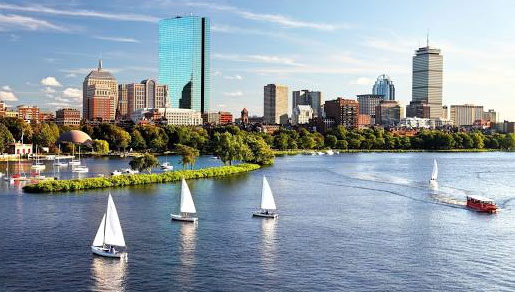
I would like to briefly summarize Boston, the capital of Massachusetts located in the eastern United States and the central city of New England. As one of the oldest cities in the U.S., it boasts a rich history and educational infrastructure. Now, let's take a look at Boston's history, population, median income, and the advantages the city has to offer.
History
- The history of Boston began in the early 17th century when English Puritans settled here. Around 1630, John Winthrop and his group established a foothold in the area, and it grew into a major city in New England from the colonial period.
- Historical events such as the Boston Tea Party and the Boston Massacre, which were catalysts for the American Revolution, took place here, and many historical sites related to the independence movement are well-preserved.
- Since the 19th century, the economy has grown centered around shipping, trade, and manufacturing, making it a cultural, educational, and financial hub of the eastern United States.
Population
- The population of Boston itself is estimated to be around 700,000. (As of the early to mid-2020s)
- Including the metropolitan area (Greater Boston), it exceeds 4 million, forming the largest urban area in New England.
- It has a high level of racial and cultural diversity, with immigrants and international students from around the world creating a vibrant atmosphere.
Median Income
- The median household income in Boston is known to be around $70,000 to $80,000.
- This is higher than the national average, attributed to abundant job opportunities, high education levels, and the development of various industries such as healthcare, finance, and technology.
- However, due to high living costs and housing prices, it is advisable to carefully consider the actual cost of living when planning to move or settle here.
Advantages
- Rich history and culture: Boston is filled with historical sites, museums, and landmarks from the colonial era and the Revolutionary War, often described as a large museum itself. You can easily experience the city's history and culture by walking the Freedom Trail.
- City of education: World-renowned universities such as Harvard, MIT, Boston University, and Northeastern are located here, continuously attracting students and researchers. This has fostered an academic and research atmosphere, as well as a vibrant startup ecosystem.
- Healthcare and medical center: With many high-quality medical facilities like Massachusetts General Hospital and Brigham and Women's Hospital, patients from around the world come here for treatment. The healthcare industry is robust, providing ample job opportunities.
- Diversity of economy and industry: Companies and jobs are consistently emerging in various fields such as finance, biotech, healthcare, and tech startups, attracting many people seeking challenges and opportunities.
- Rich culture, arts, and sports: Boston Symphony Orchestra, Museum of Fine Arts, and other cultural institutions are famous, and professional sports teams like the MLB Boston Red Sox, NBA Boston Celtics, and NHL Boston Bruins fill the city with sports enthusiasm.
- Well-developed public transportation: Compared to other major cities in the U.S., public transportation (subway MBTA, commuter trains, etc.) is relatively well-established, making it convenient to live without a car.
In summary, Boston is a historical center of American independence and a global hub for education, healthcare, and research, boasting high median income and rich cultural, sports, and leisure infrastructure. However, it is important to be aware of the high cost of living and housing prices. As a city where history, academia, and innovative industries coexist, it is always vibrant, so if you have the opportunity, I recommend visiting Boston to fully experience its charm.







 ultron78 |
 garlic bread |
 Sugar Cream Door Bulletproof Noodles |
 urbanmint |
 |
| 
 Tart Tart |
 bagel90 |
 tiramisu |
 lattecu |
 U.S. Weather Bureau News |
  Korean Mom |
  My NYC |
  moo moo |
  Mr Oh |
  forevergee |
  festival |
  manchester |
  constant |
  Leapfrog Move |
  vibranto |
  Tora Tora |
  yellowbutter |
  Dolly |
  US Embassy |
  NYC saladbar |
  Finding Superfoods |
  lightyear |
  song bang |
  vexomo |
  Indiana Jones |