
During lunch in the company break room, a colleague asked me, "I heard your neighborhood is building a school for $900 million, is that true?"
Just hearing the number is surprising. At first, I thought I must have miscounted the zeros.
To be precise, the Irving ISD has proposed a school bond package totaling $950 million for the election on November 3. The school board confirmed the election during a meeting on July 13.
However, the key point is that this is not a single yes-or-no vote. The proposals are divided into four separate items, labeled A through D, allowing voters to approve or reject each one individually.
The question posed in the title, whether a new Irving High will be built, falls under Proposition B, which amounts to $300 million.
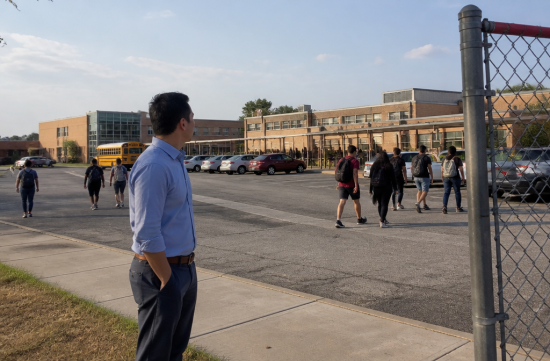
Irving High School was established in 1959. The building is older than my parents, and now kids are attending classes there.
According to descriptions from the Dallas Morning News, the structure is a mix of brick buildings of varying ages, practice fields, and parking lots. While it is well-maintained, there are concerns about navigation and security.
So, why not renovate it? The official school bond site's FAQ provides comparative figures. The renovation option is estimated to cost $183.6 million and would be completed by 2028.
Ultimately, Proposition B suggests building a new school, even if it costs over $100 million more. How voters perceive this difference will likely be a pivotal point in the election. Supporters argue that a new building will have a longer lifespan and allow for a complete redesign of security features, while opponents see the cost difference as too significant.
Let's touch on the other propositions as well. Proposition A is the largest at $552.2 million.
Proposition A includes funding for new buildings for Lively, T. Haley, Davis elementary schools, and Travis middle school. It also includes improvements for safety, security, career and technical education (CTE), and the arts.
Looking at the opening years of these schools, Davis opened in 1951, Lively in 1954, T. Haley in 1959, and Travis in 1964. They have all surpassed half a century.
Proposition C is for $40 million, aimed at technology infrastructure, cybersecurity, and updates for student and staff devices.
Proposition D is for $60,162,278. This will fund the construction of indoor multipurpose facilities at Irving High, MacArthur High, and Nimitz High.
These spaces will be used for athletics, marching band, and STEM activities. Given the Texas summer, it makes sense to discuss indoor spaces for marching band practice.
Now, let's talk about the tax implications that everyone is curious about. If all four propositions pass, the school district estimates that the tax rate will increase by 12.5 cents per $100 of property value.
Breaking it down by proposition, A would add 7.2 cents, B 3.9 cents, C 0.5 cents, and D 0.8 cents. For Irving High alone, it would be 3.9 cents.
As an example, for a home valued at $340,000, after subtracting the $140,000 homestead exemption, the monthly increase would be about $20.83, or around $250 annually.
That $20 a month is roughly the cost of three lattes at a café in Las Colinas. While one might say to cut back on coffee, with rising home insurance and rent, it's not an easy decision.
However, homeowners aged 65 and older or those with disabilities are protected by a cap on school taxes. As long as they maintain their exemption, the school taxes will not exceed that cap due to this school bond, according to the school district.
Renters may not receive the tax bill directly, but everyone knows that the costs incurred by landlords can eventually be reflected in rent.
For reference, Irving ISD also had a school bond in 2023, where only some propositions passed while others failed. This indicates that voters are actively making choices. Therefore, it's possible that some propositions will pass while others will fail this time as well.
Mark your calendars. The voter registration deadline was October 5, early voting is from October 19 to 30, and the main election is on November 3.
If you've already registered, it's more convenient to vote during the early voting period. In my experience, it's much better to take a quick break during lunch than to wait in line after work.
To add my two cents, I understand both sides: those who think it's a waste to invest $300 million in a 1959 building and those who believe spending $183 million on renovations is even more wasteful.
If it were up to me, I would vote yes for all four propositions separately, rather than bundling them together. This voting structure is designed for that purpose.
For detailed amounts or tax calculations based on your home, I recommend checking the school district's school bond site for examples. The numbers can vary significantly based on the appraised value.
I responded to my colleague by saying that while the $900 million figure is correct, for Irving High alone, it's $300 million, and that's a separate vote. At that point, he went back to eating his sandwich.
 WinterPlus





 Vacation on Hawaii |
 morvex37 |
 Ari Songhan American Immigration Life |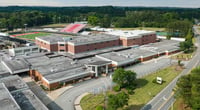
 Bearded Strawberry Smoothie |
 Heart Ticker |
 Vivid U.S. Regional Information |
 Waiting for Godot |
  wexlin84 |
 axelon47 |
 yorvik12 |
  The 2000 |
  toclick |
  Hairy Poppins |
  daisypat |
  Taco Bell Candy Note Blog |
  MintO |
  My Town My Way Blog |
  New Mexico Friends MAX |
  Hajiwon Blog Hair Salon |
  Wicked - Fireyo |
  Seattle - Emerald City |
  new noah |
  xylora |
  Anjollinya Blog |
  total solution |
  valtri |
  August Snowman |
  Way to easy |