
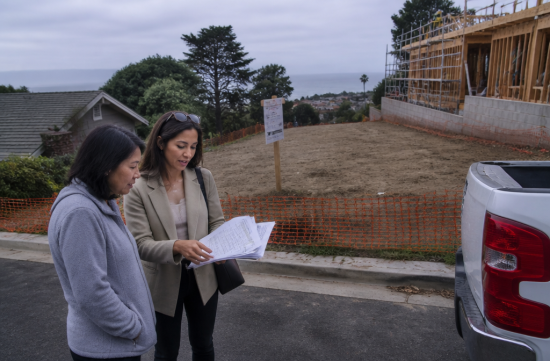
It has been 1 year and 9 months since the Pacific Palisades fire occurred. These days, there's one question that frequently comes up in inquiries about properties in that area: Do you have to pay mansion tax if you sell a house that was burned down?
As it stands now, yes, you do. However, there is a proposal on the ballot for the LA city election on November 3 that directly addresses this issue, so the answer could change depending on the outcome.
First, let's clarify what mansion tax is. Its official name is Measure ULA, a real estate transfer tax passed by LA voters in 2022.
The threshold amount is adjusted annually for inflation. Starting July 1 of this year, a 4% tax applies to transactions over $5.4 million, and a 5.5% tax applies to transactions over $10.9 million.
When you look at the numbers, it really hits home. If you sell for $6 million, the entire transaction is taxed at 4%, resulting in $240,000 in taxes.
Additionally, the existing LA city transfer tax of 0.45% is separate. For sellers, this is quite a significant amount.
The money collected from this tax is used for low-income housing construction and tenant support. Reports indicate that nearly $1.2 billion was collected from 1,633 transactions from April 2023 to the end of April this year.
The issue lies with Pacific Palisades. According to the city's Department of Building and Safety, approximately 5,620 structures were damaged or completely destroyed by the fire, with around 5,495 of those being residential.
This area has high land values. Even if the houses are completely burned down, many lots exceed $5.4 million, meaning that those who decide to sell instead of rebuild will still be subject to the mansion tax.
With insurance payouts falling short, construction costs rising, and permits taking longer, a tax of hundreds of thousands of dollars is a significant burden for homeowners who choose to sell their land.
This led to the introduction of Proposition TE. Local council member Tracy Park proposed it, and the city council voted 13 to 1 in August to put it on the November ballot.
The content is relatively straightforward. It proposes to exempt the ULA tax once when selling residential properties that were damaged or destroyed by the Pacific Palisades fire.
Conditions need to be carefully reviewed. Based on the original text of the ordinance published in the city election pamphlet, here's a summary.
First, it must be a residential property. According to supporters, multi-family buildings are also included.
Second, the damage must be verified by the city's Department of Building and Safety (LADBS). Simply claiming that you were affected is not sufficient.
Third, the seller must be the owner as of January 7, 2025, when the fire started. Investors who purchased the land after the fire cannot benefit from this exemption.
Fourth, the applicable period is from January 7, 2025, to January 6, 2030. Each property can only receive the exemption once.
One noteworthy aspect is the retroactive refund. Those who have already sold their homes and paid the ULA tax can request a refund from the city's treasury department if they meet the conditions.
So, if you paid mansion tax while selling a property in Pacific Palisades last year or this year, it would be wise to keep your transaction documents handy.
The geographical scope can also be confusing. The ULA tax only applies to transactions within the boundaries of the city of LA, so even if you were affected by the same fire, properties outside the city limits, like in Malibu, are not subject to this tax from the start.
How much impact will this have on the city's finances? The city administrative office estimates that ULA tax revenue will decrease by $35 million to $66 million by January 2030.
This estimate is based on the average tax amount per transaction in Pacific Palisades, the number of homes listed for sale after reconstruction as of July, and vacant land transactions since the fire. The higher figure assumes that transaction volume doubles.
There are opposing views as well. The only council member who voted against it, Eunice Hernandez, argued that the exemption should be limited to those who lost their primary residence.
She believes that if LLCs, investors, or those with multiple properties benefit, it will create another loophole for the wealthy, reducing the budget for affordable housing.
In fact, the ordinance text does not specify a primary residence requirement. As long as the seller was the owner on January 7, it does not filter out corporate names or rental properties.
Meanwhile, only supportive opinions were published in the election pamphlet, and no opposing opinions were submitted. Mayor Karen Bass also added her name in support.
The passing condition is a simple majority. Until the results of the vote on November 3 are announced, it is correct to assume that the tax will continue to be imposed as it is.
From a data perspective, it seems unlikely that this proposal will significantly shake up the Pacific Palisades market. However, it could be a variable that changes the timing calculations for original owners considering selling.
If I were in that position, I would wait to see the results in November before making a decision if I had the luxury of time, and if I had already paid, I would start organizing my documents.
Since tax treatment can vary based on individual circumstances, it is advisable to consult a tax professional or real estate attorney before any actual transactions.
 RocketTiger






 |
| 
 Premium Gas Camp |
 CA Real Estate |
 cheesepup |
 breezem |
 Anjollinya Blog |
 Weekend Movie Blog |
 Good News Good Thoughts |
 Victory 1988 |
 All About Real Estate Information in the USA |
  daisypat |
  Taco Bell Candy Note Blog |
  MintO |
  My Town My Way Blog |
  New Mexico Friends MAX |
  Hajiwon Blog Hair Salon |
  Wicked - Fireyo |
  Seattle - Emerald City |
  new noah |
  xylora |
  total solution |
  Vacation on Hawaii |
  valtri |
  August Snowman |
  Way to easy |
  Pirate Ship Popcorn Maker |
  USA Business News |
  Samsung My My |
  bubblo |