
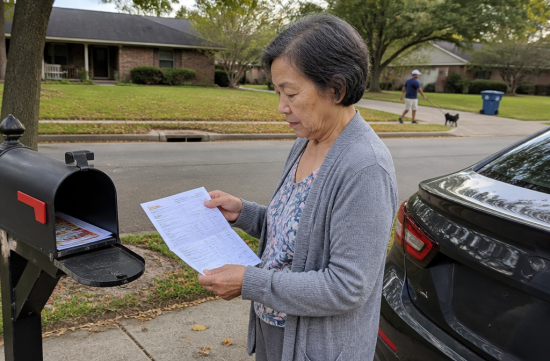
Every October, Texas homeowners receive a certain envelope in their mailbox. It's the property tax bill.
Recently, I've been getting the same question from the seniors around me: "Do I have to pay this bill in full by January?"
To put it simply, if you're over 65, you have more options than you might think. Today, I'll break down one of the lesser-known options, tax deferral, step by step.
First, let's go over the timeline. Harris County property tax bills are typically sent out between October and November.
While the bill is due as soon as you receive it, the last day you can pay without a penalty is January 31, 2027.
Starting February 1, it will be considered delinquent, and the first month incurs a 6% penalty and 1% interest immediately. It's surprising how quickly that adds up to 7% just from a one-day difference.
So, what exactly is tax deferral? It's a provision under Texas Tax Code Section 33.06 that allows homeowners over 65 or those with disabilities to postpone the collection of property taxes on their homestead.
The key point is that it's not an "exemption" but a "deferral." The tax doesn't disappear; it gets postponed to a later date.
During the deferral period, interest accumulates at 5% per year, but no delinquent penalties apply. However, a tax lien remains on the property.
Some older sources may still state 8%, but the current rate is 5%. Be sure to check the date when you search for this information.
The biggest advantage is that you can keep your home. If you qualify for the deferral, your home cannot be seized and sold due to unpaid taxes while you live there.
If there are already delinquency lawsuits or foreclosure proceedings underway, submitting an affidavit will halt those processes. However, any penalties and interest that were already incurred will remain.
The application process is surprisingly simple. You just need to fill out Texas Comptroller Form 50-126, the Tax Deferral Affidavit, and submit it to the Harris County Appraisal District (HCAD).
It's a common point of confusion that you submit it to the appraisal district, not the tax office. I initially misunderstood this myself.
So when do you have to pay it back? If you sell the house or no longer live there, the taxes and interest become due on the 181st day.
As someone who likes data, I want to point out that while 5% is definitely cheaper than delinquent penalties, over 10 or 15 years, it can significantly reduce your home equity.
Thus, this program has clear pros and cons. For retirees with tight cash flow, it serves as a safety net to keep their home, but if you plan to pass the house on to your children, it means a larger debt to settle later.
Before considering deferral, check if you have the 65 and older homestead exemption properly applied.
In November 2025, a referendum raised the general homestead exemption for school district taxes from $100,000 to $140,000. The additional exemption for those over 65 and disabled also increased from $10,000 to $60,000.
Combined, this means that homeowners over 65 can deduct a total of $200,000 from the taxable value for school district taxes. This change applies starting with the 2025 tax year and is reflected in this year's bill.
Additionally, the 65 and older homestead is subject to a tax ceiling, meaning that unless you significantly expand the home, the school district tax will remain at the same level for that year.
When you receive your bill, check line by line to ensure no exemptions are missing. Surprisingly, some people miss out on benefits because they didn't apply. The exemption must be applied for in the year you turn 65, so it's easy to overlook.
If deferral feels burdensome, there is a middle option. Under Texas Tax Code Section 31.031, homeowners over 65 can pay their property taxes in four installments.
The condition is that you must notify them of your intention to pay in installments by paying the first installment before January 31. Then, the remaining three payments can be made without penalties or interest.
One more thing: if your taxes are deducted through mortgage escrow, don't make decisions about deferral or installment payments without first discussing it with your lender. From the bank's perspective, this is a sensitive issue due to the lien order.
To summarize, confirming your exemption is the first priority, installment payments are second, and deferral is the third option if cash is really tight.
If it were me, I would follow this order. Deferral is a good safety net, but I recommend calculating the amount you'll owe later before using it.
However, tax situations can vary greatly depending on income, loans, and inheritance plans. It's essential to consult a tax professional or the HCAD counseling office based on your personal circumstances.
Don't just leave the tax bill envelope in a drawer; make sure to open it this week. January 31 comes around faster than you think.
 WeatherNews




 You Only Live Once |
 Texas Real Estate Blog |
 zentar |
 seouljung |
 AliAluAlo Blog |
 Premium Gas Camp |

 action blog 101 |
 rockets |
 Texas Migration Story |
  toclick |
  wexlin84 |
  Hairy Poppins |
  daisypat |
  Taco Bell Candy Note Blog |
  MintO |
  My Town My Way Blog |
  New Mexico Friends MAX |
  Hajiwon Blog Hair Salon |
  Wicked - Fireyo |
  Seattle - Emerald City |
  new noah |
  xylora |
  Anjollinya Blog |
  total solution |
  Vacation on Hawaii |
  valtri |
  August Snowman |
  Way to easy |
  Pirate Ship Popcorn Maker |