
Last week, while I was paying at a local restaurant, I noticed the cashier was coughing repeatedly. When I asked why he didn't take a break, he laughed and said that if he did, he wouldn't make any money that day. That laugh stayed with me for a while.
Thinking back, just a year and a half ago, the answer in Missouri would have been a bit different. There was legally guaranteed paid sick leave.
Today, I want to calmly summarize how that paid sick leave came to be and then disappeared, and what has changed for workers now.
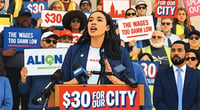
It all started with the election on November 5, 2024. Missouri voters passed the ballot initiative Proposition A with 57.6% support.
This initiative included two main points: gradually raising the minimum wage to $15 per hour and mandating paid sick leave for private employers.
Paid sick leave was set to take effect on May 1, 2025. It was structured so that for every 30 hours worked, one hour of sick leave would accumulate.
There was also a cap on how much sick leave could be used in a year. Businesses with 15 or more employees were allowed 56 hours, while those with fewer than 15 employees were allowed 40 hours.
The business community opposed this from the start, and lawsuits followed. However, in April 2025, the Missouri Supreme Court upheld the law.
When the courts couldn't stop it, the stage shifted to the state legislature. In May 2025, the legislature passed bill HB 567, which eliminated the paid sick leave provision.
Governor Mike Parson signed this bill into law on July 10, 2025. It took effect on August 28, 2025, with the previous obligations remaining only until August 27.
Ultimately, the paid sick leave created by the residents was shut down just four months after implementation. From the time of the vote, it took less than ten months.
So, what happened to the minimum wage? Many people are confused, but the $15 increase itself survived.
Starting January 1, 2026, Missouri's minimum wage will be $15 per hour. However, the provision for automatic annual increases based on inflation, which was set to begin in 2027, was removed by HB 567.
This means that, as it stands now, there will be no scheduled automatic increase next year. The $15 being paid this year will be the baseline for the foreseeable future.
Now, let's look at what has actually changed for workers. The biggest change is that sick leave has reverted from a legal right to a company's discretion.
Since state law no longer requires it, whether or not to provide paid sick leave, and how much, is determined by the employer. There is also no general federal law mandating paid sick leave for private companies.
Some may ask about the federal FMLA. That program provides unpaid leave for qualified employees in businesses with 50 or more employees, and it is limited to a maximum of 12 weeks.
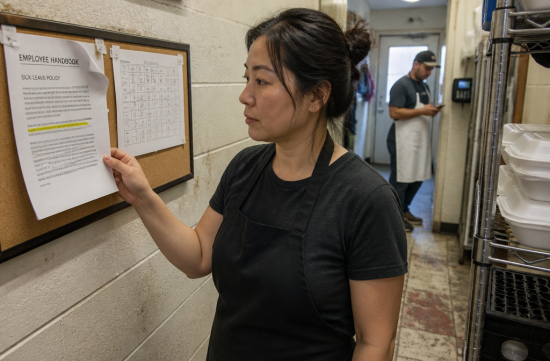
However, not all sick leave has disappeared. If a company has included paid sick leave in its employee handbook or contracts, that promise still remains as part of company policy.
So, I recommend first revisiting the handbook. Check if a revised edition has been released since last August and whether the wording regarding sick leave has changed.
It's also worth asking the HR department how any accumulated sick leave time will be handled. Each company has different policies, so it's safer to get a written response.
National statistics reveal who is more heavily impacted by this issue. According to the Bureau of Labor Statistics, as of March 2025, 80% of private sector workers had access to paid sick leave.
However, there are significant differences by occupation. While 93% of management and professional positions had access, only 65% of service jobs did.
Industries like restaurants, grocery stores, laundries, and salons, where many Korean Americans work and operate, are closer to that 65%. Therefore, this change directly affects our community.
For small business owners, this may feel like a relief. It's certainly true that the burden of labor costs and paperwork has decreased.
There have also been movements to reverse this change. Support groups have pushed for a constitutional amendment to include the same provisions, requiring 170,215 valid signatures by May 3, 2026.
However, the paid sick leave amendment did not make it onto the ballot for the November election this year. Instead, labor organizations have reportedly launched a $1 million election campaign targeting the legislators who supported the repeal.
To add a personal thought, I find the process more concerning than the sick leave itself. If the legislature can overturn what residents decided by vote in less than a year, what weight will the next ballot initiative carry?
Of course, the authority to change laws lies with the legislature, and I understand the concerns about the burden on businesses. However, I believe that having sick individuals come to work ultimately costs both colleagues and customers.
In summary, the $15 minimum wage remains, while automatic increases and legal paid sick leave have disappeared, and sick leave is now determined by company policy.
Since the specific application varies by company and employment type, I recommend directly checking with HR or labor law experts for any questions. I would personally make sure to review the handbook and pay stub at least once this week.
 Laodocus

 crystalo |
 Investment Beginner Company Information Encyclopedia |
 Always Dreaming of Big Success |
 happy 9 |
 coloradoman |
 metsoo |
 tooto |



 The 2000 |
  toclick |
  wexlin84 |
  Hairy Poppins |
  daisypat |
  Taco Bell Candy Note Blog |
  MintO |
  My Town My Way Blog |
  New Mexico Friends MAX |
  Hajiwon Blog Hair Salon |
  Wicked - Fireyo |
  Seattle - Emerald City |
  new noah |
  xylora |
  Anjollinya Blog |
  total solution |
  Vacation on Hawaii |
  valtri |
  August Snowman |
  Way to easy |