
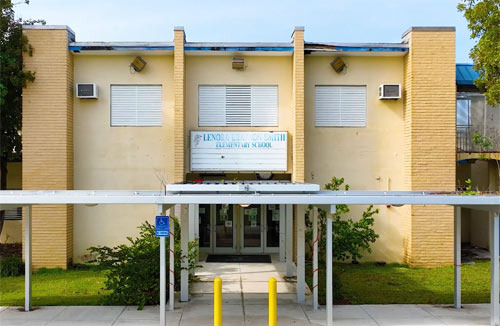
When buying or renting a home in Miami, discussions about property taxes are inevitable.
Especially for those considering their children's education, many wonder how school districts and property taxes are connected. I took a closer look and organized the information.
Property taxes in Miami-Dade County are calculated using a millage rate. One mill means a tax of one dollar for every $1,000 of assessed property value. The overall millage rate for Miami-Dade County is a sum of various items, including county general purposes, schools, fire services, libraries, and special districts.
Looking specifically at school-related mills, the Miami-Dade County Public Schools (MDCPS) is set at about 7.48 mills. The total combined millage can vary by area and city, but it generally ranges from about 20 to 25 mills in urban areas. For example, if a home has an assessed value of $400,000, the school-related tax alone could be around $3,000 annually, while the total property tax might range from $8,000 to $10,000 per year.
Florida has a Homestead Exemption program that allows homeowners to deduct up to $50,000 from their assessed value for properties designated as their primary residence. Additionally, under the Save Our Homes provision, the annual increase in assessed value for properties used as primary residences is limited to the lower of the consumer price index increase or 3%. However, this benefit only applies if the property is registered as a primary residence, so it does not apply to rental properties or properties owned by out-of-state residents.
The Miami-Dade County Public Schools (MDCPS) is the fourth largest school district in the United States, with approximately 350,000 students and over 500 schools. Its annual budget exceeds $6 billion, making it a large educational institution. The funding structure consists of local revenue from property taxes, state education grants from Florida, and federal education grants. School funding distribution varies based on the number of students per school, the percentage of students needing special education, and the ratio of English Language Learners (ELL).
It is also important to note that there is a significant disparity in educational quality among schools within the district. Schools in the southwest areas, such as Coral Gables, Pinecrest, and Kendall, generally receive high ratings, and property taxes in these areas are relatively high due to demand.
In contrast, schools in low-income urban areas like Overtown and Liberty City face relative resource shortages. The choice of school district for children directly impacts residential decisions. There is also a Magnet School program that allows applications to excellent schools in other districts, providing an option to pursue opportunities regardless of residence.
 McMorning
 VelvetTrail75







 morvex37 |
 Ari Songhan American Immigration Life |
 Bearded Strawberry Smoothie |
 Heart Ticker |
 Duck Duck Go |
 Florida King |
 Komet Park |
 My Miami Stories |
 Victory 1988 |
  savannah choi |
  Successful Manager Kim's Team |
  crystalo |
  Canvas Pro Blog |
  Time Management Enthusiast |
  Cap Com |
  nixxon |
  kevin Kim |
  beerdreamer |
  Kims Spring |
  White bunny |
  Kansas City Representative Singer |
  shadow 007 |
  sun walker |
  Choco Choco Star |
  midnight blue |
  honeypot |
  summer |
  adventure77 |
  flexible |