

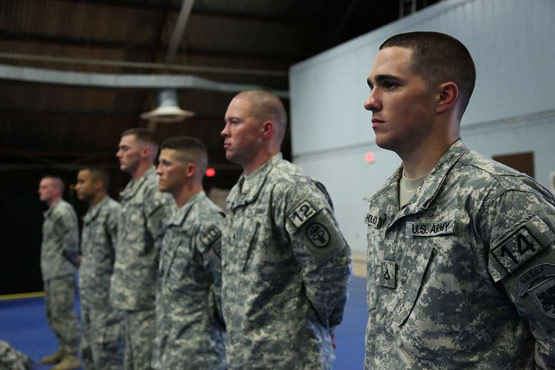
Each branch (Army, Navy, Marine Corps, Air Force, Coast Guard, Space Force) has slightly different requirements and procedures, but the overall flow is similar.
Here are the main points summarized.
Eligibility
-
Age: Generally, you must be between 17 years old (with parental consent) and 39 years old, with slight variations in upper limits for each branch.
-
Citizenship/Residency: U.S. citizens can apply for most positions, and permanent residents can also enlist. However, some positions requiring security clearance need citizenship. You cannot enlist with a student visa or other non-immigrant visas.
-
Education: A high school diploma (HSD) or GED is required. If you aim for an Officer course, a college degree may be required.
-
Physical Examination and Fitness Requirements: You must undergo a comprehensive physical examination at MEPS (Military Entrance Processing Station), where vision, hearing, physical condition, and medical history are thoroughly checked. You must also pass a basic fitness test.
-
Criminal Record and Moral Standards: A history of serious crimes may limit your eligibility, and minor records should be discussed with a recruiter to determine enlistment possibilities.
Enlistment Process
-
Recruiter Consultation: Consult at a nearby Recruiting Office to receive guidance on eligibility requirements, recruitment fields, schedules, etc.
-
ASVAB Test: This is the military enlistment aptitude test, and your scores will determine the positions you can apply for.
-
MEPS: Your final acceptance will be determined through physical examinations, aptitude tests, and interviews.
-
Enlistment Oath: After signing the Enlistment Contract, you will take the Oath of Enlistment.
-
Basic Training: The duration and intensity vary by branch; for example, the Army is about 10 weeks, and the Air Force is about 8.5 weeks.
Benefits
-
Pay and Allowances: Basic pay is provided based on rank and service duration, with additional housing, food, and family allowances.
-
Tuition Assistance: Through MGIB, Post-9/11 GI Bill, etc., you can receive college tuition support after service, and Tuition Assistance is available during service.
-
Health Insurance and Welfare: You receive medical benefits through TriCare military health insurance, and after discharge, you can enjoy some VA medical benefits.
-
Job Training and Career: You can gain experience in various fields such as technology, healthcare, communications, and aviation, which helps with career and certification transitions after service.
Important Notes
-
Understanding Branch Characteristics: The Army has diverse sizes and positions, the Marine Corps is combat-focused, the Navy has a lot of ship life, the Air Force centers on technology and aviation, and the Space Force is relatively new and smaller.
-
Establishing Long-Term Plans: It is advisable to consider whether to discharge after short service or build a career with long-term service. If you plan to obtain citizenship, the process may be smoother during service.
-
Confirming Accurate Information: The safest way to get the latest information is to check official websites and consult with recruiters.
The process of enlisting in the U.S. military can be somewhat complex, but if you prepare step by step, it is not too difficult. Thoroughly prepare for the ASVAB test and physical examination, and if you consider your long-term plans, you can enjoy various opportunities such as tuition support, skill acquisition, and career development through military service. We hope you weigh the pros and cons carefully and make the best choice.







 coloradoman |
 Living Economy Information Blog |
 Tomato Health Club blog |
 Banana Style Life |
 crystalo |
 Old English |
 K-POP TV News |


 Archaic Kim |
  Korean Mom |
  My NYC |
  moo moo |
  Mr Oh |
  forevergee |
  festival |
  manchester |
  constant |
  Leapfrog Move |
  vibranto |
  Tora Tora |
  yellowbutter |
  Dolly |
  US Embassy |
  NYC saladbar |
  Finding Superfoods |
  lightyear |
  song bang |
  vexomo |
  Indiana Jones |