
Last month, the Pasadena market can be summed up in one line: rents were stable, home prices held steady, but interest rates rose.
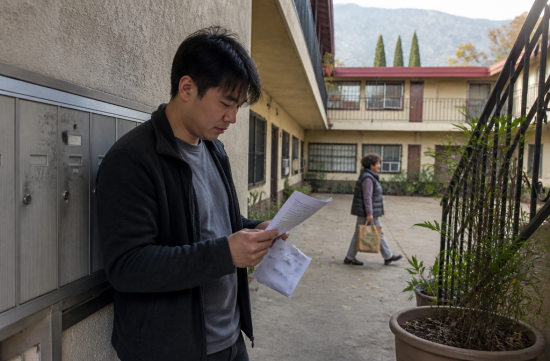
Let's consider a tenant living in a 2-bedroom apartment who has received a lease renewal notice. This person is contemplating whether to renew or buy a home. Following this person's calculations, the numbers for October become much clearer.
First, let's look at rent. According to RentCafe's October data, the average rent in Pasadena is $3,289, which is a 1.67% increase from $3,235 a year ago.
By size, the rents are $2,738 for studios, $2,988 for 1-bedrooms, and $3,801 for 2-bedrooms. Our tenant's baseline would be $3,801.
However, if we check Apartment List, the numbers are quite different. The median rent reported in early November is $2,556, with a year-over-year increase of 1.4%.
The difference of $733 between the two sources can be surprising at first glance. One is an average, while the other is a median, and the samples are different.
Therefore, I prefer to look at the direction rather than the amount first. Both sources show an annual increase in the 1% range, and there are no signs of a sharp rise.
Comparing with the surroundings reveals some differences as well. According to Apartment List, the median rent in the LA Metro area is $2,208, making Pasadena 15.8% higher than that.
The annual change for the entire metro area was -0.1%. While the surrounding areas remained stable, Pasadena has seen a slight increase, indicating that the neighborhood still has some strength.
There are also significant disparities between neighborhoods. According to RentCafe, Old Town has a rent of $3,600, while Garfield Heights is at $2,182.
Now, let's return to the renewal notice. The first thing to check is whether my unit is subject to the city's rent stabilization.
According to city guidelines, the units subject to this are multi-family rental buildings built before February 1, 1995. Condos, single-family homes, and buildings constructed after that date are excluded.
The maximum allowable increase for subject units is 2.5% from October 1 of this year to September 30 of next year. This is a slight increase from the previous period's 2.25%.
The calculation method is simple. It is based on 75% of the LA area's consumer price increase of 3.4%, adjusted to 2.5% according to city charter regulations.
Increases can only occur once every 12 months and require written notice 30 days in advance. If there are serious housing defects, increases may be blocked.
The 2.5% is not an automatic increase but a cap. Given that market rents are rising in the 1% range, if I received a notice that fully utilized the cap, I would consider negotiating.
Buildings constructed between 1995 and 2007 may be subject to state tenant protection laws, and there are exceptions. If confused, it's best to contact the city's Rent Stabilization Department (626-744-7999) to inquire based on the building.
Next, let's discuss sales. According to Houzeo, which is based on local MLS data, the median sale price in October was $1,233,000, a 2.75% increase from a year ago.
What to note is the speed rather than the price. The number of listings increased by 15.04% to 306, and the market stay duration extended to 53 days, which is a 6% increase.
While prices have slightly risen, inventory is piling up, and selling takes longer. This suggests a market where buyers have a bit more breathing room.
I cross-checked with other data. The median of 613 transactions compiled by Resideline over the past six months is $1.18 million, with half of the transactions falling between $800,000 and $1.745 million.
Foreclosure.com's automated price estimate as of October 14 is $1,269,894, reflecting a 0.57% increase from the previous year.
Although the amounts vary, both sources show annual changes not exceeding 3%. Pasadena does not have a separate official median value, so we need to look at multiple figures.
The issue lies with interest rates. Freddie Mac's average for a 30-year fixed mortgage rose to 7.40% on October 8 and 15, then dropped to 7.18% on November 5. A year ago, it was 6.22%.
Let's assume a tenant buys a home at the median sale price with a 20% down payment. That would be a down payment of $246,600 and a loan of $986,400.
At 7.18%, the principal and interest would be $6,682 per month, compared to $6,054 at last year's rate. That's a difference of $628, not including property taxes and insurance.
Compared to the average rent of $3,801 for a 2-bedroom, the principal and interest alone would be an additional $2,881 per month. This is not a direct comparison of the same home, so consider it as a rough estimate.
Freddie Mac's figures are national averages and may differ from actual quotes. Given the large loan amounts, it's essential to obtain separate estimates based on specific conditions.
If it were me, I would choose to renew this time. Rent increases are gradual, but the monthly burden of the current interest rates is quite heavy.
However, I will continue to monitor the listings. In a time when inventory is increasing and the stay duration is lengthening, price negotiations become easier, so if interest rates drop, I can quickly reassess the same calculations.
The reference points are the October reports from RentCafe and Houzeo, the November report from Apartment List, and Freddie Mac's data from November 5. Before signing a contract, double-check with actual listings in the same neighborhood.
 JackpotElec






 Dr. Kelso |

 silents |
 Choco Choco Star |

 gentle |
 neapolis |

 U.S. Weather Bureau News |

 Various Knowledge and Information in the USA |

 Cali M Law Group |


 Arlington house |
 Delicious Food Finder |
 ultron78 |
 pet dog |
 networky |
 Sandiego Auntie |
 Macon Boy |
 Moscow Kim |
 zoryan |
 Noodle Noodle |
 Anjollinya Blog |
 Texas Migration Story |
 Elastico |
 peltra |
 banleaf |
 humpday sonata |
 silver |
 Queens Blues |
 Christopher |