

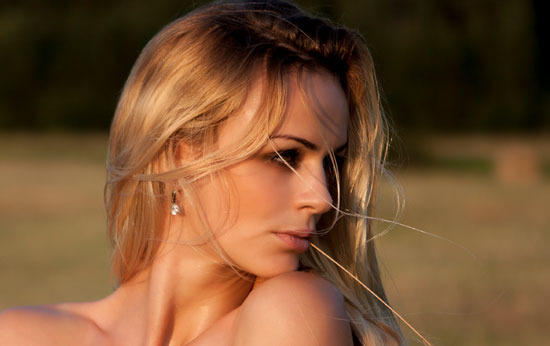
However, this image is not just a simple impression or stereotype; it is more accurate to view it as a result of the long history and complex ethnic structure that has shaped the country of Russia. The roots of the blonde population in Russia can be understood in four main branches.
The first is the East Slavic ancestry. The group that forms the core of today's Russian population consists of descendants of the East Slavs. Historically, these people formed in the regions of Ukraine, Belarus, and western Russia, and from early on, they mixed with Northern and Eastern European bloodlines. As a result, light skin, blonde hair, and light eye colors emerged relatively naturally.
Thus, in major cities like Moscow, St. Petersburg, and Novgorod, the blonde population is noticeably high. This is not a special phenomenon but can be seen as one of the characteristics of East Slavic ancestry.
The second influence comes from the Norse, or Viking heritage. In the early Middle Ages, Vikings from Scandinavia, particularly the Varangians, played a significant role in the establishment of Kievan Rus. They were typically Northern Europeans with a high proportion of blonde hair and blue eyes. Over time, they mixed with the local Slavic population, and their genes have remained significantly in the northwestern regions of Russia. As a result, a Northern European appearance is relatively frequently observed in areas close to St. Petersburg and the Baltic Sea.
The third influence is from the Finno-Ugric peoples. Traditionally, Finno-Ugric ethnic groups have inhabited northern Russia and the Volga River basin. The Karelians, Mari, and Komi are notable examples. These groups also had a high proportion of light skin and blonde hair and naturally mixed with the Slavs over centuries. Consequently, as one moves further north in Russia, the so-called Northern European appearance tends to become more common.
The fourth influence is the mixing with Baltic and Central European regions. The western part of Russia and the areas around the Baltic Sea have historically had frequent interactions with Polish, Lithuanian, Latvian, and German populations. Through political dominance, intermarriage, and population movements, the genes from these regions have naturally been absorbed into the Russian population. In this process, the blonde gene has spread even more widely.
However, there is an important point that must be addressed here. Russia is not a homogeneous nation but a clearly multi-ethnic country. Dozens of ethnic groups, including Tatars, Bashkirs, Yakuts, Chechens, Dagestanis, and Buryats, coexist. In fact, when walking the streets of Moscow, one can frequently see not only blonde Caucasians but also faces of Central Asian, Caucasian, and Siberian indigenous descent. Therefore, labeling Russia as a blonde nation oversimplifies the reality.
Nonetheless, the reason the image of blondes remains strongly associated with Russia is clear. Western media primarily showcase Moscow and St. Petersburg when covering Russia. These two cities are geographically located in the northwestern part of the country, where the proportion of Northern European genes is relatively high. Additionally, the fashion and modeling industries favor light skin and blonde hair, leading to this image being repeatedly exposed and overrepresented.
From a genetic perspective, the roots of the blonde population in Russia become relatively clear. The basic framework is East Slavic ancestry, with influences from Finno-Ugric and Northern European Viking genes in the north, and Baltic and Central European bloodlines reinforcing it from the west.
The blonde population in Russia is best understood not as a result of pure Northern European ancestry but as a complex outcome of the long-term mixing of Eastern European, Northern European, and Finno-Ugric lineages. I believe the diversity of appearances in Russia has a background as complex as the country's history.





 Moscow Kim |
 coloradoman |
 Montgomery Mom |
 GOGO SING |
 Hajiwon Blog Hair Salon |
 Cali M Law Group |

 Various Knowledge and Information in the USA |

 U.S. Weather Bureau News |
  manchester |
  constant |
  Leapfrog Move |
  vibranto |
  Tora Tora |
  yellowbutter |
  Dolly |
  US Embassy |
  NYC saladbar |
  Finding Superfoods |
  lightyear |
  song bang |
  vexomo |
  Indiana Jones |
  meloncat |
  novapixel |
  mortrix |
  Esther 1983 |
  fortbliss |