

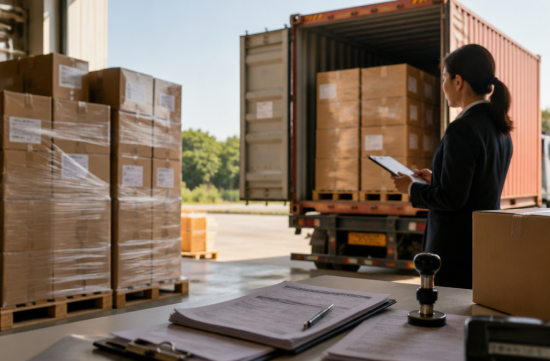
While living in Atlanta, I often meet people who want to bring Korean products to the U.S. to sell.
One of my acquaintances quit their cosmetics company and started importing and selling Korean skincare products.
At first, it seemed insignificant as they sold a little on Amazon, but once they established a presence there and started direct sales, the volume of imports increased, and the situation changed.
I heard that if one customs document is incorrect, the cargo can be held up, and they struggled with ingredient and labeling issues.
So, I advise anyone wanting to try their hand at trade not to diversify too much from the start.
If it's cosmetics, it's better to start with one or two products that are likely to sell well; for food, starting with one or two items is advisable.
Importing doesn't automatically mean that bringing in a large quantity will be cheaper. If inventory piles up and issues arise with customs, the benefits of bringing in goods cheaply are lost.
To do business in the U.S., you can start by creating a business entity like an LLC and obtaining an EIN, but having those alone doesn't mean you're ready to import.
In actual customs, you need to determine who will be the Importer of Record, check the HTS classification of the products, their origin, declared value, and duty rates.
Generally, commercial cargo exceeding $2,500 is subject to formal customs procedures, and a customs bond is often required.
There are Single Transaction Bonds used for one-time imports and Continuous Bonds used by companies that import repeatedly.
The minimum bond amount for a Continuous Bond is typically $50,000, but this doesn't mean you pay $50,000 in cash every year.
In practice, you pay a fee to a bonding company to issue the bond.
Especially for cosmetics, since the enactment of MoCRA in 2022, there are many more requirements to check, including facility registration, product listing, safety proof, and labeling.
It's a mistake to think you can just bring products that sell well in Korea and sell them in the U.S. as they are.
The same goes for food. Food entering the U.S. must comply with regulations such as facility registration, prior notice, English labeling, and allergen labeling.
If issues are found, inspections or holds can occur, and storage fees can accumulate during that time.
Logistics costs are also a significant area that beginners often overlook. If you're not filling a container, you'll typically use LCL (Less than Container Load) shipping, but you can't just calculate the ocean freight from Korea to the U.S. You need to factor in terminal fees, document fees, customs fees, storage fees, and transportation costs from the port to the final destination to get the actual cost.
People often say the product price was fine, but when they calculate the costs after it arrives at the U.S. warehouse, they find there's nothing left.
Duties also vary by product. You shouldn't assume that just because the Korea-U.S. FTA applies, it means there are no duties.
You need to check if the origin requirements are met and also confirm the actual duty rate at the time of import, including recent additional tariff policies in the U.S.
Ultimately, what's important is not the product name but the correct HTS code.
So, if you're just starting, I think it's better not to skimp on the cost of using a customs broker.
Considering the costs of delays and storage fees from misclassifying a product, it's much cheaper to have an expert verify the HTS code and necessary documents from the beginning.
When you think of the trade business, it may seem like you just need to find good products in Korea and bring them to the U.S. In reality, half of it is about the products, and the other half is about the paperwork.
It's better not to make large orders from the first time but to experience the customs process with one or two items. Once you successfully navigate EIN, importer information, customs bonds, HTS codes, FDA regulations, origin, duties, and logistics costs, you'll have a much better sense for your second import.
Ultimately, the key to the U.S. import business is how accurately you understand the process of getting products legally across the U.S. border and selling them.
 PunnyBunny
 GatoradeShot







 loran |

 DeArizona Blog |

 Swift Falcon |

 Tonky |

 My NYC |
 Gimmi207 Blog |

 Let's Be Like a Salt-like City Person |
 Dingho and USA News |
 Tiger Milk Foam Research Institute |

 Maximum Pro |
 dmzline |
 travelo |
 American Food Information & Calories |
 Splendid Mission |
 sparklingo |
 Watch Walker |
 Soy Angelino |
 autumn |
 K-POP TV News |
 cortiva6 |
 Nevada Teppanyaki |
 aerion99 |
 Golado |
 Joyce blog |
 Atlanta Business Information |
 Ansaso |
 Soft Feeling That Feeling |
 assa man |
 Yugo Girl I'm So Hot |