

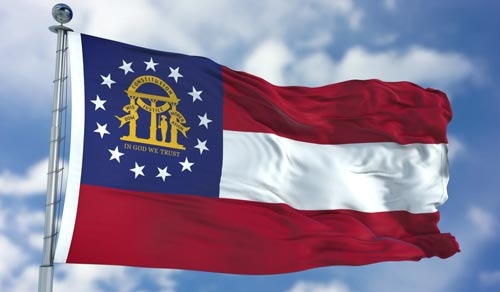
Georgia has long been classified as a Republican stronghold.
In presidential elections, Republican candidates have consistently held an advantage, and it has been seen as a symbol of Southern conservative politics.
However, in the last decade, during the 2020 presidential election, Democratic candidate Joe Biden won in Georgia, and in the subsequent 2021 federal Senate runoff, both Democratic candidates were elected, leading to questions like "Why has Georgia suddenly changed?"
In reality, this is not a sudden change but rather the result of years of gradual transformation that has manifested in the election results. Personally, I believe the biggest reason is the rapid growth of the Atlanta metropolitan area. People are continuously flocking to the Atlanta metro region. As companies relocate their headquarters or make large investments, high-income professionals have moved in, and industries such as IT, finance, logistics, and healthcare have grown rapidly.
According to data from the U.S. Census Bureau, Georgia is among the states with the fastest population growth in the U.S. in recent years.
The proportion of young professionals and college graduates moving to the new metropolitan area has increased, expanding the Democratic support base. This phenomenon is reportedly also being experienced in Texas metropolitan areas.
The second change is the diversity of the population. Atlanta has grown to be one of the most diverse cities in the U.S. in terms of race and culture.
Not only the Black population but also the Asian and Hispanic populations are rapidly increasing. Gwinnett County and DeKalb County are representative examples. In the past, Gwinnett County was a Republican stronghold, but it is now considered a key battleground area. As residents from diverse backgrounds have increased, the political leanings have also changed.
The third factor is the voter registration movement. In Georgia, voter registration campaigns have been actively conducted by civic organizations and local communities. Particularly, the registration rates of young people and minority voters have increased, leading to a significant change as previously registered voters who did not vote began to actively participate in elections.
Due to these changes, Georgia is now classified as a 'Swing State' where no single party can easily guarantee victory.
What makes Georgia elections even more special is the runoff election system.
In Georgia, if no candidate receives more than 50%, only the top two candidates will proceed to a runoff. While most states in the U.S. elect the candidate with the most votes, Georgia requires a majority, so it is not uncommon for elections to be held twice.
The 2021 federal Senate runoff was also conducted under this system, and the results determined the majority party in the federal Senate, attracting national attention.
Both candidates and parties must maintain their organizational strength through the runoff, which means Georgia elections always receive focused attention from the national political arena.
Currently, the political landscape shows strong Democratic support in Fulton County, which includes Atlanta, and DeKalb County, while the northern and southern rural areas still have strong Republican support.
Changes in the Korean community are also noticeable. The Korean population centered in Gwinnett County has steadily increased, and the number of Korean voters who have obtained citizenship continues to grow.
During election seasons, Korean-language informational materials and voter registration campaigns are conducted, and candidate invitation meetings are held frequently. Korean citizens in the U.S. can participate in federal, state, county, and city elections. Georgia is also characterized by its open primary system, allowing voters to choose between Democratic or Republican primaries without prior registration, making participation relatively flexible compared to other states.
Many people consider only presidential or federal Senate elections to be important, but local elections often have a much greater impact on daily life.
Mayors, city council members, school board members, and county commissioners make decisions on policies directly related to residents' daily lives, such as school budgets, public safety, park development, road expansion, and property taxes. Atlanta's mayor, Andre Dickens, is also leading such local policies.
Ultimately, the changes in Georgia's politics are not due to a single election but are the result of simultaneous developments over the years, including population growth, industrial expansion, urbanization, increased diversity, and greater voter participation.
If the growth trend of the Atlanta metro area continues, Georgia is likely to remain one of the most important battleground states in American politics.
 OttogiZin
 PrayOnOwn




 GOGO SING |
 Hajiwon Blog Hair Salon |
 tartbear |
 novapixel |
 NEXT ROUND |
 Maximum Pro |
 Dingho and USA News |
 Let's Be Like a Salt-like City Person |

 Korea Tiger News |
  horizon |
  Nanana Nanana Nanana |
  victoria jung |
  Kkikki Ppappa Shout Out Loud |
  Lululala |
  Toaster Pizza Magic Show |
  Utah, the Most Livable State |
  nortrix |
  Mau Nui |
  fixed |
  AL ALASKA |
  amola |
  History Repeats Itself |
  Doori Ark |
  Rainbow Bridge to the Sky |
  Sunny Fullerton |
  U.S. Weather Bureau News |