

I am currently running a fusion Korean BBQ restaurant in Atlanta, Georgia, USA.
I attended culinary school in Korea, and I have been in the United States for over 20 years now. I initially worked as a chef at a Korean restaurant in Las Vegas, and at some point, I thought, "I should open a restaurant under my own name." That's how I moved to Atlanta and started this place.
The reason I call it 'fusion' is simple: I learned through experience that it's difficult to succeed in business in America by sticking strictly to traditional Korean cuisine.
Interestingly, the Korean food craze is really intense these days. From BTS to K-dramas, and whenever there's a scene with kimchi stew or bulgogi on Netflix, the next day, a few American guests come looking for it. They ask, "Do you have that soup with red broth?"
However, I don't serve it as is. For example, if I just serve grilled pork belly with kimchi, the response is a 50 out of 100, but if I add a spoonful of butter, it suddenly jumps to 85. That's the point I want to make.
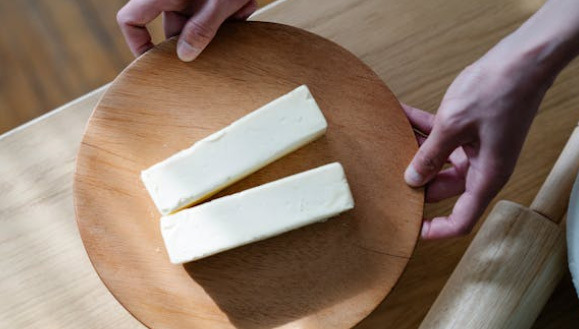
Butter
Traditionally, Korean cuisine doesn't include butter. Ingredients like perilla oil, sesame oil, soy sauce, and doenjang create the traditional flavors. However, while running a business in America, I realized that just adding butter changes the American customers' reactions significantly.
One of the dishes I developed is called 'Butter Doenjang Pork Belly.' At first, I made it just for fun. I marinated the pork belly in a soy sauce and doenjang mixture, and at the end of grilling, I added a little butter, which was a complete 'WOW' for Americans.
People kept saying, "This is BBQ, but it's different, it has a deep flavor." At first, I thought it might be a coincidence, but as it kept happening, I became convinced.
So from then on, I started experimenting more openly. I added a piece of butter to kimchi fried rice. A few drops of butter at the end of doenjang stew. I also tried coating bulgogi, which I used to grill without oil, with butter, and it retained the juices well and became much smoother in flavor.
Of course, such attempts might be criticized in Korea. People might say, "What kind of doenjang is that?" or "You're ruining Korean food." But I don't think that way.
Most of my customers are Americans. When these people encounter strong flavors like kimchi stew, cheonggukjang, or stir-fried squid for the first time, they struggle. However, if I mix in just a little American ingredients like butter, cream, or cheese, it creates a familiar taste while still feeling new.
This is fusion. It's about combining traditional Korean cuisine with my own sensibilities and American local tastes to create something entirely new. I experiment with that every day.
Sometimes customers ask me for the recipe. They say, "What did you put in this?" I just smile and reply, "Butter." Surprisingly, everyone seems to understand. They didn't know Korean food could be this smooth.
Business is going well these days. Especially during dinner hours, it's hard to get a seat without a reservation. Most of the customers are Americans, and some come four times a month. When they say, "Thank you so much. This food made me love Korean cuisine," that's when I feel it.
Ah, I'm doing well.
Cooking ultimately has to suit people's tastes. You can't last long with stubbornness alone. I want to preserve the roots of Korean cuisine while finding ways to bloom in America. One of the keys to that is this 'butter.'
I will continue to experiment. And someday, I dream that this small restaurant will have flavors that resonate not only in Atlanta but also in other cities.
And that journey starts every morning, with a piece of butter.



 Moscow Kim |
 Seattle - Emerald City |
 self-evaluation |
 Sandiego Auntie |
 Karina's Blog |
 Cherokee Rose |
 Dingho and USA News |
 moonshine 7 |
 Let's Be Like a Salt-like City Person |
 Gimmi207 Blog |
  Korean Mom |
  My NYC |
  moo moo |
  Mr Oh |
  forevergee |
  festival |
  manchester |
  constant |
  Leapfrog Move |
  vibranto |
  Tora Tora |
  yellowbutter |
  Dolly |
  US Embassy |
  NYC saladbar |
  Finding Superfoods |
  lightyear |
  song bang |
  vexomo |
  Indiana Jones |